Tag: media technology

Ta Kung Pao Attacks Opinion Poll

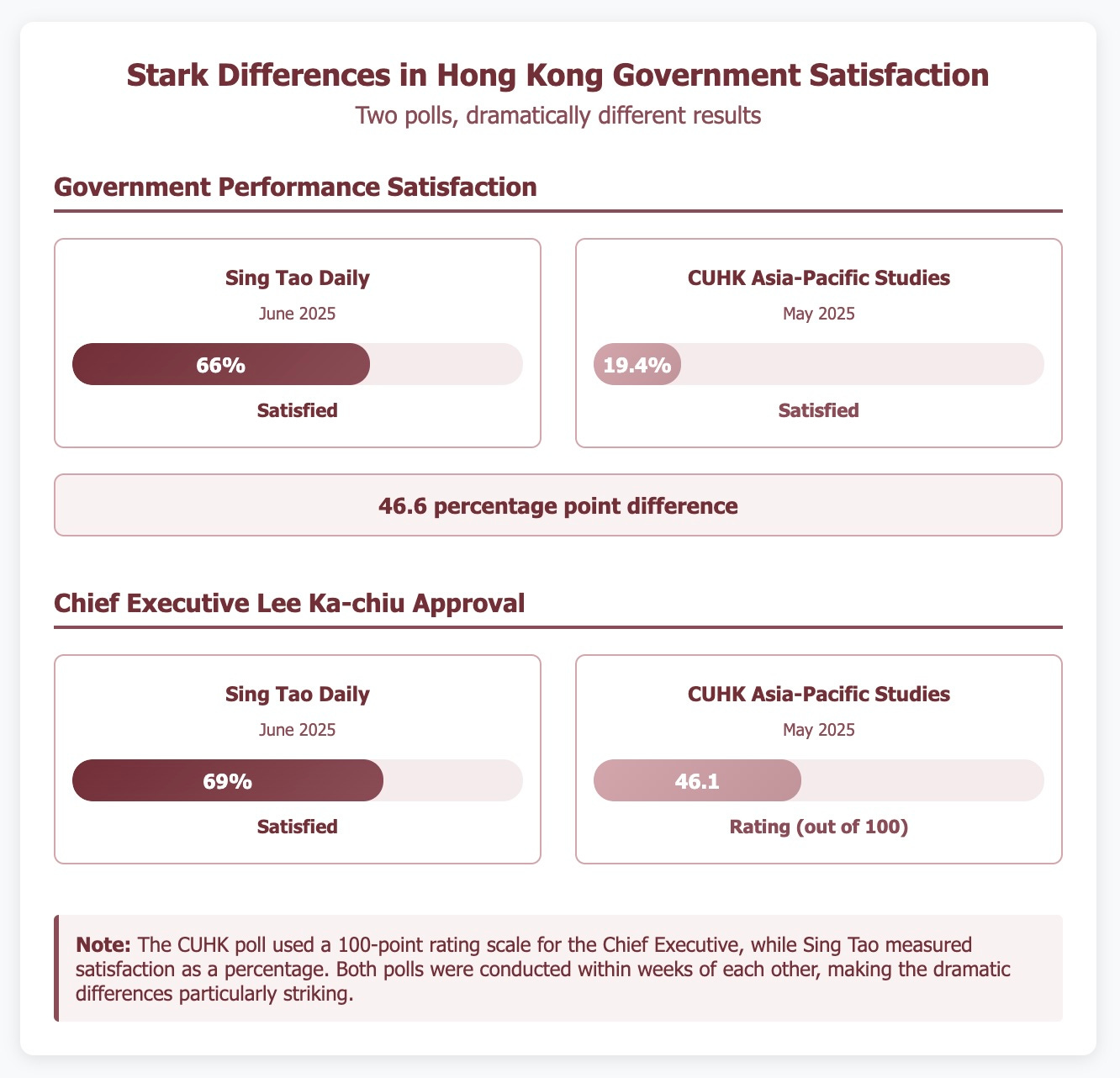
The Chinese central government-backed Ta Kung Pao (大公報) newspaper reported with fury last week that a recent survey on public opinion about the SAR government by the Chinese University of Hong Kong’s Hong Kong Institute of Asia-Pacific Studies (香港亞太研究所) “differed sharply” from similar surveys by other media outlets (see our graphic below). Resorting in typical form to ad hominem attacks, the paper noted that key scholars at the institute include “anti-China instigator” (反華推手) Morton Holbrook and “Taiwan independence advocate” (台獨分子) Hsiao Hsin-huang (蕭新煌). Holbrook is a former US diplomat, Hsiao a Taiwanese sociologist.
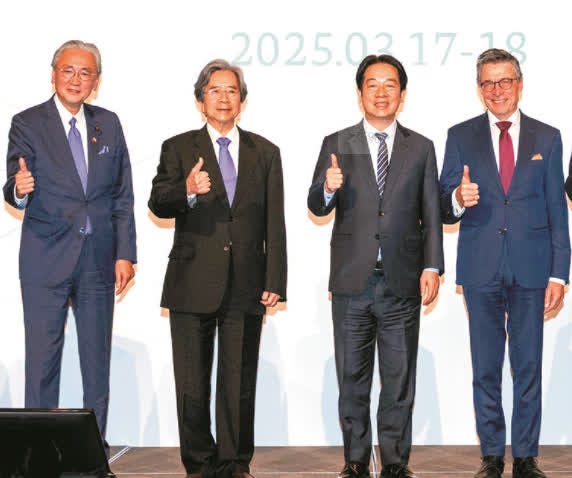
A growling caption to this photo featured in the Ta Kung Pao reads: “Hsiao Hsin-huang serves as so-called ‘Presidential Office Senior Advisor’ in the Taiwan region, alongside ‘Taiwan independence’ hardliner Lai Ching-te.”

CUHK subsequently stripped both of their honorary positions, a spokesperson telling the Ta Kung Pao that the university would “strictly comply” with Hong Kong’s National Security Law. The institute’s website went offline briefly before rebooting with both names scrubbed. Also this week, Hong Kong has cancelled passports for 12 activists living overseas. But at the HKSAR official website, everything is just fine. There is even a quick link where you can download the national anthem.

AI in the Mediagenes

Facing generative AI’s impact on media, Richard Lee (李致緯), the chief technology officer (CTO) of TNL Mediagene, an online media group based in Taiwan and serving an audience across the region, outlined three strategies last Friday in an interview with iThome, a news aggregation service for IT professionals in Taiwan. Lee’s strategies were: developing proprietary AI technologies to enhance personalized content and advertising recommendations; using AI to translate content for overseas and Taiwan markets; and actively positioning company content to be cited by AI models and tools. Lee stressed that by embracing AI rather than resisting it, media companies could adapt more quickly.

Meta Meltdown

For thousands of Taiwanese KOLs, news anchors, film critics, and influencers across Meta platforms including Facebook, Instagram and Threads in recent months it has been, well, a meta mess. The multinational’s anti-fraud mechanisms since May have triggered what many have called “indiscriminate blocking” (無差別封鎖), prompting more than 3,300 victims to form a chat group on LINE, a popular Japanese social messaging app, called “Facebook Account Rights Protection Group” (臉書帳號維權群). According to media reports, about 70 percent of suspended accounts in Taiwan were paid blue-check subscribers who lost years of content overnight.

Generative Classrooms

Taiwan’s Shih Hsin University Journalism Department has launched five new courses targeting the AI era, including “AI and Media Industry,” “Using Generative AI for Media,” “Journalist Influencers,” “Podcast News Feature Production,” and “News Micro-Enterprise,” according to Li Media (立報), a specialized education and technology outlet. The curriculum shift reflects broader media industry adaptation in Taiwan to artificial intelligence tools reshaping newsroom practices.

A vision of the journalists of the future in an image provided by Shih Hsin University.