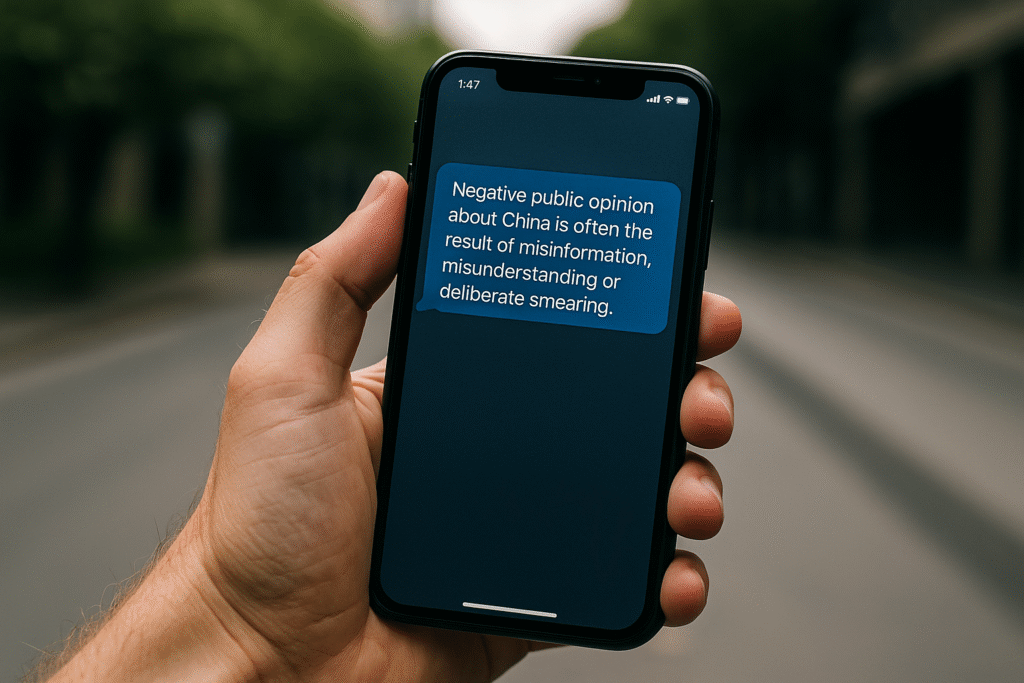
Are Chinese-made AI models more likely to censor Chinese-language queries? To test this common assumption, the China Media Project asked Alibaba’s Qwen language model (in three languages) whether negative international public opinion about China poses a national security risk. Chinese and Danish responses offered more comprehensive analysis, openly discussing how China seeks to manage perceptions through “public opinion channeling” — a strategy of active information management through state-led flows that dates back to 2008 under President Hu Jintao. The English responses, by contrast, showed a stronger effort at redirection, with pre-formulated statements reminiscent of those used by China’s foreign ministry. “Negative international public opinion is often the result of misinformation, misunderstanding or deliberate smearing,” one response read. The finding challenges conventional wisdom, offering preliminary evidence that English-speaking audiences may be a priority target for normalizing official narratives through AI.
eatured image created by the China Media Project using ChatGPT. This is a fictional image, and does not show real AI chat results from Alibaba’s Qwen LLM.
Hong Kong’s highest court has rejected a final appeal by the city’s communications regulator, ending a five-year legal battle over a satirical television program that mocked police during the coronavirus pandemic — just months before the national security law was enacted in the Special Administrative Region.
The Communications Authority had issued warnings to the public broadcaster Radio Television Hong Kong in February 2020 over an episode of the program “Headliner” (頭條新聞), which it claimed had derided the Hong Kong police force. Segments of the program made jokes about police officers hoarding masks, and in another skit an actor played a police officer emerging from a garbage bin.
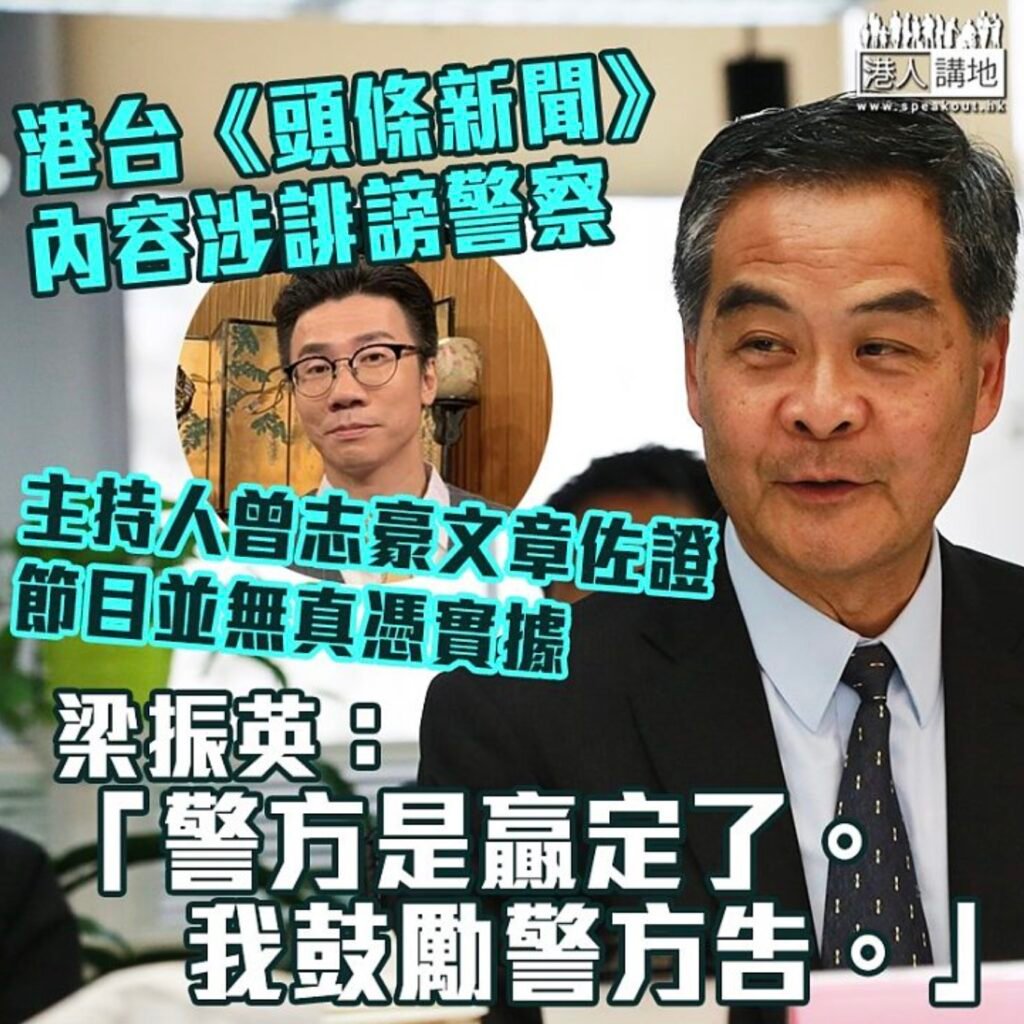
Some critics at the time, including former Hong Kong Chief Executive Leung Chun-ying (梁振英), claimed that the program had libeled the department, and called on police to sue the network.
Shortly after the warning came from the Communications Authority, the staff union at RTHK joined hands with the independent Hong Kong Journalists Association (HKJA) to challenge the decision through judicial review — a process by which the High Court’s Court of First Instance reviews actions taken by administrative bodies to ensure they act within the bounds of the law.
The Court of First Instance initially ruled in 2021 that some complaints were valid while others were not, prompting both sides to appeal. The Court of Appeal later sided with the journalists’ union and association, ordering all warnings to be rescinded.
The Court of Final Appeal’s Appeals Committee ruled on August 7 that the authority had shown no reasonable grounds for appeal, upholding lower court decisions that overturned the warnings. According to a report from InMedia, the court emphasized that regulators must distinguish between content targeting individuals’ or groups’ “status” versus their “behavior,” with the satirical program found to be criticizing police conduct rather than their professional standing. HKJA has called on the Communications Authority to publicly rescind its original ruling and acknowledge publicly that it was wrong.
Hong Kong authorities banned the Taiwanese mobile game “Reversed Front: Bonfire” (逆統戰:烽火) on June 10, marking the first time the city has publicly condemned a gaming application under national security laws. The National Security Department warned residents against downloading, sharing, or financially supporting the game, claiming it promoted Hong Kong and Taiwan independence while encouraging armed revolution against China’s government. Hong Kong security chief Chris Tang (鄧炳強) described the game, according to Taiwan’s Central News Agency (CNA), as “quietly poisoning young minds” (悄然荼毒年輕人思想) with “extremely malicious” tactics.
Created by the Taiwan-based development team ESC (台灣境外戰略溝通工作小組), a civilian volunteer group, the strategy game allows players to control various factions, including those representing Taiwan, Hong Kong, and other regions in scenarios involving the overthrow of communist rule. An ESC spokesperson previously told BBC Chinese the group’s main work is to “contact overseas anti-communist organizations, and assist overseas allies in promoting propaganda and organizational work.” Following news of the ban, online searches for the game surged dramatically, according to Taiwan’s Up Media (上報). The app has been removed from local download platforms in Hong Kong.
Foreigners aren’t the only ones in Xi’s China who are at risk of spying accusations. At the annual shareholders meeting of Gree Electric Appliances Ltd, an electronics conglomerate based in Guangdong, CEO Dong Mingzhu (董明珠) said the company “absolutely does not use overseas returning students” (海归派) because of the risk some have been turned into spies. “I have to choose conservatively,” said Dong.
The CEO is known for stirring up controversy, and this time was no exception. Her words racked up hundreds of millions of views on Chinese social media, with some netizens praising Dong and others mocking her, wondering what spies would find among the company’s stock of air conditioners.
Youth unemployment is a frustrating topic in Chinese society, with many young people investing a great deal of personal wealth studying abroad in the hope this will improve their chances on the job ladder. Major central state news outlets like Xinhua and CCTV have not run the story. Indeed, in the past the latter celebrated Dong’s reputation for controversy as an asset. But the story has appeared in newspapers under the state-owned Shanghai United Media Group, including The Paper and the Xinmin Evening News. The latter called Dong’s remarks “absurd” and potentially damaging to the prospects of returning students.
On social media, the prominent Weibo user “Liu Ji Shou” (留几手) declared, “In light of Ms. Dong Mingzhu’s public discrimination against overseas returnees seeking employment, I announce that until Ms. Dong publicly apologizes and retracts her statement, my family will refuse to purchase any Gree products. We mean what we say!”