Tag: Taiwan politics

Tension Talks

President Lai Ching-te (賴清德) of Taiwan’s ruling Democratic Progressive Party (DPP) launched his “Ten Talks on National Unity” (團結國家十講) series June 22 with a sweeping historical narrative designed to reinforce Taiwan’s sovereignty amid deep political divisions surrounding constitutional gridlock, legislative paralysis, and an unprecedented recall campaign targeting 24 lawmakers from the opposition Kuomintang (KMT). Dismissing Taiwan as “the island” and referring to Lai’s “so-called Ten Talks on National Unity,” China’s state-run Global Times (環球時報) described the initiative as “a desperate political show” and “hypocritical political rhetoric.” The Chinese Communist Party’s People’s Daily newspaper fired back with a commentary the same day under the official pen name Wang Ping (王平), which has been used as a moniker for denunciation of politics in Taiwan.
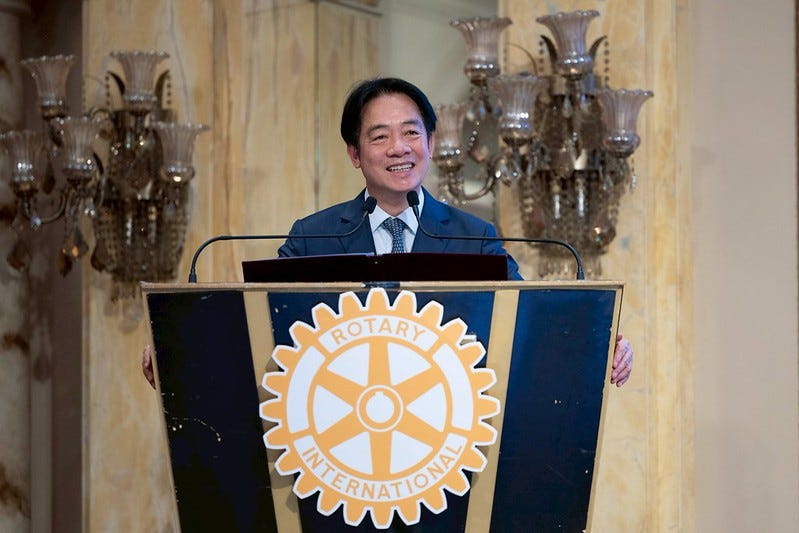
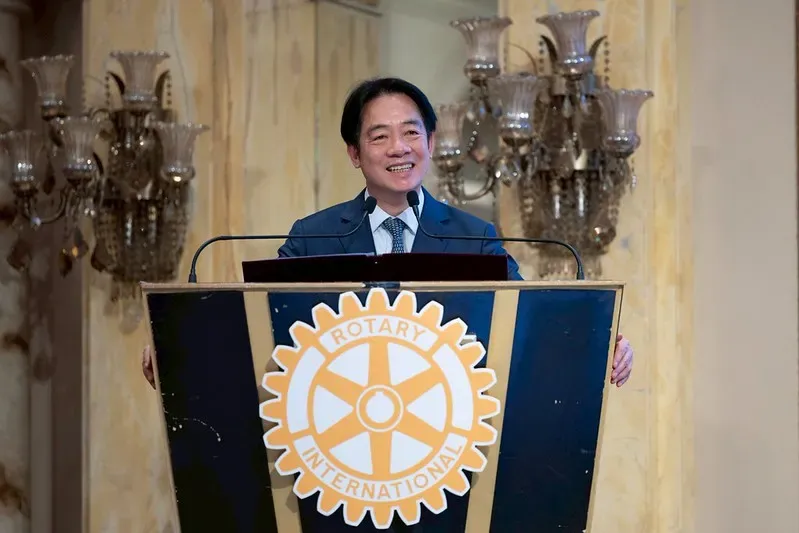
Lai addresses his audience at Rotary International for the first of ten planned addresses on national unity. SOURCE: Office of the President of the ROC.

Speaking to members of Rotary International (國際扶輪社), an international service organization first formed in Taiwan in 1948 and having a strong connection to business leaders and professionals in the country, Lai deployed familiar talking points about Taiwan’s prehistoric independence — from 40,000-year-old mammoth fossils to Austronesian cultural origins — while poking holes in the CCP leadership’s “One China” principle through legal particulars surrounding UN Resolution 2758. The speech was made available through Lai’s Facebook account. Opposition critics immediately denounced the talks as political theater designed to shore up support ahead of the mass slate of recall votes on July 26.
Smoothie Diplomacy

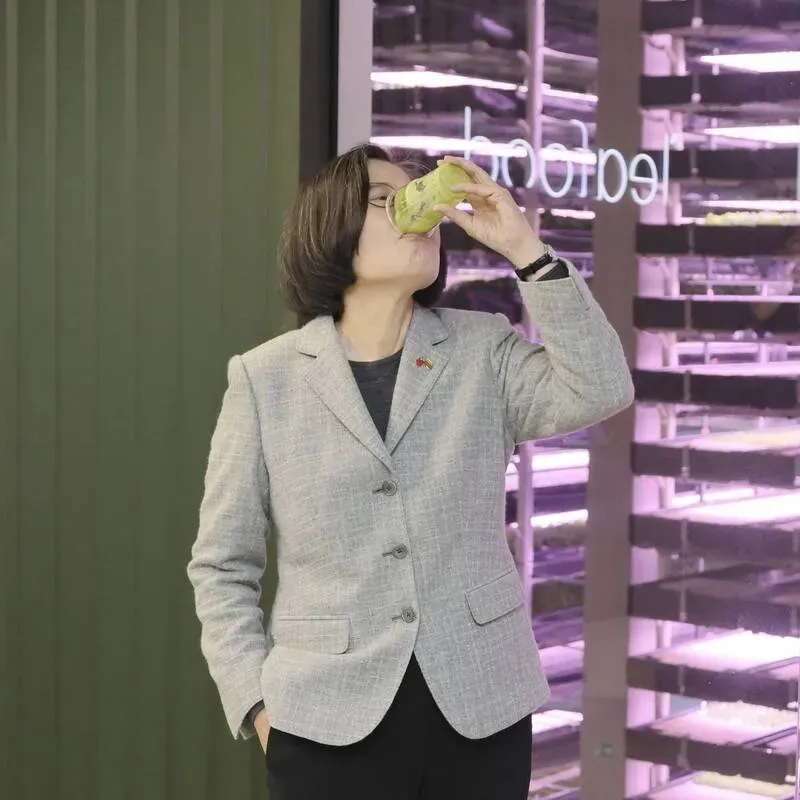
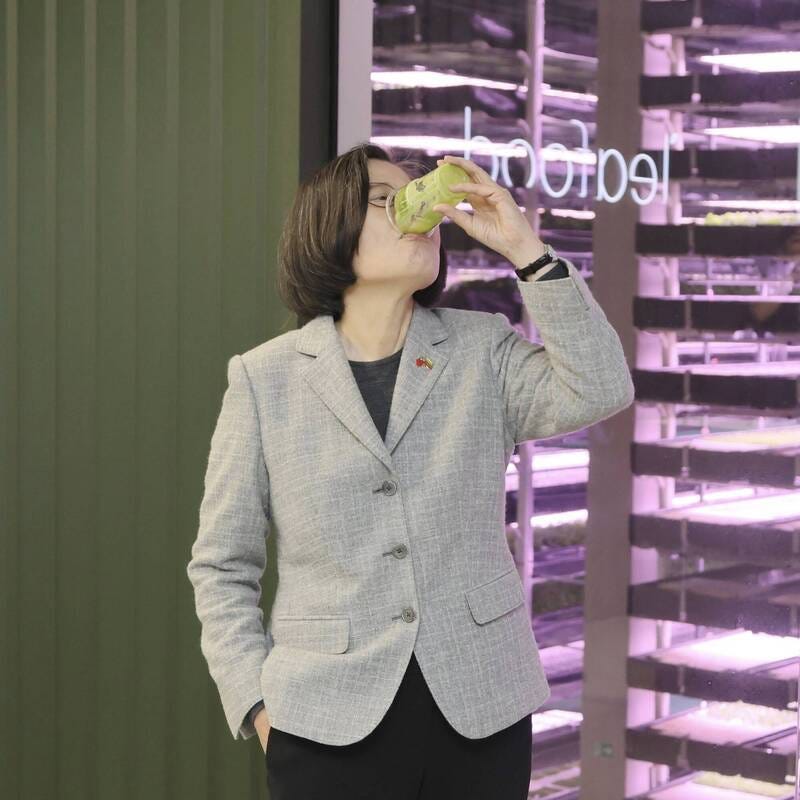
Former Taiwanese president Tsai Ing-wen (蔡英文) created a viral moment during her European tour when cameras captured her confidently downing a green smoothie at Leafood, a Taiwan-Lithuania agricultural venture. The image was widely covered by media outlets from the DPP-leaning Liberty Times (自由時報) to Taiwan’s Central News Agency (中央社). It quickly spread across social platforms, garnering over 60,000 Facebook likes. On her Facebook post, commenters marveled at how she could “make drinking a green latte look like wine tasting” and praised her “natural and unpretentious” demeanor. This adds to what netizens call the “Tsai meme series” (小英迷因哏圖系列), a collection of candid moments that have endeared the former president to younger generations. For more of Tsai’s memorable memes, see this Threads post.

Taiwan’s former president Tsai downs a smoothie in Lithuania.

A Not-so-Simple Question

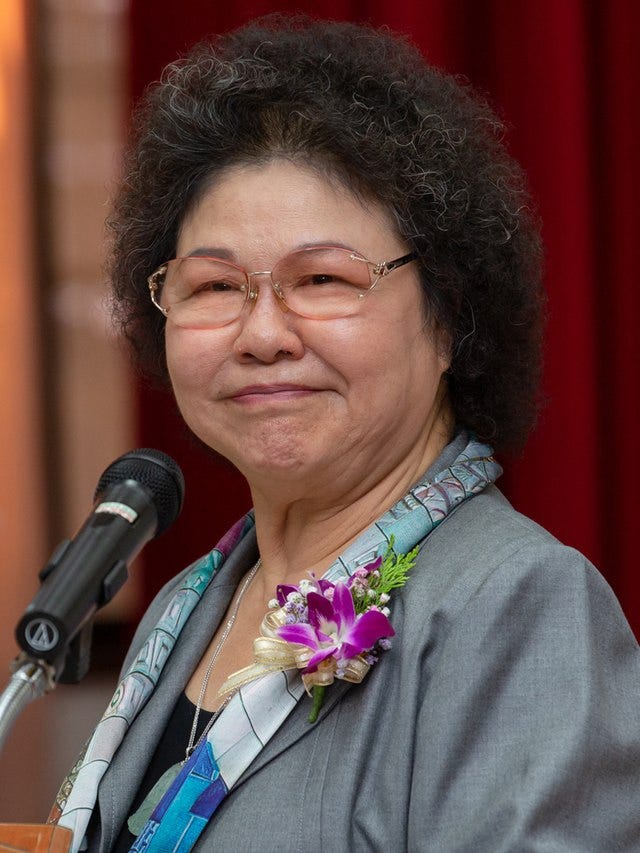
A Taiwanese woman was arrested on April 22 after she posted a simple question to social media inquiring whether one of the country’s most prominent political figures had passed away. The woman — oddly identified in local media reports as simply a “44-year-old unemployed woman” — was charged with violating Taiwan’s Social Order Maintenance Act (社會秩序維護法) by posting the question: “Has Chen Chu died?” on the PTT Bulletin Board System (批踢踢), the largest terminal-based bulletin board system in Taiwan. Chen Chu (陳菊), president of the Control Yuan and chairwoman of the National Human Rights Commission since 2020, is one of Taiwan’s most prominent political figures, and was jailed as a political dissident during the country’s martial law period. The woman facing charges for violating social order claimed that she was responding to an unspecified Threads post about “a celebrity passing away” while remembering news of Chen’s hospitalization. Kaohsiung Medical University Hospital “quickly denied the rumors,” according to a report from Central News Agency, stating Chen’s rehabilitation is “stable and continuously improving.” Police tracked the woman through her IP address within four hours. She later apologized, addressing Chen by a popular nickname, writing: “Flower Mom (花媽), I’m sorry to have caused you such a disturbance.”

Chen Chu pictured in August 2020. SOURCE: Wikimedia Commons.

|

Pulp Politics

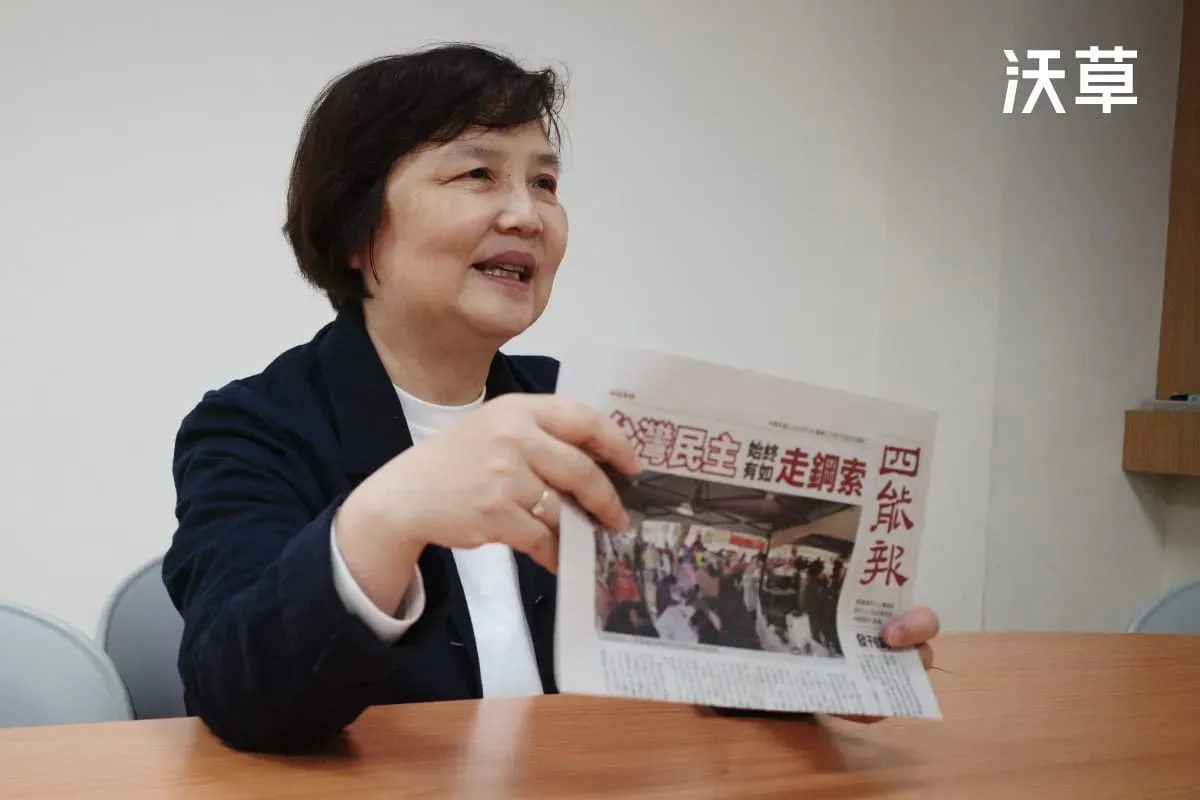
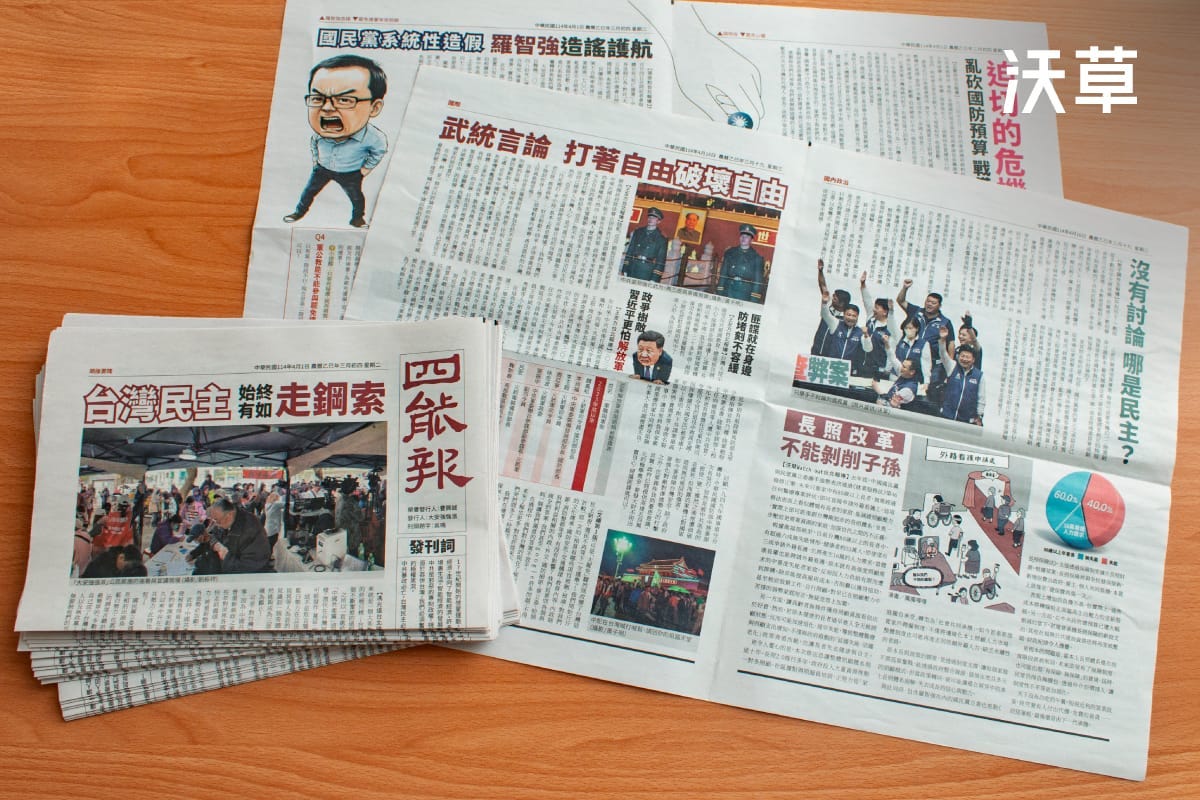
You might call it an ink insurgency. As Taiwan’s so-called Great Recall” (大罷免) movement, a wave of campaigns to remove newly elected legislators through citizen petitions, has taken the country by storm, creative print media initiatives have emerged to reach voters in traditional strongholds for the Kuomintang (國民黨) party, whose members tend to be older and more politically conservative — and much less digital savvy — than their counterparts in the ruling Democratic Progressive Party (DPP). According to a fascinating report by the watchdog organization Watchout (沃草), these print strategies aim to connect with digitally-disconnected constituencies as campaigners face a 60-day window to gather a sufficient number of signatures to push recall actions.

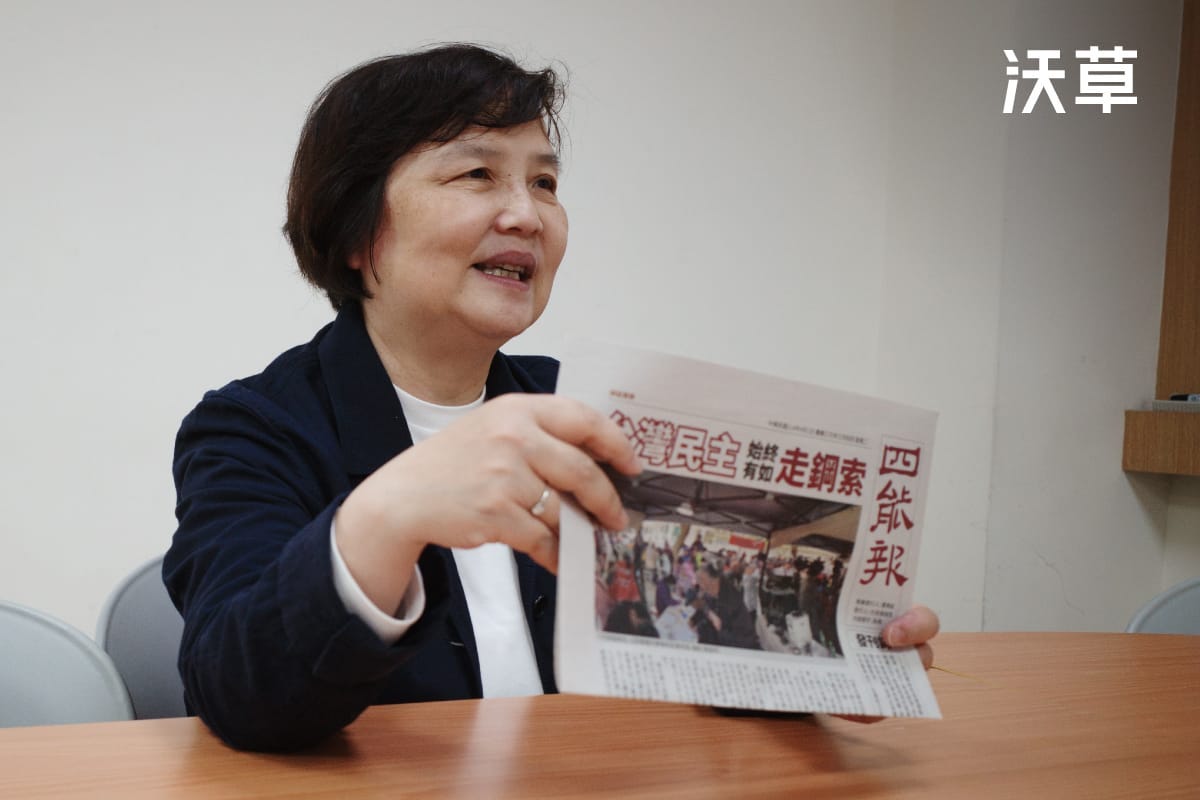
Veteran journalist Gu Bi-Ling (古碧玲) invited several friends from the media and cultural sectors to publish the physical newspaper Four Able News amid the recall push. SOURCE: WatchOut.

Media veterans in Taipei’s Da’an district have launched “Four Able News” (四能報), a biweekly publication promoting the recall of KMT legislator Lo Chih-chiang (羅智強), while activists in Xizhi, an inner city district in eastern New Taipei City, have created “Shrimp News” (蝦報) to campaign against KMT legislator Liao Hsien-hsiang (廖先翔), referencing his “shrimp diplomacy” controversy (He proposed resuming cut-off diplomatic relations with Honduras back in January as shrimp exports to the country from Taiwan dropped sharply). In Hualien, DPP-aligned recall campaigners have placed advertisements in the traditionally pro-KMT Update Daily (更生日報), featuring painter Chen Cheng-po’s (陳澄波) artwork to appeal to local sentiment.

These diverse print campaigns share a common strategy: bypassing digital barriers to reach older, more conservative voters. In north Songshan district, recall groups have even leveraged imagery of former KMT dictator Chiang Kai-shek (蔣介石), the architect of the country’s White Terror, to connect with traditional KMT supporters, demonstrating how the movement is adapting traditional media for modern political activism.

Have you picked up your copy of “Four Able News”?

Scandalous Salute

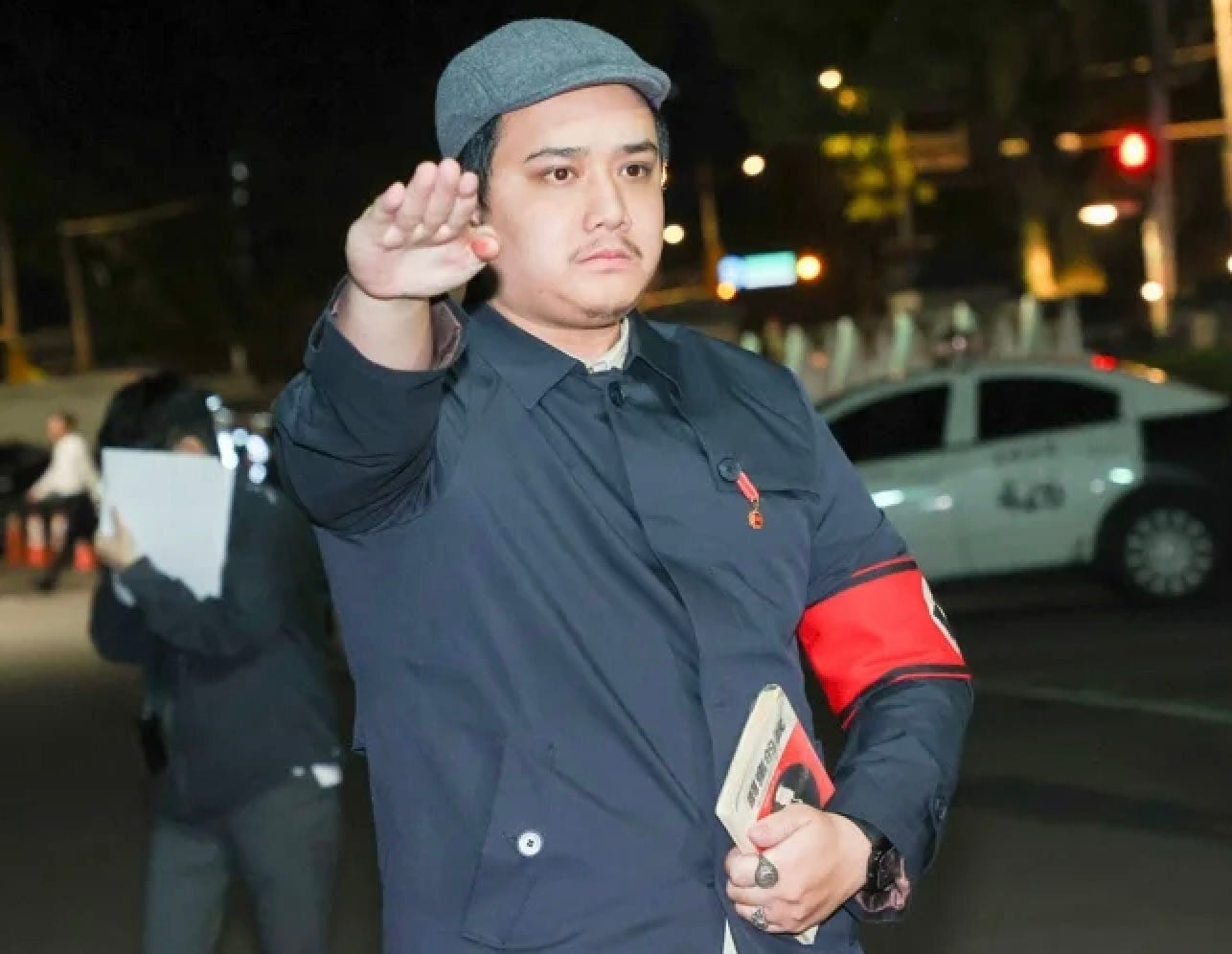
Leading a recall effort against Democratic Progressive Party (民進黨) lawmaker Lee Kun-cheng (李坤城) on Tuesday, Taiwan politician Sung Chien-liang (宋建樑) sparked outrage by donning a Nazi armband to attend court, the United Daily News (UDN) and other outlets reported. The German Institute Taipei (德國在台協會), Germany’s representative office in Taiwan, condemned Song’s “shameless” (無恥) and “deliberate” display of Nazi symbols, calling it a severe affront, according to Taiwan’s state-owned Central News Agency (CNA). Song, reportedly affiliated with the opposition Kuomintang party (國民黨), also performed the Nazi salute while carrying a copy of Hitler’s Mein Kampf. Lee criticized the Kuomintang leadership for distancing itself, calling the incident a “serious international scandal” that could damage Taiwan’s relations with Israel, Germany and European nations.

Taiwan politician Sung Chien-liang arrives for court with a Nazi armband and a copy of Mein Kampf.


A Tattle Page for Taiwan

China’s Taiwan Affairs Office (國務院台灣事務辦公室), a ministerial-level agency focused on pressing China’s territorial claims and often involved in disinformation campaigns targeting Taiwan, launched a new website column on March 26, 2025, encouraging people to report “Taiwan independence” (台獨) activities. Later the same afternoon, Chinese state media reported that the snitch page — essentially an attempt at participatory propaganda — had received 323 reports from the public, including accusations against Liu Shih-fang (劉世芳), Taiwan’s interior minister, and a number of legislators for the country’s Democratic Progressive Party.

According to a report by Taiwan’s United Daily News (UDN), Chinese Academy of Social Sciences researcher Chen Guiqing (陳桂清) warned that “Taiwan independence thugs” would face the mainland’s “powerful anti-independence punch” while criticizing President Lai’s actions as promoting “anti-Chinese sentiment.”