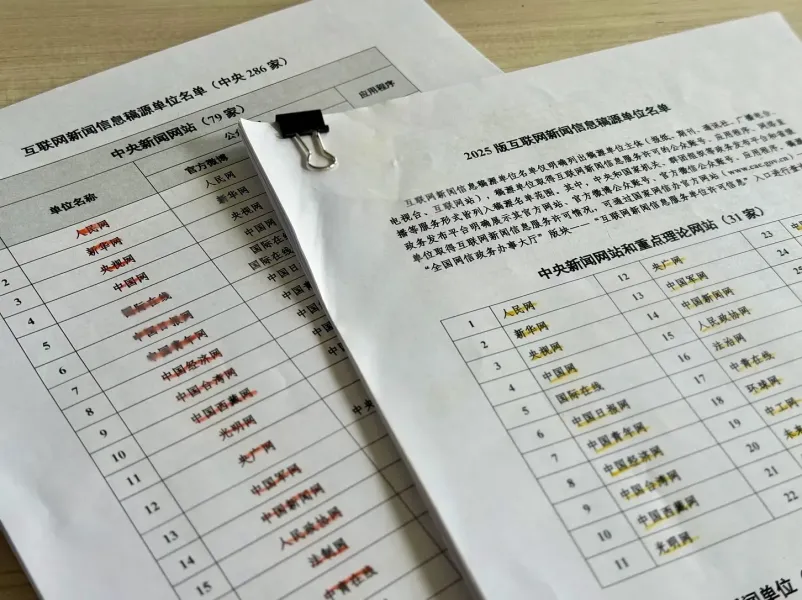
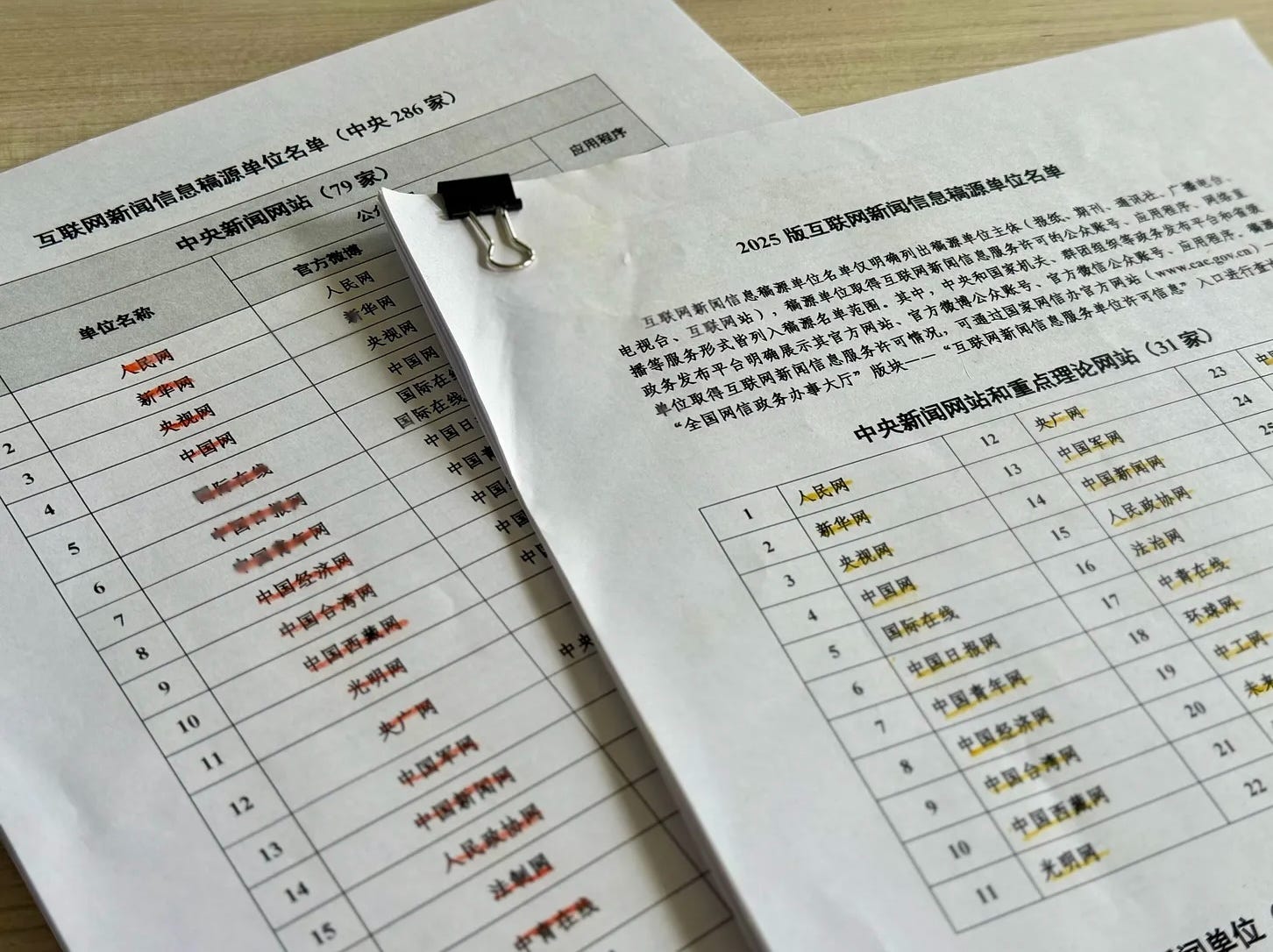
Last month, China’s top internet control body, the Cyberspace Administration of China (CAC) released its latest “whitelist” of approved news sources from which internet platforms are legally permitted to repost news content — a system that has become a cornerstone of information control under Xi Jinping. Journalists over at our Chinese-language sister publication Tian Jian (田間) combed through the list last week to compare it with the 2021 version of the roster. What did they find?
The most noteworthy change was the omission of a more outspoken news outlet, Sanlian Life Weekly (三聯生活周刊), a respected news magazine that had recently published sensitive investigative reports, including coverage of Beijing flooding and a rare story about cross-regional arrests. Both stories were subsequently deleted from Chinese internet platforms.
The scrubbing of Sanlian from the roster echoes the 2021 removal of Caixin Media, another respected outlet that has struggled over the past decade to maintain professional space. The updated 2025 list grew from 1,358 to 1,459 approved sources, with most additions being local government platforms — likely reflecting Beijing’s strategy to strengthen propaganda capabilities at the local level. Guangdong province alone added 59 new government-affiliated outlets.