Archives: Dispatches

All Lingua Sinica Dispatches

China Propaganda Chief Meets Mexican Presidential Press Office in Beijing

On September 19, 2012, Liu Yunshan (劉雲山), then Chinese Communist Party Politburo member and head of the Central Propaganda Department (中央宣傳部部長), met with the director of Mexico’s Presidential Press Office at the Great Hall of the People (人民大會堂) in Beijing. According to the official Chinese government report, Liu stated that China-Mexico relations had maintained “good development momentum” (良好發展勢頭) over 40 years of diplomatic relations and expressed desire to “deepen strategic partnership” (深入發展戰略伙伴關係). The Chinese report stated that Liu called for strengthened news media exchanges, particularly in “new media” (新媒體), to allegedly “deepen political mutual trust” (深化政治互信). The Mexican official reportedly agreed that cooperation serves “common interests” (共同利益) and expressed interest in establishing “regular exchange mechanisms” (經常性的交流機制). The meeting included Wang Chen (王晨), director of the State Council Information Office (國務院新聞辦公室), China’s foreign propaganda agency.

Secretariat of Media and Public Communication

Argentina’s Federal System of Public Media and Content (Sistema Federal de Medios y Contenidos Públicos) was created on December 10, 2015, through Decree 12/2015 under President Mauricio Macri. Initially headed by Hernán Lombardi, the system oversees Argentina’s public media ecosystem, including Télam news agency, public television and radio networks, digital channels, and cultural centers. In 2018, it was downgraded from ministerial status to secretariat level. Following President Javier Milei’s inauguration in December 2023, the secretariat was transferred to the Communication and Press Secretariat of the Presidency through Decree 45/2023. The entity manages platforms including TV Pública, Radio Nacional, and the Centro Cultural Kirchner.

Xinhua President Meets Mexican News Agency Head

Cai Mingzhao (蔡名照), President of Xinhua News Agency, met with Alejandro Ramos Esquivel, Director General of Mexico’s state news agency Notimex, in Beijing on September 22, 2015. During the meeting, Cai stated that despite geographical distance, China and Mexico share “long-standing friendship” (源远流长). Emphasizing media as a tool of bilateral exchange, Cai described news media as bearing “an important mission in promoting friendly exchanges between the two countries” (增进两国之间友好交往的重要使命). Cai stated that Xinhua prioritizes reporting on Mexico and Latin America, and expressed desire to strengthen cooperation with Notimex across various fields, building on what he described as “over 30 years of close collaboration” (30多年密切合作). Ramos said Xinhua’s work in new media left a “deep impression” (留下深刻印象) and stated his agency “wishes to further strengthen cooperation” (愿进一步加强合作) in promoting national images and addressing technological challenges.

Notimex

Notimex, formerly known as Agencia Mexicana de Noticias, was Mexico’s official state news agency until its dissolution in December 2023. Founded on August 20, 1968, to cover the Mexico City Olympics, the agency operated for over five decades under government ownership. The agency underwent reform in June 2006, changing its name and establishing what it described as “genuine editorial independence” through governance by a board with representatives from various state entities. Notimex ceased operations in June 2020 following a strike that began in February of that year. Sanjuana Martínez, appointed in March 2019, was the first woman to serve as Director-General before the Mexican Senate approved the agency’s “definitive closure” in December 2023.

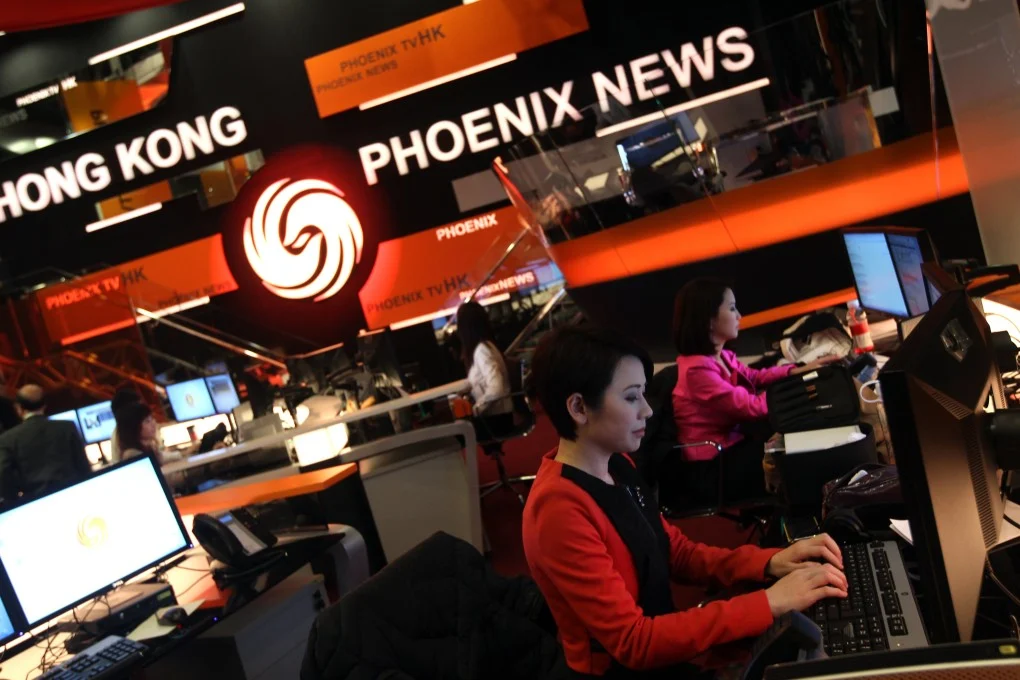
Phoenix Media Investment Holdings Limited

Phoenix Media Investment Holdings Limited is a multinational media corporation headquartered in Hong Kong, with major operations in Beijing and Shenzhen. The company operates six satellite television channels targeting global Chinese audiences. The company was founded on March 31, 1996, by Liu Changle (劉長樂), initially through a joint venture between his Today’s Asia Limited company, Hong Kong Satellite Television, and Huaying International. Liu, who previously served as a journalist and senior manager at China Central Radio before moving overseas in 1988, established Phoenix TV with the mission of “reducing the distance within the global Chinese community”. The company went public on the Hong Kong Stock Exchange in June 2000. Following the 2021 sale of Liu’s controlling stake, the company’s largest shareholder is now Bauhinia Culture Holdings (紫荊文化集團) with 21 percent, a Beijing-backed cultural enterprise directly owned by China’s central government, while Shun Tak Holdings (信德集團) owns 16.93 percent.

China-ASEAN AI Development and Governance Cooperation Seminar Held in Phnom Penh

The China-ASEAN Artificial Intelligence Development and Governance Cooperation Seminar (中國-東盟人工智能發展與治理合作研討會) was held on December 9, 2024, in Phnom Penh, jointly organized by Cambodia’s Economic, Social and Cultural Council and the China Institute of International Studies (中國國際問題研究院). Deputy Prime Minister Vongsey Vissoth (旺西偉索) praised China’s AI achievements and called for strengthened policy coordination, research collaboration, and talent development to promote more inclusive and fair global AI governance. He highlighted that Cambodia is implementing the first phase of its “Pentagonal Strategy,” with digital economy and social development as key focus areas. The Cambodian government is advancing technological innovation, including AI, through its Digital Economy and Society Policy Framework (2021-2035), which aims to achieve five major goals: digital infrastructure development, enhanced digital trust, digital citizenship cultivation, e-government implementation, and digital business promotion.

China and Nigeria Advance Media Cooperation Agreement

On March 6, 2025, Chinese Ambassador to Nigeria Yu Dunhai (于敦海) met with Nigeria’s Information and National Orientation Minister Mohammed Idris in Abuja. Ambassador Yu stated that during the China-Africa Cooperation Forum (FOCAC) Beijing Summit in 2024, President Xi Jinping and Nigerian President Bola Tinubu jointly announced the elevation of China-Nigeria relations to a comprehensive strategic partnership. Yu emphasized China’s commitment to implementing agreements from the summit, particularly the television, broadcasting, and news media cooperation memorandum signed during the September 2024 meetings. Minister Idris, who serves as publisher of Blueprint newspaper and chairman of WE FM, expressed Nigeria’s commitment to strengthening media cooperation with China and implementing the bilateral agreements signed by both presidents.

Chongqing Jiazuo Film and Culture Media

Established in Chongqing, Jiazuo Film and Television Culture Media Co., Ltd., specializes in film production, distribution, digital cultural creative activities, and broadcast media services. The company is headquartered in Building 7 of Jingyu International Cultural and Creative Park in Jiulongpo District. With a registered capital of 5 million yuan, the firm is majority-owned by CEO Zuo Yue (左越), with 80 percent, and Yin Boyu (尹博宇) as a minority shareholder with 20 percent. While there is no evidence of direct state involvement in Jiazuo Film and Television Culture Media, the company has been involved in international content distribution with explicit governmental involvement. The company has participated in the “China Time Slot” initiative in Peru and Colombia, facilitating the distribution of Chinese visual content abroad. The National Radio and Television Administration (NRTA) pushed these initiatives “under the auspices of the National Radio and Television Administration and the Chongqing Municipal People’s Government.” The NRTA, a ministry-level agency controlled by the Central Propaganda Department of the Chinese Communist Party, has promoted international cooperation and exchange in radio, television, and online audio-visual content. In November 2024, Jiazuo signed a trilateral cooperation agreement with Peru’s Willax TV and Classic Media China International Ltd. to expand Chongqing’s film and television industry in the Latin American market.

Cyberspace Administration of China

The Cyberspace Administration of China, established in May 2011 as the State Internet Information Office, functions as China’s powerful internet regulator and censor. Now serving as the executive arm of the Central Cyberspace Affairs Commission (chaired by Xi Jinping), the CAC implements far-reaching censorship, regulates internet content, and oversees data security policies. Led by Zhuang Rongwen (庄榮文), who concurrently serves as a deputy head of the Chinese Communist Party’s Central Propaganda Department (officially translated as “Publicity Department”), the agency exercises extensive powers through the 2016 Cybersecurity Law and 2021 Data Security Law. The CAC’s activities include censoring “rumors,” controlling cross-border data transfers, requiring pre-review of online comments, ensuring AI systems uphold Communist Party ideology, and maintaining majority ownership in the China Internet Investment Fund (中國互聯網投資基金), which holds stakes in major tech companies like ByteDance and Weibo through “golden shares.”