Archives: Dispatches

All Lingua Sinica Dispatches

Paris Olympic Organizing Committee

On October 23, 2023, China Media Group (中央廣播電視總台), or CMG, and the Paris 2024 Olympic Organizing Committee signed a cooperation memorandum in Paris regarding broadcasting the Olympics and related media promotion programs. The agreement outlined CMG’s role as a host broadcaster, deploying over 2,000 personnel to produce international broadcast signals for gymnastics, table tennis, badminton, and sport climbing using “5G+4K/8K+AI” technology. CMG President Shen Haixiong (慎海雄), and Paris 2024 President Tony Estanguet signed the memorandum. The agreement also covered promotional programming and “telling the Olympic stories” of Beijing and Paris. Estanguet praised Beijing’s hosting of the 2022 Winter Olympics, without mentioning that the event faced diplomatic boycotts over human rights concerns in Xinjiang. Estanguet said France had much to learn from Beijing and that the cooperation would bring the countries closer “in the spirit of the Olympics.”

Economic Social and Cultural Council of Cambodia

Cambodia’s Economic, Social and Cultural Council (ECOSOCC) is a government body established in 2009, attached to the Office of the Council of Ministers. Originally known as the “Economic, Social and Cultural Observatory” (OBSESC) from 1996, it was transformed into its current form by Royal Decree in February 2009. The Council monitors economic, social, and cultural developments, researches challenges, reviews draft legislation related to these sectors, and provides recommendations to the Royal Government. The General Secretariat, established by Sub-Decree No. 44 in March 2009, handles daily operations and is headed by a Secretary-General with the rank of Secretary of State or Under Secretary of State.

China-Africa Friendly Economic and Trade Development Foundation

The China-Africa Friendly Economic and Trade Development Foundation (中非友善經貿發展基金會) was established in September 2014 in Beijing as China’s first foundation specifically focused on economic and trade development between China and African countries. Operating under the supervision of the China-Africa Friendship Leadership Group of the Chinese People’s Political Consultative Conference (全國政協中非友善領導小組), the foundation describes itself as a non-governmental organization with the stated mission to “help small and medium enterprises go abroad, strengthen China-Africa economic and trade cooperation, fund China-Africa science and technology trade projects, and encourage export earnings.” Since 2015, the organization claims to have established relationships with embassies from all 53 African countries and over 60 Belt and Road Initiative countries in China. The foundation offers services including fundraising for small enterprises, international exchange facilitation, targeted funding for China-Africa technology projects, and legal training programs, positioning itself as a bridge between Chinese enterprises and African markets within China’s broader Belt and Road Initiative (BRI) in Africa.

United Daily News

Lianhe Ribao (聯合日報) is a Malaysian Chinese-language newspaper that was formed on January 1, 2004, through the merger of Miri Daily News (美里日報), founded in 1957, and Zhong Hua Ribao (中華日報), established in 1945. The newspaper primarily serves East Malaysia, with circulation concentrated in Sarawak and extending to neighboring Brunei Darussalam. According to industry data, the newspaper’s circulation increased from 40,947 copies in 2004 to 50,729 copies by 2017, making it one of the fastest-growing Chinese newspapers in East Malaysia. Lianhe Ribao focuses particularly on local news coverage from western Sarawak regions including Kuching, Samarahan, and Sri Aman, distinguishing itself through community-based reporting that serves the Chinese-speaking populations in these areas.

Chinese Embassy in Iceland

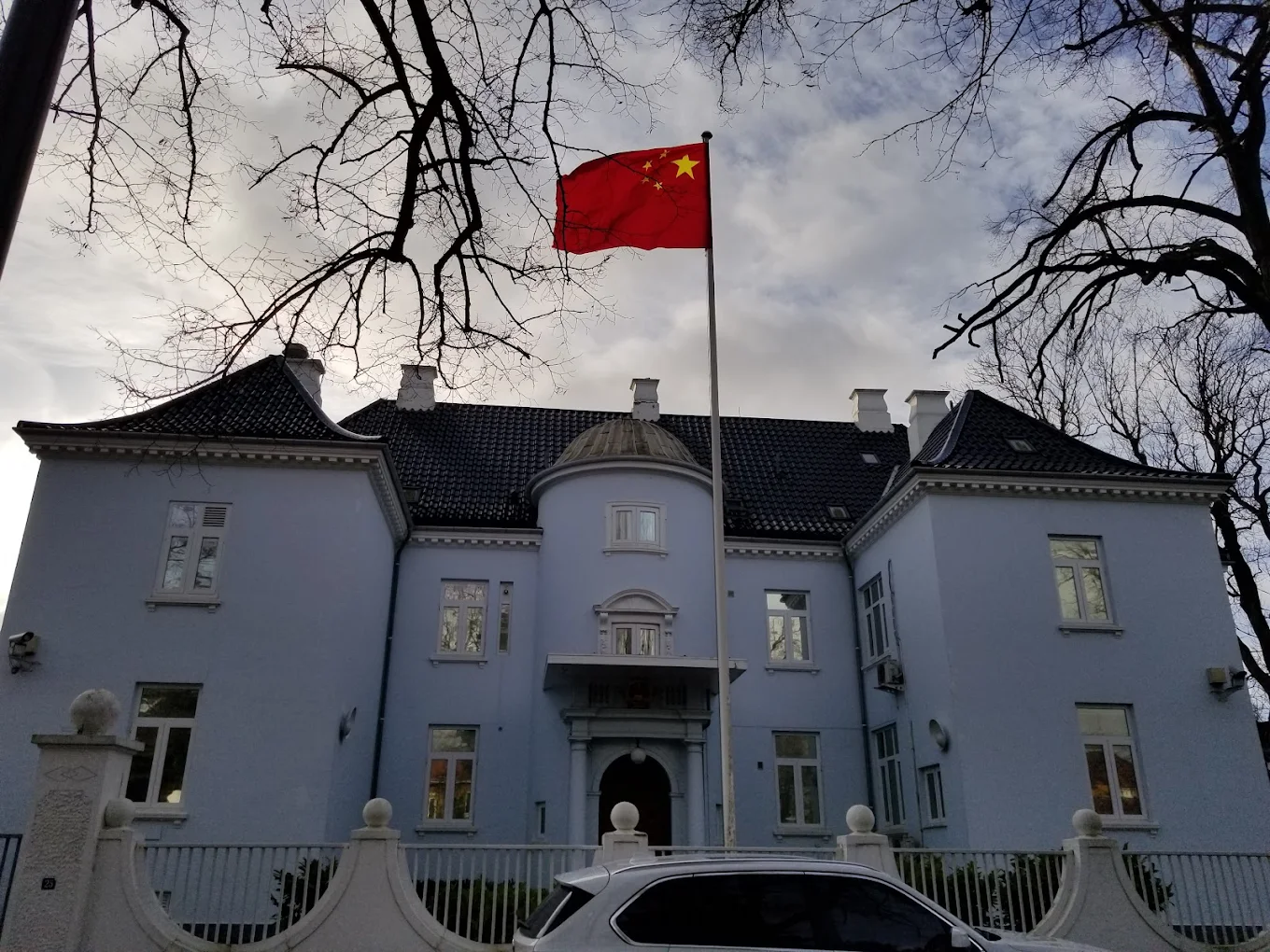
The Chinese Embassy in Iceland, located in Reykjavik, manages diplomatic relations between China and Iceland. Iceland established diplomatic ties with the People’s Republic of China on December 8, 1971, becoming one of the early Nordic countries to recognize the PRC. The embassy’s functions include promoting bilateral political dialogue, economic and trade cooperation, cultural exchanges, and consular services. In recent years, China-Iceland relations have maintained cooperation in areas including Arctic affairs, clean energy, and fisheries. The embassy disseminates diplomatic information through its official website and social media platforms, advancing mutually beneficial cooperation under the Belt and Road Initiative framework. 

Guangdong Provincial People’s Government

The Guangdong Provincial People’s Government (廣東省人民政府) serves as the provincial administrative authority for Guangdong Province in the People’s Republic of China. Established on November 6, 1949, the government operates as the executive organ of the Guangdong Provincial People’s Congress, implementing policies from Beijing while managing local affairs across the nation’s most economically dynamic province. Based in Guangzhou, the provincial government oversees constituent departments and institutions that manage everything from economic development to social services. The government exercises broad administrative powers including economic planning, urban development, education, healthcare, and environmental protection while serving as the key interface between central government directives and local implementation in China’s manufacturing and export hub.

Chinese Embassy in Spain

The Embassy of the People’s Republic of China in Spain is China’s chief diplomatic mission in the country. The mission was established in March 1973, following the normalization of diplomatic relations between the People’s Republic of China and Spain. The embassy serves as the primary channel for political, economic, and cultural relations between China and Spain, and also represents China’s interests in Andorra. The embassy faced international scrutiny in September 2022 when human rights organization Safeguard Defenders alleged the existence of nine secret Chinese police stations operating in Spain, the second-highest number in any European country after Italy, according to the organization. The stations, ostensibly providing administrative services to Chinese nationals, were allegedly used to coerce Chinese dissidents and criminal suspects into returning to China through intimidation tactics. 

Danish Ministry of Culture

The Danish Ministry of Culture is a government ministry responsible for overseeing Denmark’s cultural, sports, and media sectors. Established in 1961 with Julius Bomholt as its first minister, the ministry plays a crucial role in shaping Danish cultural policy. Its historic headquarters is located at Gammel Strand on Nybrogade in Copenhagen, in a building dating back to 1729 that was expanded in 1765 with a canal-facing wing designed by architect Philip de Lange. Through its various departments and agencies, including the Danish Film Institute, the ministry works to preserve and promote Denmark’s rich cultural heritage while supporting new artistic endeavors.

China International Communication Group

China International Communications Group, also known as China International Publishing Group (中國國際出版集團), is a state-controlled media organization established in 1949 and owned by the Central Propaganda Department of the Chinese Communist Party. Headquartered in Beijing, it operates as a foreign-language publishing and communications enterprise claiming to “introduce China to foreign countries.” The organization reportedly runs 20 overseas branches in countries including the United States, Britain, Germany, and Mexico, employing approximately 3,000 staff members, including about 100 foreign workers. CICG publishes over 3,000 book titles and around 50 journals annually in more than 10 languages, including notable periodicals like China Today (今日中國) and Beijing Review. As of September 2024, independent media researchers classified the organization as “State Controlled Media,” challenging its claims of editorial independence.