The National Television and Radio Company of Uzbekistan (Oʻzbekiston Milliy teleradiokompaniyasi), known by the acronym MTRK, is Uzbekistan’s state broadcaster, headquartered in Tashkent. Its current organizational structure dates to a presidential decree issued November 8, 2005, and a subsequent Cabinet of Ministers resolution the following month, both published on Uzbekistan’s official legal-documents portal, directing a restructuring of MTRK’s staffing and production operations to modernize its broadcasting output. The company operates multiple national television channels, including the flagship Oʻzbekiston channel, alongside a national radio service, broadcasting primarily in Uzbek and Russian. MTRK is wholly state-owned.
Pakistan Television Corporation (PTV) is Pakistan’s state television broadcaster, headquartered in Islamabad and operated under the country’s Ministry of Information and Broadcasting. The broadcaster traces its founding to a pilot television station established in Lahore, which began black-and-white transmission on November 26, 1964, according to the Ministry’s own account. Television centers followed in Karachi and Islamabad in 1967, and in Peshawar and Quetta in 1974, later expanding to Multan and Azad Jammu and Kashmir. The broadcaster describes its mandate as providing public-service broadcasting both within and outside Pakistan, producing programming in Urdu and regional languages including Sindhi, Punjabi, Pashto, and Balochi. PTV’s terrestrial coverage reaches about 90 percent of Pakistan’s population, with its channels also distributed by satellite across South Asia, East Asia, the Middle East, Africa, the United Kingdom, Europe, and North America, per the Ministry.
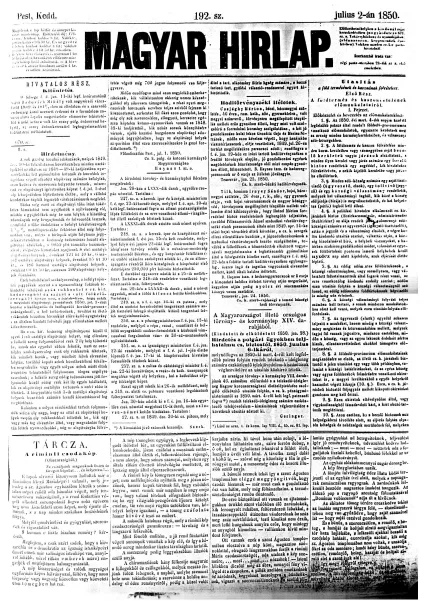
Magyar Hírlap is a Hungarian daily newspaper founded in 1968 as a state publication based in Budapest. Privatized after Hungary’s 1989 transition from communist rule, it became known for a liberal editorial stance until Swiss publisher Ringier acquired it in 2000. Hungary’s Economic Competition Authority (GVH) later ruled that Ringier held an excessive share of the newspaper market, prompting a divestiture. Entrepreneur Gábor Széles purchased and relaunched Magyar Hírlap in 2005, after which it adopted a “pro-government, anti-globalist, and patriotic” editorial line supporting the ruling Fidesz party, according to the media-monitoring database Eurotopics. In 2023, independent outlet Telex reported that the paper’s foreign-policy desk cited Orosz Hírek, an anonymous pro-Kremlin outlet republishing banned Russian state media, more than 1,500 times that year. Magyar Hírlap has published online only since 2022.
Hungary Today is an English-language news portal based in Budapest, billing itself as the leading English-language news source for Hungary. The portal, active since 2011, covers politics, economy, culture, and sport. It is published by the Friends of Hungary Foundation (Magyarország Barátai Alapítvány), a Hungarian NGO founded in 2011 to strengthen ties between Hungary and Hungarians living abroad. The foundation relies on private donations, including from state-linked firms such as gas and oil company MOL Group. MOL Group was long seen as closely associated with Orbán and his administration. In 2020, the Hungarian state transferred a 10 percent stake in MOL to Mathias Corvinus Collegium (MCC), a think tank run by Orbán’s then political director, Balázs Orbán. While its “About Us” page says the newsroom strives to “provide a complete, unbiased picture of Hungary,” the Media and Journalism Research Center (MJRC), a research institute that studies media systems worldwide, found that Prime Minister Viktor Orbán has regularly appeared at its annual conferences, and journalists and analysts it interviewed in 2023–2024 said the outlets increasingly function as vehicles for government narratives.
The Kyrgyz National Broadcasting Corporation (Улуттук Телерадиоберүү Корпорациясы), known by its Kyrgyz-language acronym UTRK and formerly branded as KTRK, is Kyrgyzstan’s state broadcasting corporation, based in Bishkek. According to UTRK’s own account, its history traces to December 8, 1958, when Kyrgyzstan’s first television broadcast aired, an event now marked annually as the country’s professional Radio and Television Workers’ Day; the organization’s radio operations date back further, to 1931. The corporation operates Kyrgyzstan’s main television channels, including the National First Channel, Ala-Too 24 news channel, and several radio stations, along with the Republican Radio-Television Center and the Kyrgyztelefilm studio. In 2022, Kyrgyzstan’s parliament converted the broadcaster from “public” to “national” status, abolishing its independent oversight board and giving the president the power to appoint and dismiss its general director directly. UTRK has served as a domestic broadcast partner for Chinese state-linked media content in Kyrgyzstan, including a joint programming section with privately owned cable operator Dolon TV that carries “China TV Theater,” a strand created by China’s National Radio and Television Administration to place PRC state-produced programming abroad.
Rossiya Segodnya (今日俄羅斯國際通訊社) is a Russian state media group established after Vladimir Putin signed a presidential decree on December 9, 2013, ordering the liquidation of the state news agency RIA Novosti and the state broadcaster Voice of Russia and folding their staff and assets into the new entity. RIA Novosti itself traced its lineage to the Soviet Information Bureau, founded in 1941, though Rossiya Segodnya was created as a distinct entity by the 2013 decree, not a continuation of it. Putin’s chief of staff said the restructuring was meant to improve cost efficiency in state media, while RIA Novosti’s own reporting at the time suggested it reflected tightening Kremlin control over the media sector. The group’s outlets include Sputnik, its international multimedia brand publishing in 32 languages and broadcasting in 19 countries; RIA Novosti, which continues to operate as its Russian-language domestic wire service; Prime, a business and financial news wire; and Arctic.ru, a bilingual Russian-English outlet covering Arctic infrastructure, resource development, and indigenous culture that reports roughly 60 percent of its readership from outside Russia.
GBTimes Oy (環球時代傳媒有限公司) is a Tampere-based Finnish media company producing China-related radio, print, and online content for European audiences. According to its own About Us page, the outlet was founded as Radio86 in 2004 and has “gradually worked to become the web’s most extensive China-related information base,” publishing news, travel, politics, food, history, and entertainment content in 11 languages, including English, Finnish, Swedish, and Chinese. GBTimes was formally registered as a Finnish company in 2007. In 2015, independent researcher Jichang Lulu told Reuters in 2015 that the network’s aim was “selling China’s story to the world” while “portray[ing] the content as coming from an independent party.” GBTiimes Oy CEO Zhao Yinong (趙亦農) told Reuters that CRI paid his firm “several million euros” annually, more than half its revenue, to produce local-language programming. When Reuters asked why CRI was working through private companies abroad, he defended the practice, saying there was no “no difference” between his operation and the US government-funded Voice of America (VOA). According to a separate Reuters report, a 60 percent stake in the Finnish company was held by a subsidiary of state broadcaster China Radio International (中國國際廣播電台). GBTimes Oy was part of a broader global network of 33 CRI-linked radio stations across 14 countries, “from Finland to Nepal to Australia, and from Philadelphia to San Francisco,” including a counterpart in Australia run by Melbourne-based media proprietor Tommy Jiang (姜兆慶) through Global CAMG Media. Four Corners, an Australian Broadcasting Corporation program, reported that CAMG’s radio stations functioned as an overseas outlet for Chinese state messaging and that Jiang was a major donor to Australia’s two main political parties.
Televisão de Moçambique (Television of Mozambique), or TVM, is Mozambique’s state-funded public television broadcaster, launched in 1981. TVM is owned and funded by the Mozambican government, which directly appoints its leadership and covers over 75 percent of the television budget through state subsidies. It broadcasts 24 hours a day, covering news, children’s programming, entertainment, cultural content, soap operas, and drama series.
Radio Television of Serbia , headquartered at Takovska 10 in Belgrade, is Serbia’s state-owned public broadcaster. The organization traces its origins to Radio Belgrade-Rakovica, which began broadcasting on October 1, 1924, followed by Radio Belgrade’s regular programming launch on March 24, 1929. Radio Television Belgrade (RTB) was established on February 13, 1958, following the Executive Council of the Socialist Republic of Serbia’s decision, with television broadcasting commencing on August 23, 1958. The current institution emerged in 1992 when RTB merged with regional networks Radio-Television Novi Sad and Radio-Television Priština to form the national Radio Television Serbia. RTS comprises four organizational units: radio, television, music production, and record label (PGP-RTS). The broadcaster is financed through monthly subscription fees (46% of revenues), state subsidies (28%), and advertising revenue (22%), and is a member of the European Broadcasting Union.