Tag: CAC

Whitelist Wipeout

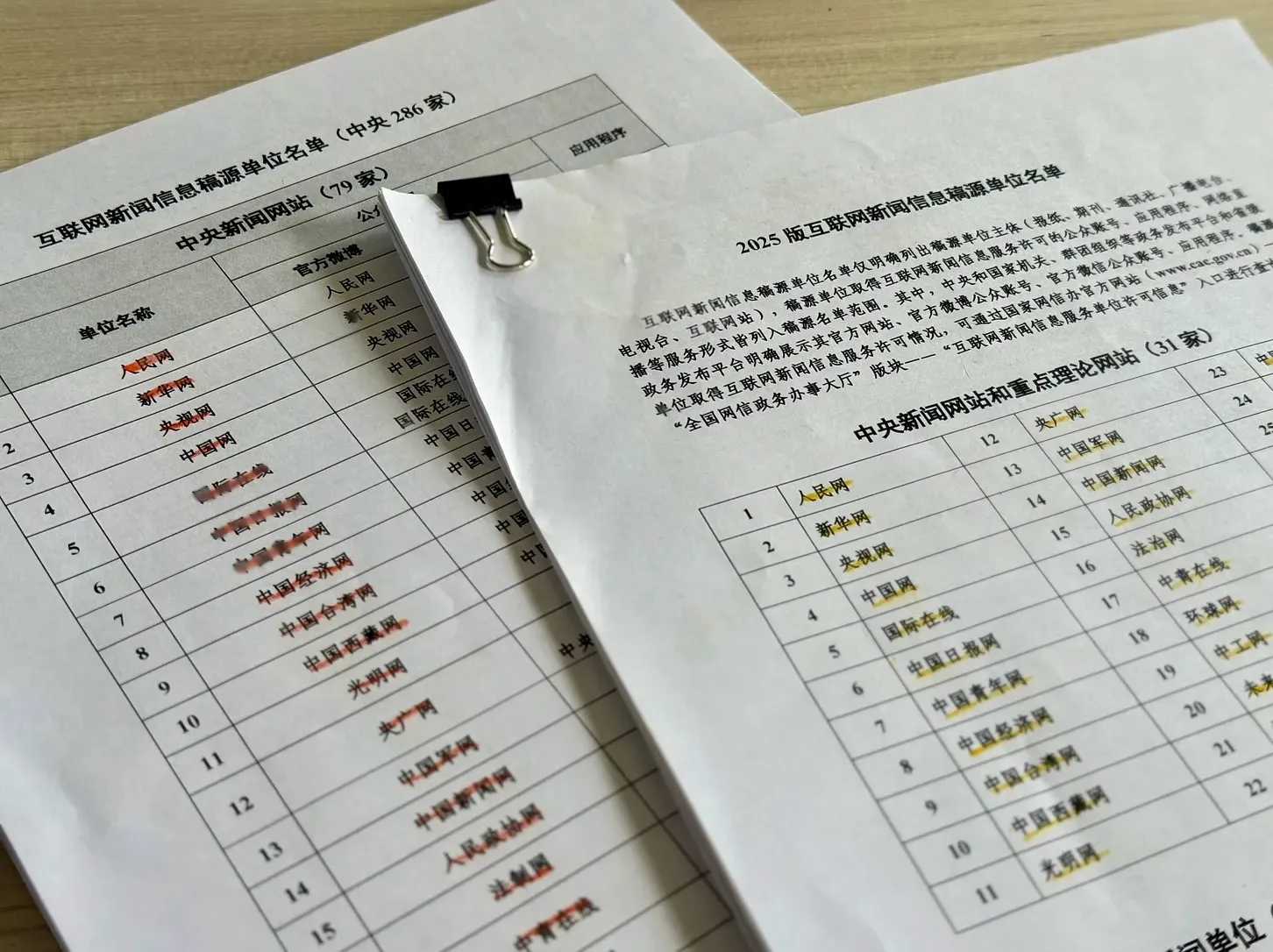
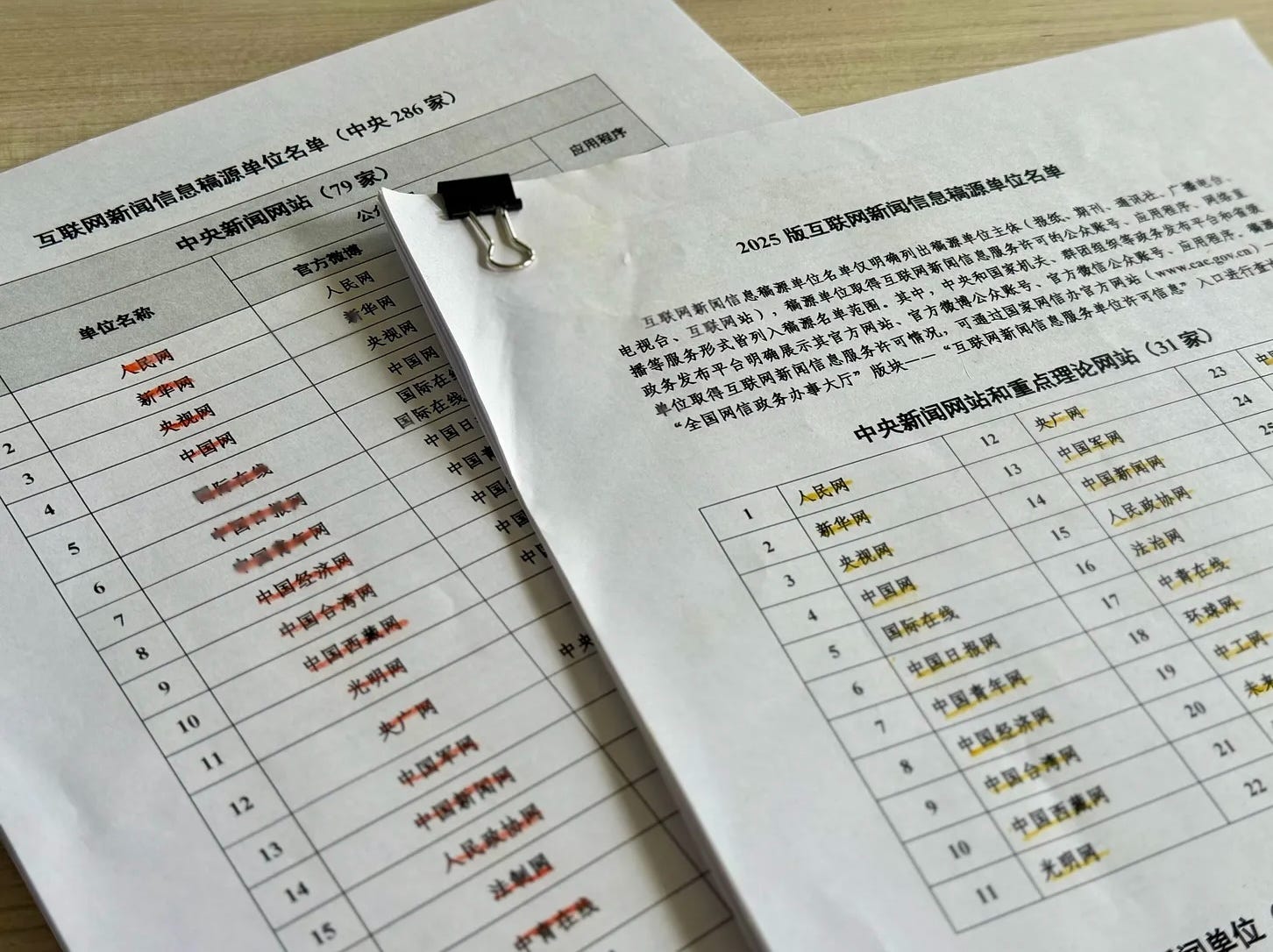
Last month, China’s top internet control body, the Cyberspace Administration of China (CAC) released its latest “whitelist” of approved news sources from which internet platforms are legally permitted to repost news content — a system that has become a cornerstone of information control under Xi Jinping. Journalists over at our Chinese-language sister publication Tian Jian (田間) combed through the list last week to compare it with the 2021 version of the roster. What did they find?
The most noteworthy change was the omission of a more outspoken news outlet, Sanlian Life Weekly (三聯生活周刊), a respected news magazine that had recently published sensitive investigative reports, including coverage of Beijing flooding and a rare story about cross-regional arrests. Both stories were subsequently deleted from Chinese internet platforms.

The scrubbing of Sanlian from the roster echoes the 2021 removal of Caixin Media, another respected outlet that has struggled over the past decade to maintain professional space. The updated 2025 list grew from 1,358 to 1,459 approved sources, with most additions being local government platforms — likely reflecting Beijing’s strategy to strengthen propaganda capabilities at the local level. Guangdong province alone added 59 new government-affiliated outlets.

Laying Down the Law

The Cyberspace Administration of China (CAC) has published its first comprehensive annual report on “internet rule of law development” (网络法治发展), signaling expanded digital control mechanisms for 2025 under the umbrella of what should be more accurately termed “rule by law.” The 278-page document references 2025 as the final year of China’s 14th Five-Year Plan and promotes three separate legal frameworks for building “rule of law” (法治) in cyberspace — indicating the department may push harder to meet these converging deadlines.

“Explore uncharted territories,” reads the motto at DeepSeek. Authorities are making sure those territories are known and controlled.

The CAC explicitly cites “increasing diversity of opinions and groups” online — diversity in this case being a concern to be managed by a control-obsessed leadership — as justification for expanding operations. The report also acknowledges that new developments in artificial intelligence (AI) like the rise and expanding scope of DeepSeek’s popular model require careful management to balance “reform and rule of law, development and security.”

The CAC report focuses on the governance of AI, the body noting that domestic AI models have achieved breakthrough speeds — fondly referred to as “China speeds” (中国速度) — that have “swept the entire network” (席卷全网) and attracted global attention. In the report, officials describe a new phase of digitization driven by AI that transforms “production tools” (生产工具) and “production conditions” (生产条件), requiring updated regulatory frameworks. The administration plans to strengthen oversight of AI-generated content, algorithmic recommendations, and automated decision-making systems while promoting what it calls “beneficial” technological development.

Beyond domestic control, the CAC emphasizes China’s ambition to shape international cyberspace governance rules. The report calls for more assertive participation in global internet governance forums and bilateral negotiations on data flows, emerging technologies, and telecommunications services. Officials plan to leverage platforms like the World Internet Conference (WIC), held each year in Zhejiang, and China-Africa internet cooperation forums like the 2024 China-Africa Internet Development and Cooperation Forum to promote Chinese governance models internationally, while deepening enforcement cooperation with other nations on cross-border cybercrime and digital security issues.