Tag: China

Airwave Infiltration

Chinese propaganda broadcasts from Fujian People’s Broadcasting Station (福建人民廣播電台) — a station under the state-run Fujian Radio Film and TV Group — have infiltrated Taiwan’s airwaves with unprecedented clarity, according to recent reports in the Liberty Times (自由時報). PRC programming has managed to reach even remote mountain areas, including the 2,000-meter-high Daxueshan Forest Recreation Area (大雪山森林遊樂區). The FM 96.7 frequency, normally reserved for Taiwan’s Uni Radio (環宇廣播), which reaches audiences in the Taoyuan, Hsinchu and Miaoli areas, now carries Beijing-directed content throughout the eastern districts of Taichung, the country’s second-largest city.

Due to distance, it’s generally difficult to receive a clear signal from Uni Radio in the Taichung area, and frequencies without broadcasts from a major station can be considered open channels that smaller local stations can occupy to air their programming. Lawmakers in Taiwan have demanded a swift investigation into possible domestic collaboration with actors from China, as well as enhanced countermeasures against what officials describe as an escalating cognitive warfare campaign targeting Taiwan’s airwaves.

More information on China’s infiltration of Taiwan radio frequencies can be found in this April 2023 report from the Mainland Affairs Council (MAC).

Sentence in Sitong Bridge Case

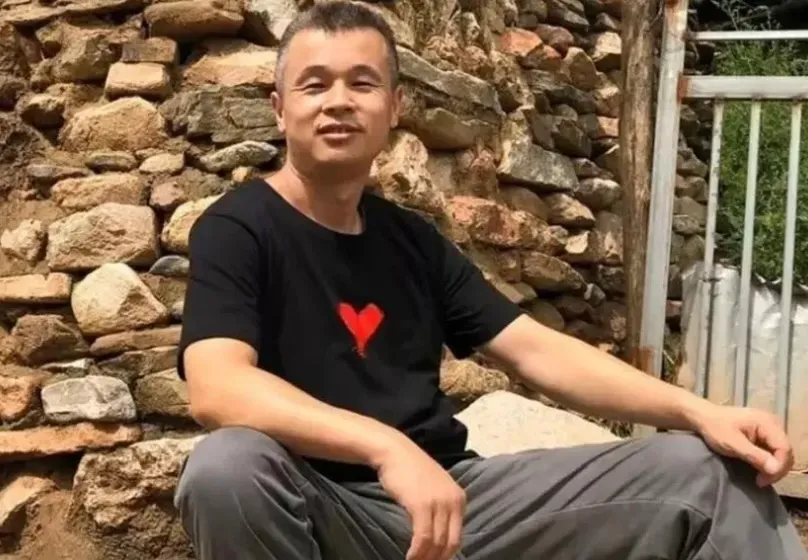
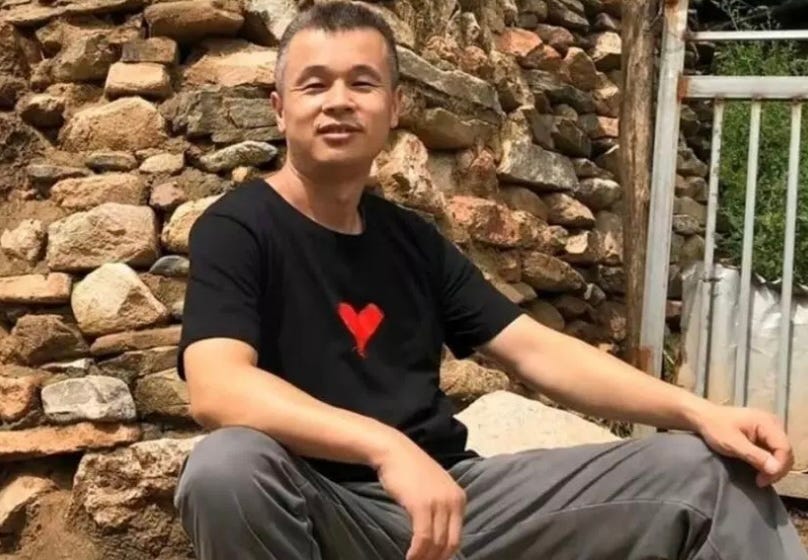
Peng Lifa (彭立發), the protester dubbed “New Tank Man” (新坦克人) who hung anti-Xi Jinping banners on Beijing’s Sitong Bridge in October 2022, has been sentenced to nine years in prison on charges including “picking quarrels and provoking trouble” and arson, according to reports from The Chaser News citing the protest-monitoring platform Yesterday. The 51-year-old activist, who disappeared following his arrest, was reportedly transferred to prison two months ago to serve his sentence. Peng’s bold protest, which demanded freedom from pandemic lockdowns as well as the removal of Xi Jinping from office, came ahead of the “White Paper Movement” protests that erupted in China the following month.

Peng Lifa (彭立發). SOURCE: Internet.

Is Xi’s Grip Holding?

Speculation about Xi Jinping’s waning influence intensified late last month following news of his planned absence from this week’s BRICS summit in Rio, on top of reports suggesting his presence in China’s state-run media has declined. Willy Wo-Lap Lam at the Jamestown Foundation’s China Brief noted that “citations of Xi’s name have become thinner and thinner in authoritative official media,” raising questions about potential leadership changes as China approaches its next Party congress.

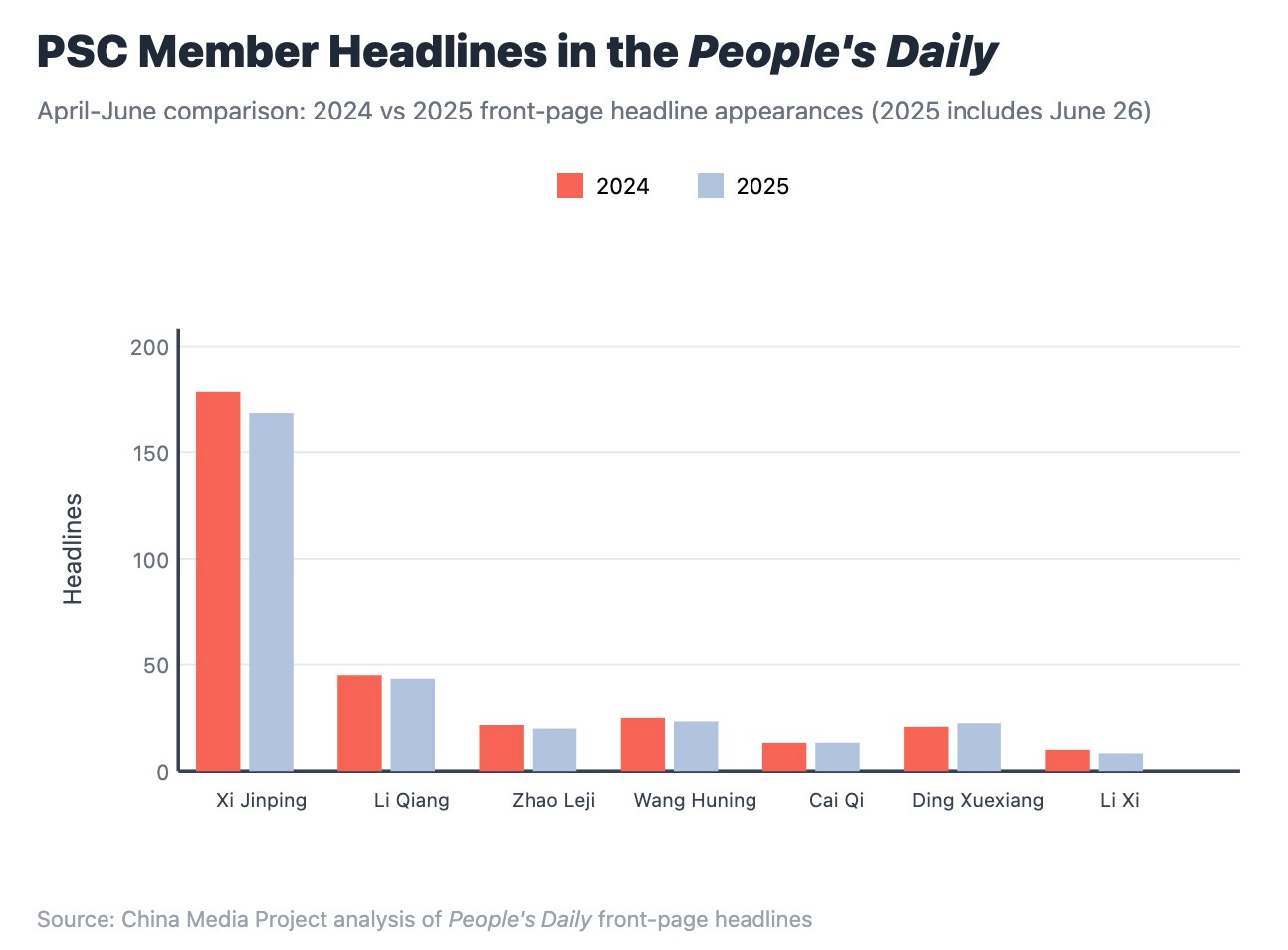
However, our analysis of front-page headlines in the Party’s official People’s Daily challenges this narrative. Comparing the second quarters of 2024 and 2025, we found that Xi appeared in headlines 177 times versus 157 times respectively — a modest decline likely explained by incomplete June 2025 data. More significantly, Premier Li Qiang, Xi’s closest competitor, showed virtually no change with 45 appearances in 2024 and 43 in 2025.

While these headline counts cannot capture insider dynamics or leadership effectiveness, they hardly suggest a power shift in the Party’s most important publication. Xi’s dominance in China’s authoritative media remains intact — contradicting speculation about his declining grip on power. The data suggests China’s most powerful leader in generations continues to command overwhelming media attention. Read more on this at the China Media Project website.

Youth Exchange Scandal

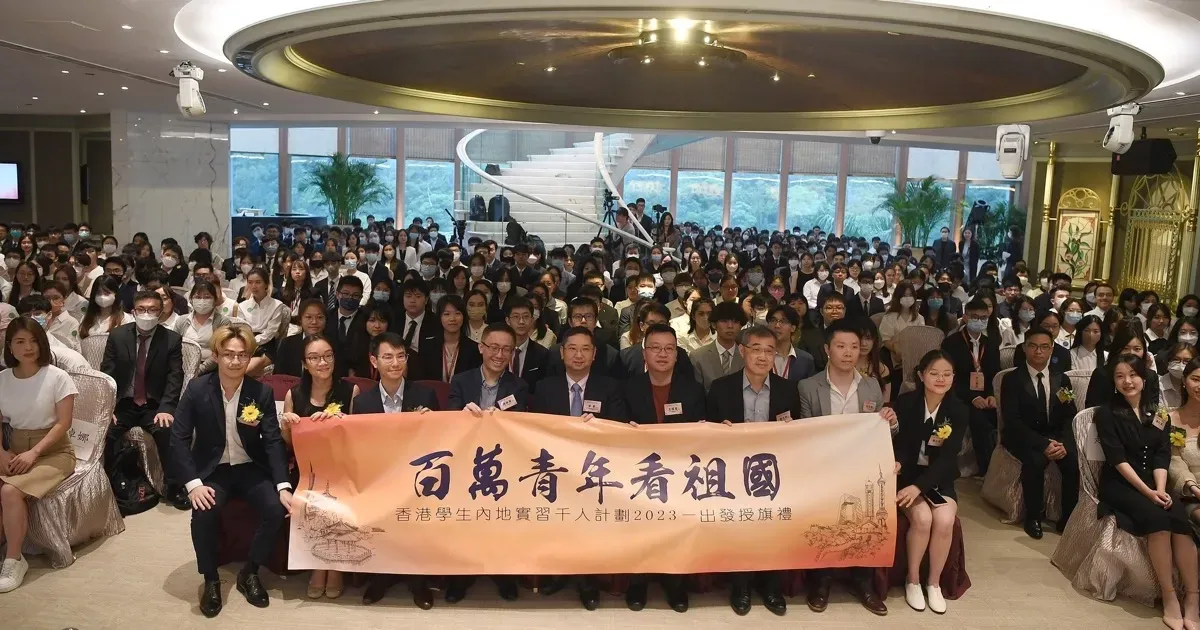
In a series of four investigative reports published starting last week, the independent Hong Kong outlet The Collective (集誌社) exposed potential irregularities in a government-funded mainland China internship program. According to the series, the budget of the Funding Scheme for Youth Internship in the Mainland has ballooned from HK$23 million in 2014 to over HK$113 million this year, with mainland programs this year accounting for 87 percent of Hong Kong’s overseas exchange budget. The Collective‘s investigation found that over half of audited projects violated guidelines by failing to publish financial reports, while some organizations with questionable backgrounds received millions in funding. Among the recipients, the series alleges, three companies linked to All-China Youth Federation member Wong Yiu-ying (王耀瑩) secured HK$23 million across 18 projects over three years, despite having websites created on identical dates and posting synchronized content.

Read On: Report 1 | Report 2 | Report 3 | Report 4

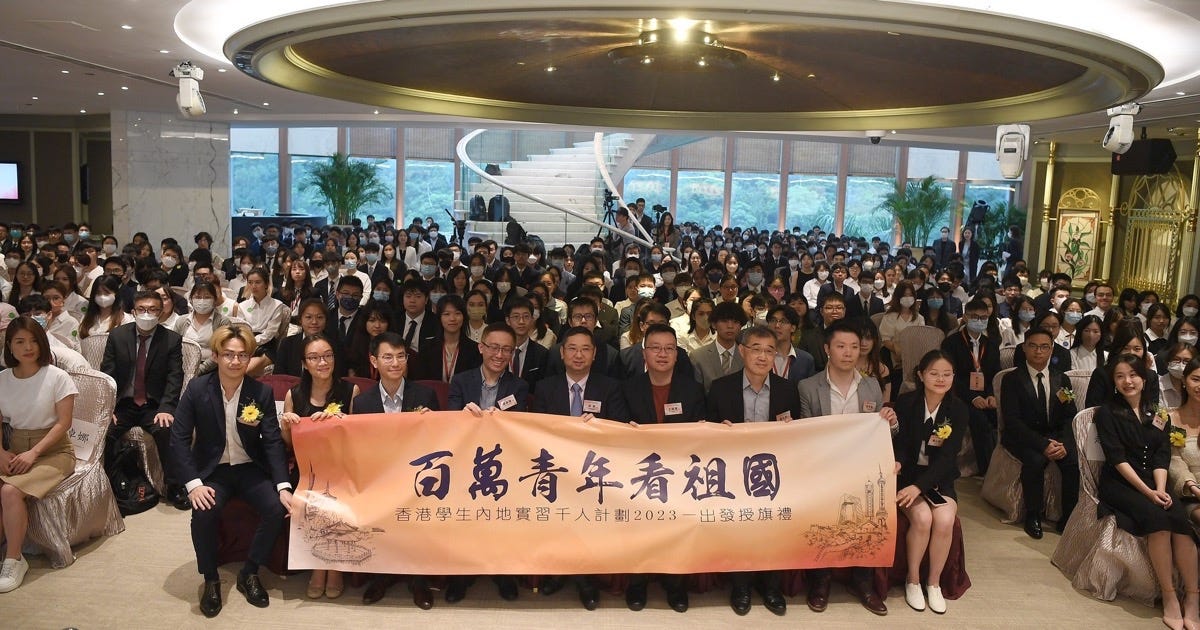
All-China Youth Federation member Wong Yiu-ying (fourth from right) has organized mainland internship programs for thousands of participants. Next to Wong, at center, is Song Lai, deputy director of the Youth Work Department of the central government’s Liaison Office. SOURCE: The Collective.

DeepSeek’s Democratic Deficit

DeepSeek’s R1 AI model, released in February, has been rapidly adopted by governments and companies worldwide, including India’s government and American tech multinational Nvidia. Meanwhile, China’s government has promoted the model as democratizing AI access. “DeepSeek has accelerated the democratization of the latest AI advancements,” China’s embassy in Australia declared back in March this year.

DeepSeek, a global whale in Chinese AI. Image: ChatGPT by CMP.

Much of the hype around DeepSeek is premised on the idea that the model can be “de-censored” — training out of its embedded PRC biases. But our research at the China Media Project questions this premise, suggesting the model risks becoming a vehicle for the global spread of Chinese Communist Party narratives and authoritarian influence rather than genuine democratization of information. Our work suggests the model’s biases run deeper than simple censorship, and that even “uncensored” versions continue spreading CCP disinformation — for example claiming Taiwan has been “part of China since ancient times.”

CMP researcher Alex Colville writes: “Open-source can mean, broadly speaking, greater democratic decision of the benefits of AI. But if crucial aspects of the open-source AI shared across the world perpetuate the values of a closed society with narrow political agendas — what might that mean?”

Learn more about this important issue at the China Media Project.

Rising Waters, Drops of Coverage

Missile strikes by Israel and the United States against nuclear sites in Iran have topped headlines across the world last month. In China, where the story trended on the hot search (热搜) lists of Baidu, WeChat (微信) and RedNote, it also drowned out news of record-breaking floods that displaced more than 400,000 people in Hunan province alone.

Beginning June 18, heavy rains triggered the worst flooding since 1998 in Hunan, inundating entire cities. Similar flooding struck Guangdong province and the municipality of Chongqing. Despite affecting hundreds of millions of Chinese in the region, the domestic disaster struggled for attention as social media feeds filled with news of US missile strikes on Iranian nuclear sites — and warnings from Chinese state media that that American bunker-penetrating bombs would make the world a more dangerous place. (Read more of CMP’s analysis here on the sidelining of flooding coverage last week.)

With floods this past weekend inundating parts of the western province of Guizhou for the second time in the space of a week, the domestic blind spot toward the severe flooding season in China’s media seems now to have eased moderately, with the official Xinhua News Agency reporting in a release shared across multiple outlets that “the flood disaster in Rongjiang County, Guizhou Province, has been tugging at everyone’s hearts.”

Low-lying areas submerged in Guizhou’s Rongjiang County on June 28. SOURCE: Internet | Orange News.

Playing With Fire

Former Chinese University of Hong Kong assistant professor Simon Shen (沈旭暉), a political scientist who studied at Oxford under Sinologist Rana Mitter and is now a visiting scholar at National Sun Yat-sen University (中山大學) in Taiwan, faces accusations of selling pro-Hong Kong independence materials through his Global Hong Kong Library (國際香港圖書典藏館). 

Political scientist Simon Shen. SOURCE: National Sun Yat-sen University.

Wen Wei Po (文匯報), a paper controlled by China’s central government in Hong Kong, alleged that Shen’s online platform promoted separatist agendas while displaying and selling items from the 2019 protests — disguised (the paper said snidely) as “precious collections” (珍貴藏品).

Pro-Beijing politician Elizabeth Quat Pei-fan (葛珮帆) warned that sharing such content on social media could violate the National Security Law. Barrister Ronny Tong Ka-wah (湯家驊), a non-official member of Hong Kong’s Executive Council, a formal body of advisors to the chief executive, raised the specter of transnational repression, warning that violators anywhere in the world could face police pursuit. At the Bastille Post (巴士的報), columnist Lai Ting Yiu (黎廷瑤) described Shen as “playing with fire.” The Global Hong Kong Library website states it hopes to preserve Hong Kong collections and ensure “the truth will not be revised.” For more on the crucial role of archives in information freedoms, be on the lookout for today’s edition of our companion publication Tian Jian (田間), or read their recent interview with Ian Johnson.

Laying Down the Law

The Cyberspace Administration of China (CAC) has published its first comprehensive annual report on “internet rule of law development” (网络法治发展), signaling expanded digital control mechanisms for 2025 under the umbrella of what should be more accurately termed “rule by law.” The 278-page document references 2025 as the final year of China’s 14th Five-Year Plan and promotes three separate legal frameworks for building “rule of law” (法治) in cyberspace — indicating the department may push harder to meet these converging deadlines.

“Explore uncharted territories,” reads the motto at DeepSeek. Authorities are making sure those territories are known and controlled.

The CAC explicitly cites “increasing diversity of opinions and groups” online — diversity in this case being a concern to be managed by a control-obsessed leadership — as justification for expanding operations. The report also acknowledges that new developments in artificial intelligence (AI) like the rise and expanding scope of DeepSeek’s popular model require careful management to balance “reform and rule of law, development and security.”

The CAC report focuses on the governance of AI, the body noting that domestic AI models have achieved breakthrough speeds — fondly referred to as “China speeds” (中国速度) — that have “swept the entire network” (席卷全网) and attracted global attention. In the report, officials describe a new phase of digitization driven by AI that transforms “production tools” (生产工具) and “production conditions” (生产条件), requiring updated regulatory frameworks. The administration plans to strengthen oversight of AI-generated content, algorithmic recommendations, and automated decision-making systems while promoting what it calls “beneficial” technological development.

Beyond domestic control, the CAC emphasizes China’s ambition to shape international cyberspace governance rules. The report calls for more assertive participation in global internet governance forums and bilateral negotiations on data flows, emerging technologies, and telecommunications services. Officials plan to leverage platforms like the World Internet Conference (WIC), held each year in Zhejiang, and China-Africa internet cooperation forums like the 2024 China-Africa Internet Development and Cooperation Forum to promote Chinese governance models internationally, while deepening enforcement cooperation with other nations on cross-border cybercrime and digital security issues.

China’s America Moment

Donald Trump’s use of the National Guard and US Marines to quell protests in Los Angeles against his immigration policies became a major story across Chinese media last week. Op-eds filled with images of turbulence interpreted the news as pointing toward imminent “civil war,” words used in several reports. Pursuing their long-term goal of discrediting the US political system, Chinese state media are now pushing at a door the Trump administration has opened wide.

Scenes of aggressive police action in LA are reported by Hong Kong’s government-run Ta Kung Pao.

China’s state-run Xinhua News Agency reported that its journalists had been injured while covering the protests. The article purported to deliver the will of the protesters, quoting them as saying they were “hard-working local community residents who wanted to express their opinions peacefully.” The report reached second-place on the Baidu search engine’s list of hottest news topics on June 9. The same day, another trending post from a prominent self-media account predicted that the events in California were a “prelude” to deeper conflict. “America’s ‘civil war’ has begun” (美国”内战”开始了), the author declared, calling the unrest “the first large-scale street conflict of the Trump 2.0 era” and comparing downtown Los Angeles to “a Middle Eastern war zone.” The post received close to 1.6 million reads.

In Hong Kong, media similarly mirrored these narratives of American decline. The online news outlet HK01 and state-backed newspaper Ta Kung Pao (大公报) both framed the conflict as a consequence of long-term social divides within the US, with HK01 warning that without resolution, America would “eventually fall into the abyss.”

For more on Chinese media portrayals of protests in the United States, and our perspective at CMP on how Trump administration actions have been a huge assist for China’s external propaganda efforts, read “A Trump Card for China’s Media.”