Tag: China

We Thought We Were Going to Learn About Journalism

For decades since Xinhua opened its first African bureau in Addis Ababa, Ethiopia, in 1950, China’s state news agency maintained a modest presence on the continent, part of the PRC’s broader international newswire infrastructure. But over the past two decades — and especially since the launch of Xi Jinping’s signature Belt and Road Initiative in 2013 — Beijing’s footprint in the African media space has expanded into something of a different order altogether. Xinhua now operates 37 bureaus across the continent, dwarfing any other news agency, African or foreign. Chinese digital television giant StarTimes has become the second-largest pay-TV operator in Africa. As Western news organizations have lost staff correspondents across Africa, China has moved to fill the media gap — not only through its own outlets and ventures, but through a sophisticated web of partnerships with local media and governments, and training programs for journalists.

Yet for all the outside analysis, one perspective has been consistently missing from this debate: that of African journalists themselves. How do the reporters at the center of this story actually experience China’s media push? And what do they make of it?

This is exactly what Emeka Umejei, a Nigerian-born media scholar who spent over a decade as a journalist himself, set out to understand. In his new book, China in African Media: Between Influence Operations and Decolonization, published by Bloomsbury, he draws on interviews with journalists across 14 African countries to offer what has been lacking: an account of China’s media strategy told from the journalist’s point of view. 

Dalia Parete: You’ve just published China in African Media: Between Influence Operations and Decolonization.What drew you to this topic, and why did you feel this book needed to be written now?

Emeka Umejei: If you are from Africa or from the Global South, you would have noticed that anything people from the Global North do with African countries is framed as a continuation of colonial ideology. The PRC has been smart. They know that. So they say: Our engagement in Africa is win-win. We were also colonized. So every one of our engagements is part of decolonization. They play on that delicate balance to win many battles in Africa.

At the Third Plenum of the 20th CCP Central Committee in July 2024, the CCP proposed to establish a more effective international communication system. And when they say that, the PRC is talking about decolonization. Then, in September 2025, the Xinhua Institute published a policy paper titled Colonization of the Mind: The Means, Roots and Global Policies of US Cognitive Warfare. So what the PRC is trying to say is that the US system is colonial, but its own system is decolonial — fed from the ground by what local people want, not imposed.

So I decided to investigate the PRC’s multimodal engagements in African media, whether it advances decolonization or Chinese propaganda. Does it actually advance decolonization in African journalism, or Chinese propaganda in African media? The answer is obviously no. China is not doing anything different from the US or the UK. 

The problem is that African political actors have yet to realize this. And if China gains the kind of hegemony in Africa that the US had, it’s going to be much, much worse. Nobody is thinking about the next twenty, thirty or fifty years. When China achieves that level of hegemony economically, in the media, in every part of the African continent — how will that affect democracy in Africa? Nobody is talking about this. These are the critical issues nobody is paying attention to. That’s what motivated my research.

DP: For those not familiar with the topic, can you give us a brief overview of how Chinese media have expanded across Africa over the past decade or so, and what types of engagements between Chinese media and their African counterparts can be seen across the continent? I’m guessing there are a lot of regional differences.

Umejei: Over time, while Western media organizations were pulling out of Africa, Chinese media organizations such as Xinhua, China Daily, CGTN Africa and the People’s Daily have expanded in Africa.

There are several engagements between Chinese and African media. I can list them for you. You have the China-Africa media exchanges for African journalists. You have media partnership and content-sharing agreements. You have African media having membership in the Belt and Road News Network (一带一路新闻合作联盟), a Beijing-headquartered media alliance chaired by the People’s Daily, the Chinese Communist Party’s official newspaper. And you have what they call opinion writers in Africa, where African journalists, scholars and columnists publish op-eds in mainstream African newspapers, with the aim of spreading Chinese narratives on specific topics. There’s also the digital space — a digital satellite television service was launched across Africa [with China’s involvement].
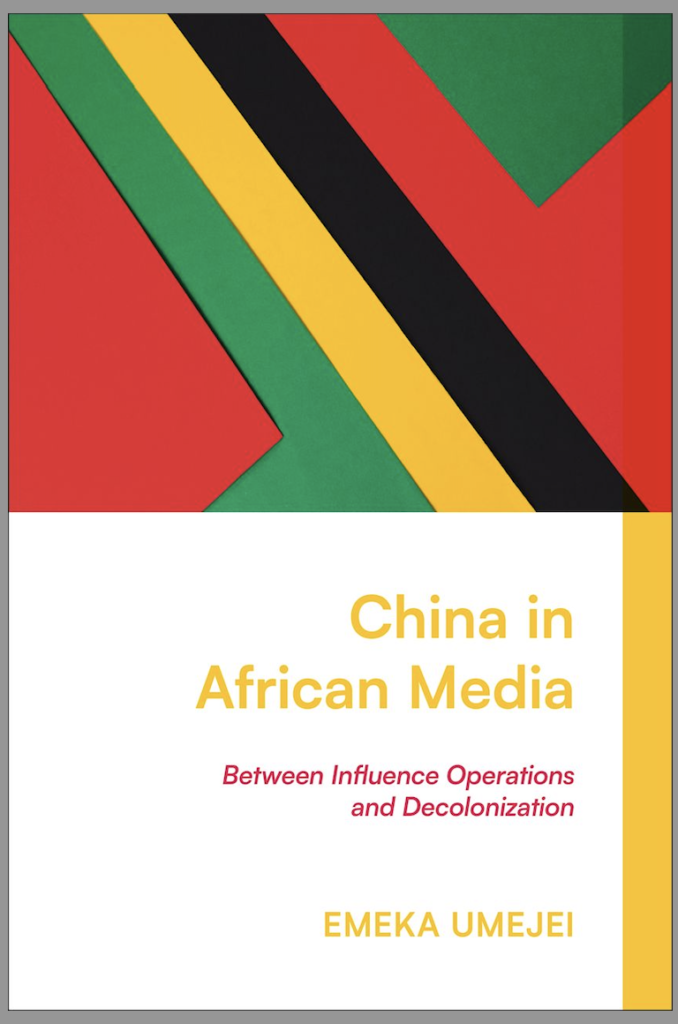
Emeka Umejei’s latest book.

In terms of approach, they basically have the same objective. There could be regional differences, but the goals and objectives are actually the same. It’s all about, so to speak, influence operations. The recruitment process is very, very different across the regions. The way they recruit journalists to attend media exchanges in Nigeria differs from the way they recruit in Sierra Leone or Egypt. These are different methods of recruitment. But in terms of the objective, which is to influence, it’s the same.

DP: Your book argues that the PRC’s most effective work in African media is done through partnerships with local outlets. How did that strategy come about, and why is it effective?

Umejei: I think what happened was that the Party realized that there’s no trust for Chinese media in Africa. People are just skeptical of Chinese media organizations, saying: Okay, if the Chinese media organizations cannot critically engage with the political leaders in China, how do we trust them to engage critically with us in Africa? So, having realized that, they said: Okay, the best thing we should do is to have a partnership. So instead of just coming to Africa to engage directly, they now have engagement with local media.

There are these media exchanges where they take journalists to China; those journalists come back to Africa and become advocates for the PRC in newsrooms across Africa. Then you have the media partnership and content-sharing agreements, which let them disseminate their own messaging through content they share with African media organizations without it being censored. Most of this content is free of charge. It is not paid for. You also have the Belt and Road News Network, which incorporates African media organizations and journalists, and the Belt and Road Journalist Network, a network comprising African journalists.

In the long run, it gives them a multifaceted influence across African media and Africa generally. Because you have the Chinese media, which is not doing well in Africa even though it’s there, but these other engagements are more profound than Chinese media operations. That’s the essence.

DP: The title of your book frames a tension between “influence operations” and “decolonization.” Many African journalists and scholars argue that Western media have imposed their own editorial values and agendas. Does China’s media expansion genuinely offer an alternative to that dominance, or are African journalists simply being asked to swap one outside power for another?

Umejei: If you ask me, I would say that Chinese media engagement in Africa does not offer an alternative to the West. I’ll give an example. When I was doing fieldwork for my PhD in Kenya, I spoke to [African] journalists who were working for CGTN, Xinhua andChina Daily. They will tell you that it’s the same thing. The Chinese media cover Africa the same way that the West covers Africa, except when Chinese economic and political interests are involved. For instance, if it involves Chinese economic and political interests, they’re going to be very, very positive about it. But if it has nothing to do with China and no Chinese company is involved, they’ll just report it the way the Western media will.

People want to learn, but it just isn’t there, because the real purpose of the training isn’t journalistic. It’s an influence operation.

So they’re not offering any alternative. It’s just that they want to make African journalists think: Oh, the West impose their own agenda. So this is the truth of the matter. It’s not as if [China] offers any genuine alternative. Africans generally are not switching sides. Instead, they will have to contend with both sides. It will be a coexistence. So you have both Chinese ideology and Western ideology coexisting in Africa.

i
Emphasizing Positive News
正面报导为主
“Emphasizing positive news” has been a guiding principle of China’s Central Propaganda Department (中宣部) since at least 1984. At a February 1995 conference of editors in chief of provincial-level newspapers, propaganda minister Ding Guangen said: “By supporting unity and stability, emphasizing positive news and speaking with one voice, we have achieved success in setting examples, leading and encouraging [the people] (People’s Daily, February 27, 1995). Ji Bingxuan, a deputy propaganda minister, said: “The relationship between positive and negative news must be well-managed. We must always support the guiding principle, which is to encourage unity and stability by emphasizing positive news. This principle must be followed with news reports … China is so vast and diverse, its development so unequal.”

DP: China often presents itself as a partner of the Global South as a whole, but, as you said in your book, the Global South is not monolithic. Do you think China’s media strategy is actually adapting to different local contexts, or is it essentially a one-size-fits-all approach?

Umejei: What they have done, and they’ve done well, is the partnership. For instance, with their partnership in Zimbabwe, when you listen to this news, this CCP-sanctioned narrative, it comes from a Zimbabwean media organization. As a Zimbabwean, you are more likely to believe it. So you could say yes, it’s through local organizations, and that makes it easier for them, it makes it easier for the message to be sent.

Take Nigeria as an example: people do not read CGTN or China Daily. Instead, you are going to see national newspaper This Day and daily newspaper Daily Trust pushing Chinese narratives in their articles and the readers do not know it is coming from China. So it makes it very, very effective. The locals don’t see China. They don’t see the PRC. But they see this content being disseminated in local media. That’s the advantage.
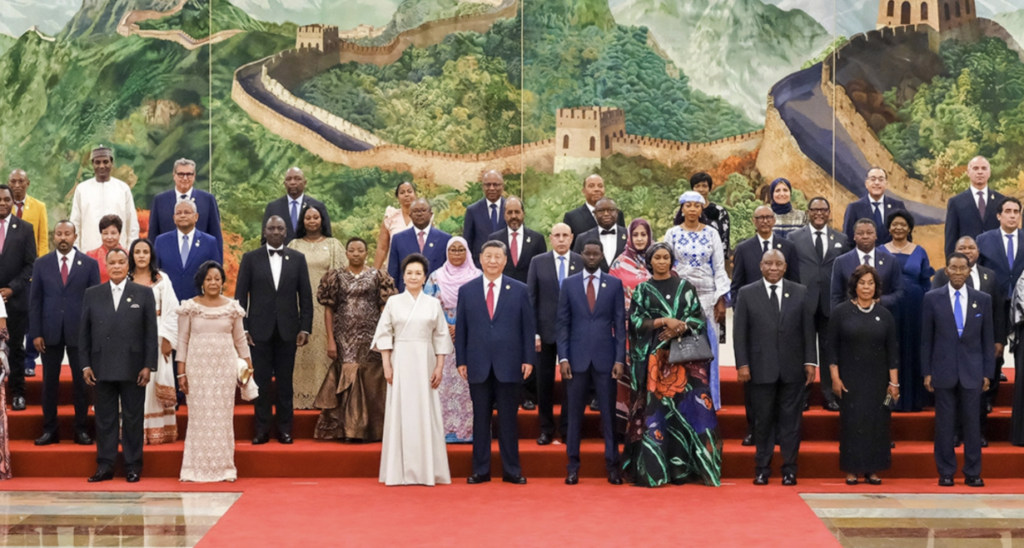
Xi Jinping hosts African leaders ahead of the 2024 edition of the Forum on China-Africa Cooperation (FOCAC) at the Great Hall of the People in Beijing. SOURCE: Xinhua News Agency.

Chinese media engagement in Africa does not offer an alternative to the West.

DP: You were also talking about how journalists from different countries have a different view of China. You were saying, for example, that South African journalists might have a different understanding of China than Zambian journalists. So it also depends not only on China but also on the local context, I guess.

Umejei: Right. You see, where a country has an established democracy, that itself pushes back against the whole PRC propaganda effort. Take South Africa. The democracy there is established, and the media is solid. The South African media is different from the media in other parts of Africa. So it’s difficult to influence what happens there. You’d get serious pushback. Unlike in Nigeria, where even if you just give journalists some stipends, they’ll do your dirty work. But you won’t get that in South Africa, because if you try it, other media organizations will come after you, and you don’t want that. So those are some of the contextual realities that mediate the influence. It really only holds where you have a very, very dominant, established democracy like South Africa. Nowhere else in Africa. I’d say it’s only in South Africa you find that. Not Nigeria, not even Ghana.

DP: It’s always important to consider the agency of local journalists, and not assume they simply accept what China and other powers offer. Your research is based on interviews with journalists across 14 African countries. In their own words, how do African journalists describe the experience of Chinese training programs — from how they were selected to what they actually took away from it?

Umejei: I want you to understand something about Africa. I was a journalist for more than a decade. In Nigeria, there were times when I didn’t receive a salary for more than 15 months. So I wasn’t getting my monthly salary. Now, China comes to train you. You have the opportunity to go to China. They’ll pay for your ticket and everything. You come back and you’re able to save maybe two million or three million [in local currency]. With the money you save, you can build a house or buy a car. Everyone is happy. So journalists are happy that they can go to China. It’s mostly about the economic benefits. If I go there then I come back, I can build my house in the village. I can buy a new car, or I can repair my car. If I don’t go, how can I do that? So I should be grateful to them. That comes before anything.

That indebtedness is what the Chinese also play on. Most African journalists become indebted and advocates for the PRC. These are critical issues. Nobody is talking about the economic aspects of it. Because of the economic aspect, they don’t really bother about what happens, whether the training is good or bad. It doesn’t concern them. But among them, there are some people who say: Okay, even though we went there, when we were going, we thought we were going to learn about journalism. But we didn’t learn much about journalism. We went there, it was just hospitality.

DP: In the book, some journalists mentioned the training courses are mostly about how beautiful China is, but that the technical training falls flat, can you expand on that?

Umejei: Yes, there’s very little actual journalism in these programs. People want to learn, but it just isn’t there, because the real purpose of the training isn’t journalistic. It’s an influence operation. The aim is to have a positive outlook on China,  so you’ll advance its interests in Africa. That’s the whole point of it. It’s not about you: you’re not part of the equation.

And that’s what makes it so hard for participants to grasp. It’s not about you. You go to China, come back, and you’ve learned nothing about journalism. You feel cheated. They hand you the equipment but never teach you how to use it, which is painful, because you could easily have learned it and put it to use back home. But that was never the purpose. The purpose was simply for you to get to know China, see what they’ve built, and go home and tell people about it. That’s all they want.
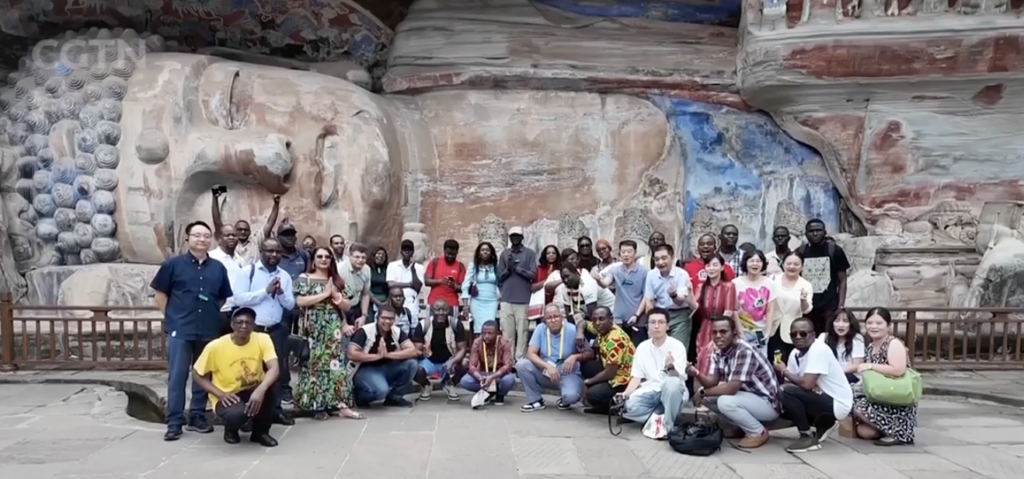
A group of African journalists visit Chongqing after the conclusion of the 2024 FOCAC Summit. SOURCE: CGTN.

Most African journalists become indebted and advocates for the PRC.

DP: You also document cases of self-censorship among African journalists who engage with Chinese media partnerships. How widespread is that and is it self-imposed, or are there more explicit pressures, like the role of local embassies?

Umejei: When journalists return from training in China, they’re added to a WhatsApp group. Most of the people who have gone for training in China are part of it, and the Chinese embassy uses that group to disseminate information and talking points.

If you’re in that group, it works like a leash. You won’t write anything negative about China, because you’re always thinking about the next training trip. They keep a pool of journalists. Once you’ve gone, someone else gets added to the pool and sent next. That rotation keeps everyone in line. You don’t want to write something critical and risk being excluded from the group, because exclusion means no more training opportunities and no more money from them. Nobody wants to end up in that bad group.

A few people do come back and say, “I don’t want to do this anymore.” But only a few.

DP: After all those conversations, is there one thing a journalist said to you that you feel really captures the essence of what is happening between China and African media today?

Umejei: One of them told me: We don’t feel our engagement, our training in China, is unethical. Why? Because our countries are also engaging with China. So why should we not engage with them? Why should we not go there for training? People are going there to borrow money, to collect money for infrastructure development. What is wrong if a journalist is going to get training there?

That kind of captures what it is. It means that Chinese engagement with African countries is indirectly influencing the media space too, because journalists are involved in that. The government is also playing with China. So why should you, as a journalist, not play with China? That’s what it is for me.

DP: Could you talk about responses that African countries and journalism communities should have? How can they maintain their independence in the face of outside media pressures?

Umejei: One of the things Africa should do first is that African political actors and policymakers should fund their own journalism. If you continue to wait for external actors to fund journalism training, this will continue. African governments decide to fund training opportunities for journalists themselves, and what we’re saying will continue, unfortunately. So there’s no better response than to say, “Okay, if we have the media, let’s look for a way to develop the journalists themselves.” If you get opportunities, even if it’s for two weeks, make it a mandatory professional training program for journalists, funded by the government, a government agency, or someone locally. It must not stand alone, not dependent on outsiders. Until that is done, we’re just joking, actually.

The way to maintain independence is sustainability — to be self-sustaining. It means you have to fund yourself. If you can’t fund yourself, if you can’t sustain yourself, you won’t be able to be independent, because you’ll be depending on people to sustain you. Once you depend on foreign organizations to sustain you, that’s a problem.

There is also a need to have an African-grown global media, which is not there. I don’t think there’s any global media from Africa. There’s no global media that tells the true African story on the global stage. There is none. That’s where the problem is. That’s actually the first problem. Because if there were an African-grown global media corporation that would tell the true African story on the global stage, it would be very, very difficult for other global media — from the West or from China or from wherever — to tell a different story of the African reality on the global stage. 

X Marks the Spot

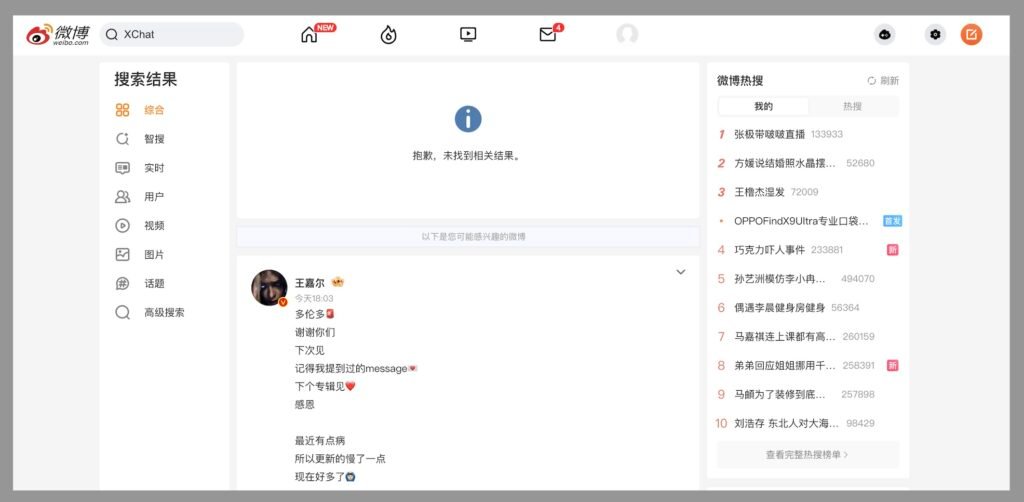
Elon Musk’s social media platform X was making no secret of its ambitions in China. Its new standalone messaging app, XChat, came equipped with Simplified Chinese language support and was listed simultaneously on the China App Store, suggesting X had its sights set on a vast base of Chinese users. But the app was buried in China before it could even get off the ground. X — or more precisely, “404” — marks the spot.

According to a post by the influencer known as Teacher Li Is Not Your Teacher (李老师不是你老师), who goes by @whyyoutouzhele on X, outlets including Xinhua, People’s Daily Online, The Paper, and Jiemian News had each published reports on XChat’s impending launch — only to delete them. Teacher Li’s post drew nearly 970,000 views. Searches for “XChat” on Weibo, WeChat and Douyin returned no results.

A search for “XChat” on Weibo returns a message: “We’re sorry, relevant results cannot be found.”

XChat, an encrypted, ad-free messaging service with no user data tracking, is part of Musk’s broader “everything app” strategy for X and has been compared for this reason to China’s WeChat.

A Cutting Edge Cartoon Goes Ancient

What do you get when you combine three of the Chinese Party-state’s favorite themes — the innovative potential of AI, confidence-boosting messaging about the greatness of national culture, and wholesome children’s programming? The answer has arrived in the form of “The Fantastic Quest for National Treasures” (國寶奇趣探秘集), billed as the country’s first wholly AI-generated animated series focused squarely on child education. Not surprisingly, it was produced by the AIGC Innovation Content Center at Mango TV, the streaming platform of Hunan TV (湖南衛視), which for the past two decades has been synonymous with entertainment innovation (Is anyone old enough to remember “Super Girl”?). 

For China’s broadcast authorities, no doubt, this production is packed with all the right messages. The cartoon, which began exclusively streaming on Mango TV on April 3, is a perfect marriage of the cultural, technological and political priorities of the country’s leadership. It commercializes generative AI in children’s programming to instill cultural identity and national pride — fitting the broader push under Xi Jinping to deepen the country’s “cultural confidence” (文化自信). 

The 12 episodes of “The Fantastic Quest for National Treasures” focus on the adventures of Huahuo (花火) and Dingdong (叮咚), who time-travel to understand the stories behind some of China’s most famous artifacts. As the protagonists visit five museums across China, they explore such antiquities as a pig-shaped bronze vessel from the Shang Dynasty and a bird-shaped container from the Western Zhou.

The show is not China’s first AI-generated animated production. In February 2024, state broadcaster CCTV aired “Poems of Timeless Acclaim” (千秋詩頌), a 26-episode AI-generated series that animated classical Chinese poetry. That program was only partly aimed at young audiences, though it shared with the Mango TV series the leadership’s favored pairing of deep history and dazzling new technology, bearing the message that China’s future is as vast as its past is glorious. 

Too Pretty for the PLA?

Late last week, in a move that signaled future regulatory trends for the industry, China’s film and television regulator summoned major production companies and streaming platforms — including iQIYI, Mango TV, and Tencent Video — for a symposium on “wholesome aesthetics” in drama production. Though it is unclear whether the two events are connected, the symposium came just six days after sharp official criticism was directed at the hit costume drama Pursuit of Jade (逐玉), primarily from an account affiliated with the People’s Liberation Army (PLA). 

In the April 2 symposium, the National Radio and Television Administration (中國廣播電視總局), or NRTA, criticized what it called “lookism” (顏值至上) — referring to the casting of actors for their looks rather than their talent. It also spoke out against “traffic dependency” (流量依賴), the practice of centering productions on social media celebrities with substantial existing fan bases, which are expected to drive viewership. The readout from the NRTA meeting seems to suggest such an approach was being pursued without care to quality. “What the people demand of television dramas has never been merely that they look good in terms of appearance,” it said, “but that the story holds up to repeated viewing.” 

As the NRTA stated that actors must “look the part” (演什麼要像什麼), it was impossible for media not to relate these latest signals to the controversy recently surrounding Pursuit of Jade in China. While the drama has been a genuine streaming phenomenon in China and across the region, even topping charts in Taiwan, its male lead, Zhang Linghe (張凌赫) — who plays a battlefield general — has prompted amusement with his flawless, K-pop complexion even in the midst of battle. This has earned him the affectionate or mocking online nickname “General Foundation” (粉底液將軍). The portrayal seems to have rankled some in the military, and on March 27, “Junzhengping” (鈞正平), a social media account linked to the PLA, complained that such portrayals undermine “the spirit of masculinity.” 

Revising Hong Kong’s Past

Last week, the Hong Kong Museum of History reopened its flagship permanent exhibit after more than five years of renovation. Do the math. The museum closed its doors just months after Hong Kong’s National Security Law was enacted on June 30, 2020 – and it has been closed ever since. The revamped exhibit, called “The Hong Kong Story“ in a nod to Chinese leader Xi Jinping’s storytelling formula for what the Chinese Communist Party calls “external propaganda,” displays over 2,800 artifacts spanning six millennia. But it’s the re-framing of the narratives threading the artifacts together that it most worth attention — that is, if you are a media outlet with even an iota of critical spirit.

Hong Kong’s Ming Pao newspaper, published by Malaysia’s Media Chinese International, was the only major outlet in Chinese to touch the story as a matter of journalistic truth-seeking. It ran a point-by-point comparison of the exhibit’s previous and new language. Among the changes noted was a complete erasure of references to the Tiananmen Massacre, which was recast as “political turmoil in the late spring and early summer of 1989.” Gone from the exhibit entirely, the Ming Pao reported, is a previous image that showed one million Hong Kongers taking to the streets in 1989 in support of the demonstrators in China.

Also apparent was the effort to recast the British acquisition of Hong Kong, previously described as “cession” (割讓) — language still widely used even in pro-establishment sources — as “forcible occupation” (強佔). Similarly, the 1967 leftist riots, previously referred to in the exhibit as the “1967 riots” (六七暴動), are now characterized as “Anti-British Resistance” (反英抗暴).

Government-aligned media outlets were notably uncritical. The Ta Kung Pao, published by China’s central government, ran a celebratory feature emphasizing how satisfied visitors are with the reopened exhibit. Sing Tao Daily previewed the new exhibit content with no critical evaluation whatsoever. The most brutally direct response came, unsurprisingly, from Hong Kong exile media outlets. UK-based Green Bean, an outlet run by exiled Hong Kong illustrators, posted a cartoon of a figure on a ladder hanging a new sign over the museum entrance that reads: “Falsification” (篡改).

Silence Follows Harassment

Last Friday, InMedia (獨立媒體), one of Hong Kong’s few remaining independent news outlets, published an unusual apology to readers through its newsletter. The outlet said that its normal operations had been disrupted in recent days  by “harassing messages” (滋擾訊息) as it sought to cover hearings looking into the deadly fire at the Wang Fuk Court residential buildings in November last year that killed 168 people. InMedia said in its message that it had filed police reports in two specific cases of harassment by “unidentified persons” (不明人士).  

On Tuesday, online commentator Fung Hei-kin (馮睑乾), a former columnist for Hong Kong’s Apple Daily, noted in a Facebook post that not one mainstream Hong Kong outlet had covered the InMedia story in the four days since the outlet’s disclosure. In fact, the only outlet to cover the news at all, said Fung, had beenEpoch Times, the right-wing American media outlet backed by the Falun Gong religious group — a brief report that added no new information. Fung likened the silence over the InMedia case to that which followed revelations by the independent Hong Kong Journalists Association (HKJA) in September 2024 that reporters from thirteen news organizations had been harassed or threatened in the preceding few months. The chilling effect on the press could clearly be inferred from the silence, said Fung. “The more you think about it,” he wrote, “the more chilling it becomes.”

AI for Human Propaganda

At a media forum over the weekend in Zhengzhou, the capital of Henan province, foreign influencers took the stage to explain how their lives in China had offered a more “authentic” understanding of the country. Indian travel blogger Anayat Ali and Belgian influencer Lucas Deckers said that immersion in local life had given them a more realistic portrait of China than headlines alone could convey — the subtext being that Western media coverage of the country is inherently biased and deeply unfair. Also present was Adam Foster, head of the US-based Helen Foster Snow Foundation, whose mission is to preserve the legacy of Edgar Snow, the journalist and author of Red Star Over China, who today remains for China’s leadership the paragon of the useful foreign journalist.

In a twist that would almost certainly perplex professional journalists elsewhere in the world, this talk about authenticity in portrayals of China unfolded at a forum uncritically proclaiming the virtues of artificial intelligence for media production. Understand the context, however, and this alliance of AI and untruth makes perfect sense, throwing into sharp relief AI’s emerging role in both domestic media control and global propaganda and disinformation.

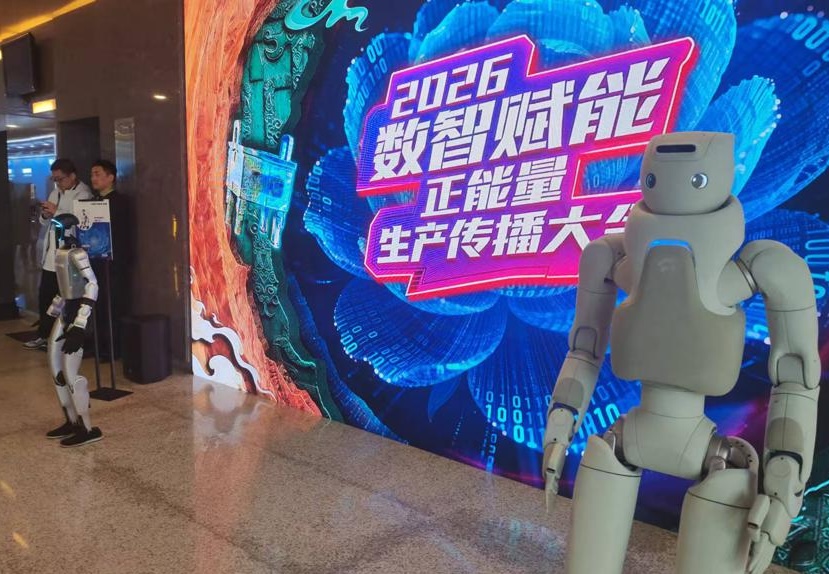
The theme of this year’s Internet Media Forum, co-organized by the Cyberspace Administration of China (CAC) and held in Henan province on March 28–29, was the “2026 Digital Intelligence Empowerment: Positive Energy Production and Dissemination Conference.” That is a mouthful, but the concept is simple enough: AI has the power to revolutionize the Chinese Communist Party’s demand that journalism and media serve its interests by emphasizing positives and suppressing critical coverage.

CAPTION: A robot stands before the conference backdrop in Zhengzhou. The slogan reads: “2026 Digital Intelligence Empowerment: Positive Energy Production and Dissemination Conference.” Photo: China Daily.

Across much of the world, the rise of artificial intelligence has prompted fierce and often anguished debate about the future of the media, and the role of the journalist. When is AI a “strategic ally” for the truth-seeking journalist? How can we balance the valuable aspects of AI with its myriad dangers? How can we make sure that substantive, relevant and even hard-hitting journalism — so critical for democracy — can be discovered amid the inundation of synthetic text, image and video?

In a recent report adding to a rising tide of output on the subject, the Center for News, Technology and Innovation (CNTI) weighed in earlier this month. “For newsrooms, the use of generative AI tools offers benefits for productivity and innovation,” the report said coolly. “At the same time, it risks inaccuracies, ethical issues and undermining public trust.” At a recent press talk in Vietnam on AI and the “crisis of trust” in news facing media, hosted by the Embassies of Canada, Norway, New Zealand, and Switzerland in collaboration with the United Nations Development Program, UNDP representative Ramla Khalidi returned to basics: “The most important thing in journalism, for me, is trust. When trust is lost, you are no longer a voice that can be relied upon.”

In China, where media are defined as tools to manufacture public trust in the Chinese Communist Party (CCP) and the state, such concerns are not even secondary. If there are journalists in China wringing their hands over the impact of AI on professional reporting or public trust, those conversations are happening privately, and quietly. The whole notion of the public interest as fundamental to journalism has been eclipsed under the leadership of Xi Jinping by the most robust application of press controls seen at any time in the reform era since the late 1970s. The possible exception is the three years immediately following the Tiananmen Massacre, which gave rise to the concept of “public opinion guidance” — a policy that to this day delivers on the firm conviction that the CCP must control news and public discourse to maintain the stability of the regime.

In one of his earliest actions as the country’s top leader, Xi Jinping in 2013 introduced an internal Party directive called “Document 9” that expressly opposed the idea of public interest journalism, which it panned as “the West’s idea of journalism.” “The ultimate goal of advocating the West’s view of the media is to hawk the principle of abstract and absolute freedom of press, oppose the Party’s leadership in the media, and gouge an opening through which to infiltrate our ideology,” the directive said.

Later that same year, as Xi cracked down aggressively on more independent voices on Chinese social media — the now mostly forgotten “Big Vs” — the Party introduced the concept of “transmitting positive energy to society” (传播社会正能量). If the role of the press in China had become more ambiguous through the 2000s, amid a precarious but determined movement of journalistic professionalism, it had now become clear again. Its place was to serve the larger goals of the Party and the nation, not of the public.

i
Positive Energy
传播社会正能量
“Positive energy” (正能量) has been a key phrase in the Xi Jinping era to refer to information controls and official messaging, both domestically and internationally. The term generally refers to the need for uplifting content as opposed to critical or negative coverage — and particularly content that puts the Party and government in a positive light. Although the term began appearing in various contexts in 2012, it was given a much larger profile at the Central Forum on Arts and Literature in October 2013, when Xi Jinping called on cultural creators to produce works that “inspire minds, warm hearts and cultivate taste.” In the context of news control, “positive energy” is closely associated with “guidance of public opinion,” a cornerstone of the CCP’s media control regime since June 1989.

Today, it is virtually impossible to talk about the truth in China in any way other than that bandied about on the stage at the 2026 Internet Media Forum. “Authenticity” is fundamentally about positivity. And this means that discussions in China about the impact of AI in the media revolve almost exclusively around its production-related advantages.

A series of thematic sessions held alongside the main forum in Zhengzhou is a case in point. Discussions treated propaganda and corporate public relations as a seamless continuum, discussing how official and corporate messaging can “go viral” by adding a more human touch to narratives. The session brought together participants including Chang’an Avenue Insider (长安街知事), a public account under the capital’s state-run Beijing Daily, the new media department of the CCP’s People’s Daily, and Weibo’s executive editor-in-chief.

On Monday, a commentary at People’s Daily Online drove the point home, suggesting that AI could be effective in “adding warmth” to positive energy — in other words, that propaganda could be made to feel more human and relatable. The piece, published the day after the forum closed, described AI as having “deeply penetrated the full chain of content planning, newsgathering, editing and distribution” in mainstream media. Once again, there was not the merest frisson of concern. The integration of AI with content meant for public consumption, and of course public opinion guidance, was celebrated as a milestone.

During panel discussions at the forum, the People’s Daily Online commentary noted, keywords like “professionalism,” “staying grounded,” “seizing trends,” and “innovation” were on everyone’s tongues. Even the deeply human concept of “empathy” (同理心), which has entered into sharply different discussions of journalism in the West, made an appearance. All of these are qualities with the potential to ground journalism in the human experience, and form the connective tissue between journalism and the public it is meant to serve. In this context, however, they are production techniques and rhetorical devices to be achieved with helping hand of artificial intelligence.

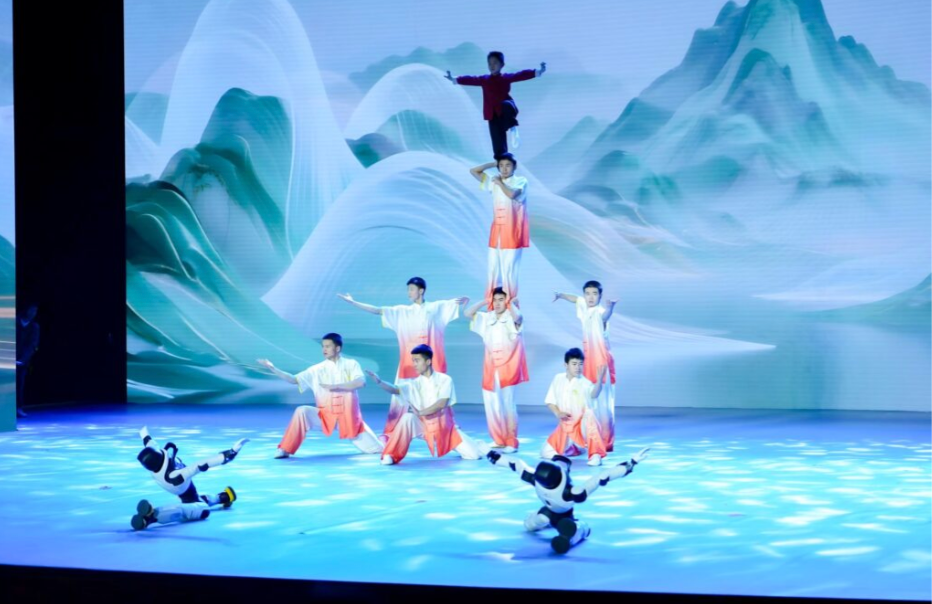
It was no accident that posters and images of the Zhengzhou forum came with the usual heavy dose of robot imagery. AI robots took to the stage alongside dancing child performers, the pairing an oddly dissonant state message about the humanity of AI. China’s dream of an army of compliant Edgar Snows, all reporting empathetically on the elevated humanity of the Party, cannot be far off.

Women’s Day, Minus the Women 

On March 2, just days before China’s annual parliamentary sessions opened in Beijing, the country’s state-run women’s organization held its annual ceremony to mark International Women’s Day — a holiday recognized by the United Nations in 1977 as a global call for women’s rights and equal participation in public life. But the organization’s vision of the limits of that participation was clear from the start, as its chair, Chen Yiqin (谌贻琴), a senior government official, called on women to follow the party, contribute to China’s next five-year development plan, and promote family civilization to “consolidate the family foundation for Chinese-style modernization.”

It was the beginning of a barrage of official messaging in which women were not subjects but instruments of state policy. China Women’s News (中国妇女报), the organization’s official newspaper, ran its usual coverage. Model workers were honored, and speeches made about the “wisdom and strength” of women in the service of national rejuvenation. On March 8, International Women’s Day itself, the paper ran a full-page spread titled “THIS Is Our Women’s Day!”

The question of who exactly was subject to that “our” had in fact been settled three days earlier by China’s premier, Li Qiang (李强), as he delivered his annual policy address to the country’s National People’s Congress. He pledged to build a “fertility-friendly society” (生育友好型社会), offer housing support for first-time married couples, extend parental leave, and expand childcare subsidies, which he said had already reached more than 30 million infants. With births plunging to a record low of 7.92 million in 2025, the premier’s message was clear: women have a primary role in resolving China’s demographic emergency — and the state will pay for their cooperation in these goals.

The price of that bargain, so familiar to women around the world, is silence and marginalization. And just as the state prepared its empty message of female empowerment, this was enforced with precision. In the days leading up to International Women’s Day, authorities shut down at least 10 WeChat public accounts that had built communities around the real concerns of women. Taken together, those accounts offered a different vision of participation — one the party-state was not prepared to tolerate.

These were not fringe voices. For years, Chinese women have been telling a different story — on WeChat, on Weibo, on Xiaohongshu — about why they do not want to marry, do not want children, or simply do not see motherhood as the defining purpose of their lives. But for a state bent on managing demographic trends, these voices are regarded as a form of contamination. 

Weeks ahead of International Women’s Day, as the Cyberspace Administration of China (CAC) launched its latest periodic “Clear and Bright” (清朗) campaign, social media platforms were ordered to purge not just the usual content deemed harmful to the state but also speech that “promotes not marrying and not having children” (鼓吹不婚不育) or that “provokes gender antagonism” (挑动性别对立) — language that has tended in recent years to radicalize feminism in all of its forms. 

Platforms were ordered to set up dedicated task forces and proactively purge content from front pages, trending lists, and comment sections. Then, on the evening of March 6, as the Women’s Federation held a reception celebrating International Women’s Day with foreign dignitaries, the purge directly impacted feminist and sexual minority communities online.

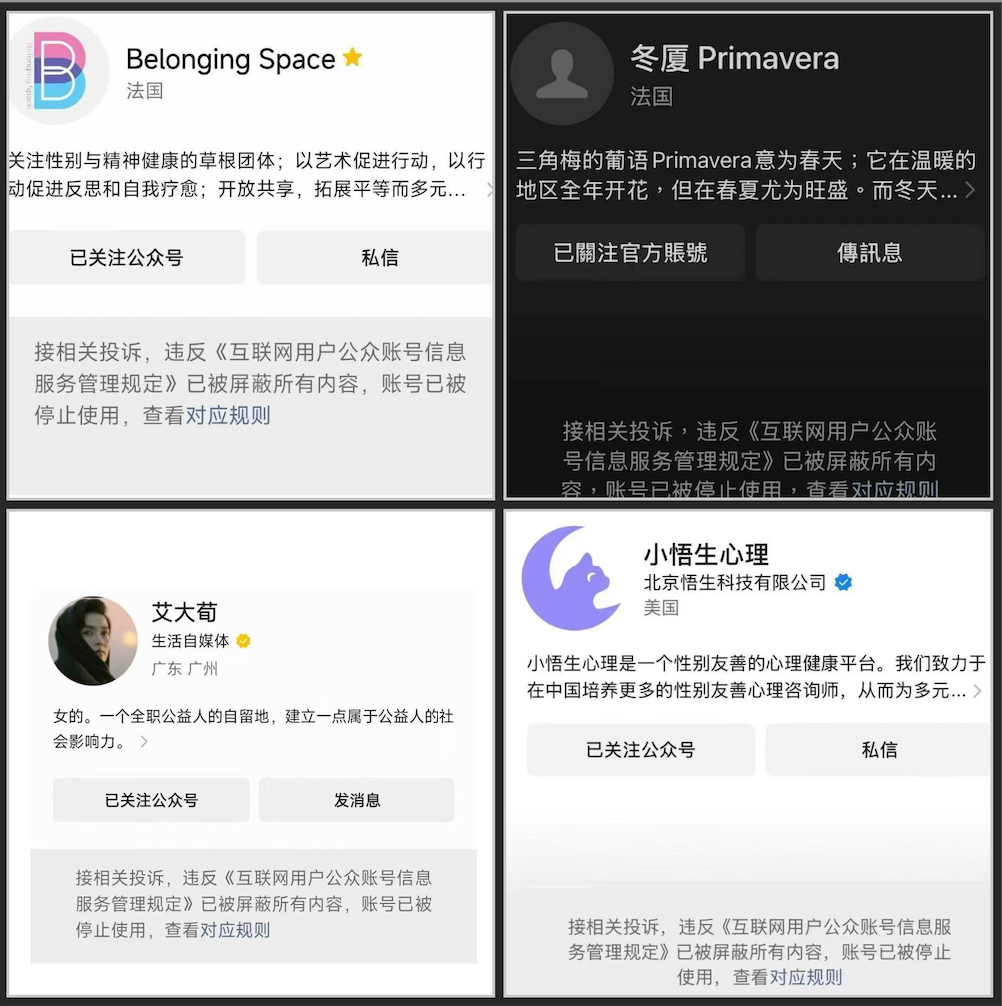
From the evening of March 6 into the early hours of March 7, at least ten WeChat public accounts focused on gender rights vanished one after another. Among them were “Xiaowusheng Psychology” (小悟生心理), which writes about the mental health of marginalized communities; “Dongxia Primavera” (冬廈Primavera), a platform discussing feminism and left-wing youth issues; the Gen Z feminist account “Letters from Two Stranger Girls” (两个陌生女生的来信); “HerStoryNow,” a grassroots feminist community space; “Free NORA” (自由娜拉NORA), which advocates for victims of human trafficking and people with mental disabilities; “Belonging Space,” a counseling and community platform; “Ai Dasun”(艾大荀) which focuses on public welfare, science popularization, and related social issues; “Pride Voice” (骄傲声浪), renamed from the once prominent LGBTQ Weibo account “Voice of Comrades” (同志之声); and “Exile LandAi Dasun” (流放地), which publishes essays, fiction, and personal narratives by sexual minorities.

Screenshots of four WeChat accounts banned around International Women’s Day, March 2026: “Free NORA” (自由娜拉); “Dongxia Primavera” (冬厦); “Belonging Space”; and “Ai Daxun” (艾大荀).

For those who follow China’s online feminist communities, this playbook from the authorities is all too familiar. Nearly 10 years ago, on March 6, 2018, “Feminist Voices” (女权之声), the country’s most influential feminist account with a following of at least 180,000 on Weibo and 70,000 on WeChat, published an article titled “The Ultimate Women’s Day Celebration Guide” (最强妇女节过节指南) — which called on women to mark the holiday not with shopping discounts or the flattery of being called a “goddess,” but by joining a campus anti-sexual harassment campaign that had grown out of China’s nascent #MeToo movement.

Two days later, on March 8, as official outlets like China Women’s News ran their usual tributes to International Women’s Day that put the achievements of the Party first, “Feminist Voices” was permanently banned. Similar waves of enforcement against accounts devoted to women have followed nearly every year since. In an article this year called “Multiple Gender Equality Accounts ‘Arranged’ Ahead of International Women’s Day,” writer and independent commentator Li Yuchen (李宇琛) observed that the early-March crackdown has become almost a form of ritual. “This operation has already formed a stable, institutionalized rhythm,” he wrote. 

The action this year has not been limited to public accounts. Individual voices on social media have also been targeted. In February, Xinjiang stand-up comedian Xiao Pa (小帕) became another casualty. On February 5, she posted on Weibo: “I’ve been lying at home with a fever for two days. I was thinking that if I had a husband and children, I’d probably have to force myself up against the wall right now to cook for them.” Her account was quickly muted and remains restricted.

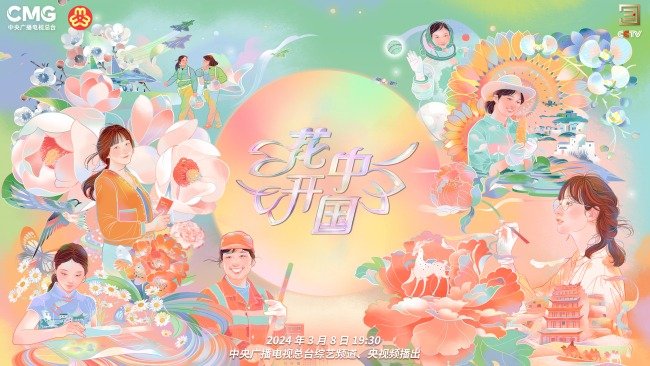
China Media Group poster for “Flowers Blooming for the Nation” (花中开国 ), a Women’s Day special programme airing on March 8, 2024, on CCTV’s General Arts Channel and the CMG Video platform.

Three weeks later, the platform’s official moderator account “Weiboxia” (围脖侠) explained the reasons behind the closure. Xiao Pa, it said, had violated requirements of the CAC’s “Clear and Bright” campaign against content that “incites gender antagonism” and stokes “marriage fear” and “fertility anxiety.” Posts expressing support for the comedian were also quietly scrubbed from the platform.

Even caution has offered little protection. On March 7, author “Ai Daxun” (艾大荀), a public-welfare worker who writes about social work, women’s rights, and civil society, published a farewell essay after her WeChat account was pulled down. Called “Written at the Moment My Public Account Was Banned,” the post described the constant paranoia that prevails when one writes under tightening restrictions. 

In 2025, “Ai Daxun” had tried to organize an offline book club in Guangdong ahead of International Women’s Day, only to have it canceled two nights before the event. She never attempted such an event again, and said she had grown accustomed on a fundamental level to the atmosphere of self-censorship. She was someone who knew every sensitive keyword and every shifting red line on Chinese cyberspace. “I might even be the mildest among the accounts you follow that still track social issues,” she wrote. “But even so, my account was banned. I kept retreating and treading carefully, yet as the red lines kept tightening, there was still no way around them.”

Each year around March 8, the cycle repeats. Accounts disappear, keywords are scrubbed, and communities scatter and regroup elsewhere. For those trying to speak about gender, feminism, or women’s rights in China’s digital public sphere, the space left to speak grows smaller still.

Telling China’s Story, One Bottle at a Time

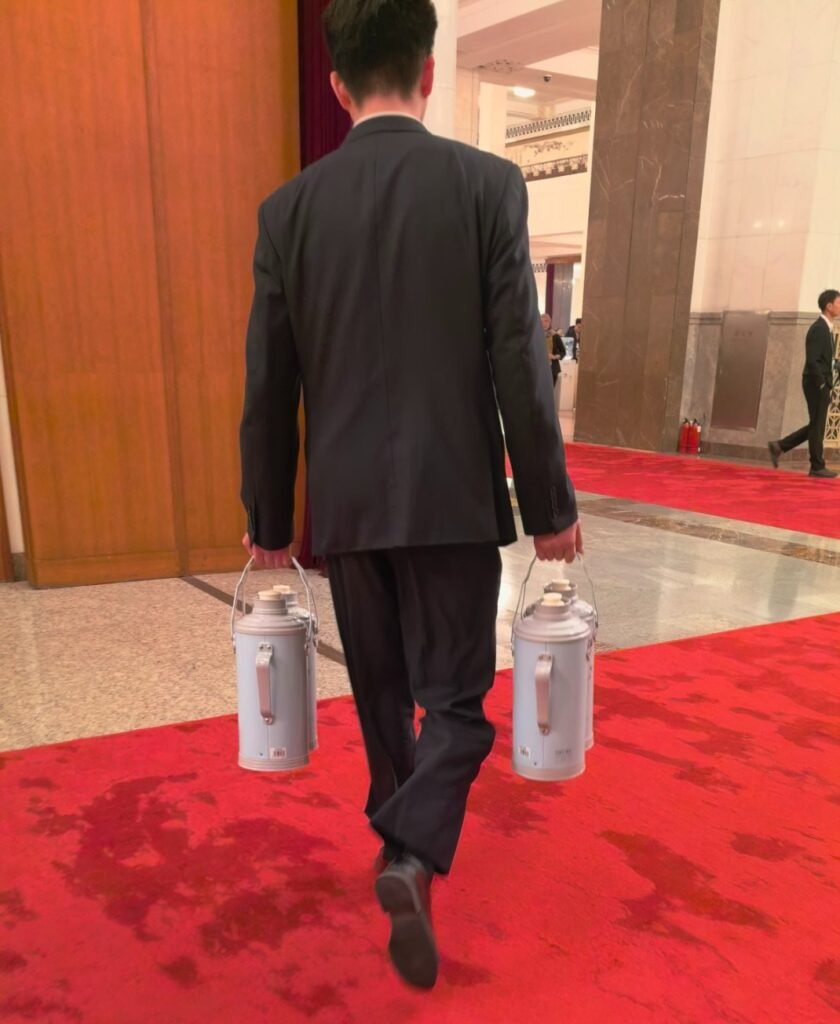
Meeting in Beijing last week, China’s annual political gathering, the “Two Sessions,” introduced plans for the country’s economy and society over the coming year. Technologies like AI were a clear focus in the premier’s government work report. But not all of the gadgets taking center stage in media coverage were so high-tech. Enter the vintage hot water bottle.

On March 12, as the annual plenary meetings of the country’s top legislative and advisory bodies concluded, the Ningbo Daily published a story in which reporter Cheng Liangtian (成良田) described becoming curious about the apparently long-used hot water bottles passed out at the conference. A staff member explained, according to the report, that the National People’s Congress “has always emphasized thriftiness.” The reporter then discovered that the model, now discontinued, had been manufactured three decades ago. 

Cheng concluded by drawing a not-so-journalistic link between the humble vessel and the mystique of Chinese Communist Party power: “Through an old hot water bottle, one glimpses the spirit of diligence and frugality that defines a great party,” he wrote. 

What can explain such a strange fuss over water bottles? And why is the Ningbo Daily reporter getting so warmed up about this oddball topic?

With this month’s political meetings touching on issues with the potential to unsettle — unemployment, sluggish consumer spending, a flagging economy — focusing on the minutiae of thrifty housekeeping can serve as an effective distraction. Or so the authorities hope. China’s economic outlook is far from optimistic. The GDP growth target set at this year’s Two Sessions was 4.5 to 5 percent — the lowest in 35 years. And as early as January, Cai Qi (蔡奇), one of the country’s top leaders, instructed propaganda officials to “place economic publicity in a position of importance” and tighten “guidance over public sentiment.”

Small diversions have long served larger propaganda goals in China. In his 2018 book China’s Digital Nationalism, Florian Schneider, a professor at Leiden University who studies political communication in the PRC, describes how the authorities treat China’s media networks as an “info-web” — using their central position within it to inject officially approved “symbols and statements into discourses about the nation, its leaders, and their sovereignty.” Journalists for state media in China learn too that one of their most critical roles is to help create this symbolic world, at the expense of reporting facts. In this system of meaning creation, the battered hot water bottle can be a perfectly serviceable tool.

Hot water bottles at the NPC are a minor but telling case in point, one of many such non-news diversions communicated during the course of the meetings — including the ubiquitous AI robot, a symbol of the country’s tech dominance and ambition. The props invite the public to celebrate frugality as an imagined virtue of the CCP leadership, while turning their gaze away from real social and economic challenges.

The story quickly went viral. The hashtag “The Great Hall of the People’s Hot Water Bottle Has Been Used for 30 Years” (#人民大会堂的热水瓶用了30年#) trended on Weibo, where it was picked up and amplified by state and commercial media outlets.

Even the manufacturer — a company in Jiaxing, Zhejiang province — weighed in, telling reporters that it had been sending staff to the Great Hall every year for 16 years to carry out maintenance, and that “no matter how material life changes, frugality is always the foundation.” 

Not all readers, however, were warmed by the nostalgic glow of the water bottle story. On Weibo, alongside supportive comments, some users pointed out the irony that keeping the old bottles going had likely cost more than simply replacing them. Another declared that “the most hilarious and farcical video of the year has arrived.”

On Reddit, where Chinese-language communities often include diaspora users and those accessing the platform via VPN, the verdict was blunter still: “What is the government doing with this kind of stunt other than performing and spreading a sense of panic? They keep telling residents to spend more, while the government itself puts on this pointless show.”

As inconsequential as the news story was, it did not go unexamined. Wuyue Sanren (五岳散人), a former Chinese media insider turned independent commentator now based in Kyoto, took to his YouTube channel to raise questions about several of the story’s key claims. Drawing on his experience working within China’s state media system, he noted that bottles and other such objects — far from being frugally preserved — are routinely cycled out of use every three-four years as necessary. He also questioned why the timeline in subsequent reports had quietly shifted from “30 years” to “16 years” of use. One likely reason, he said, was that the media indeed calculated, as social media users had snidely remarked, that ongoing maintenance costs would have exceeded simple replacement costs, undermining the core narrative of frugality. 

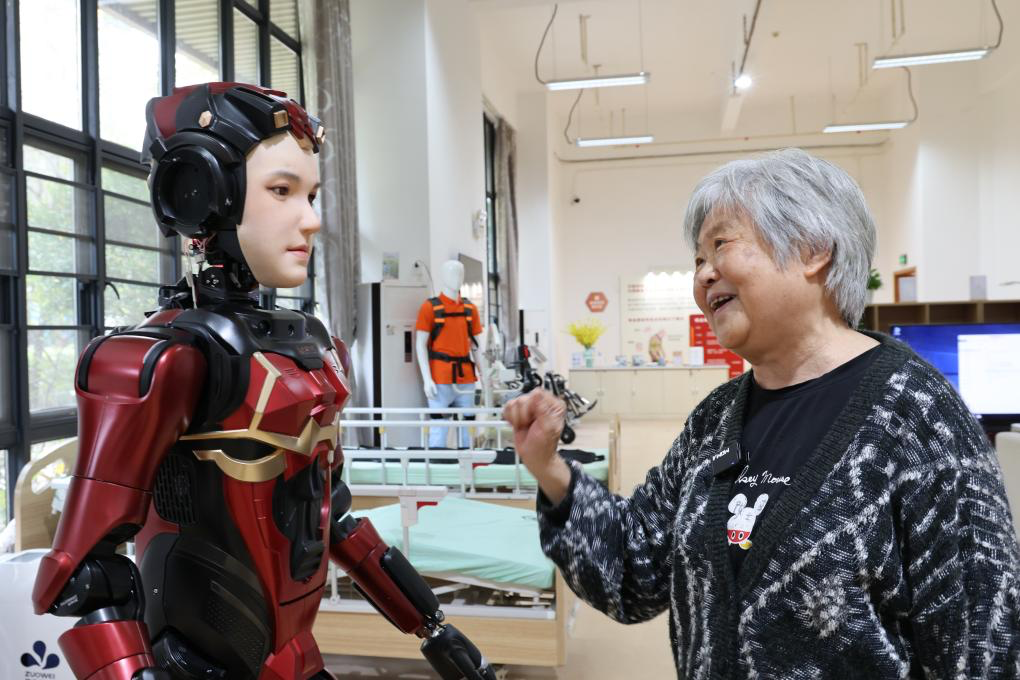
A Xinhua News Agency report on robots, this one speaking to the elderly in Shenzhen, is one of hundreds in state media during the “Two Meetings.” 

So why keep them? Wuyue Sanren set aside the rational explanations — frugality, tradition, and so on — and pointed to something else more basic: superstition. For all the Party’s public denunciations of superstitious thinking, he said, a quiet fear in the leadership runs just beneath the surface. Changing out objects associated with political continuity, even worn-out hot water bottles in a ceremonial hall, could portend unwanted power shifts. “On the one hand, they are always emphasizing that superstition is bad,” said Wuyue Sanren. “On the other hand, they have a constant sense of dread.”

But perhaps the most succinct response to the water bottle ballyhoo came again on Reddit, from a user who ridiculed the state media fixation on nostalgia and emotion: “Classic propaganda apparatus,” they wrote. “Moved by its own storytelling.”