Tag: China

Cave Cleanup

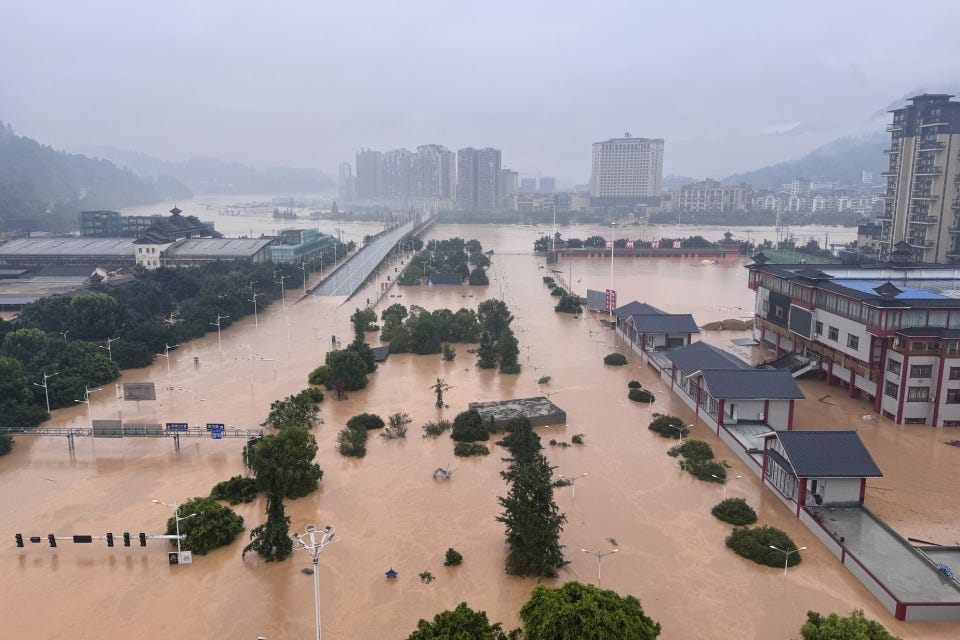
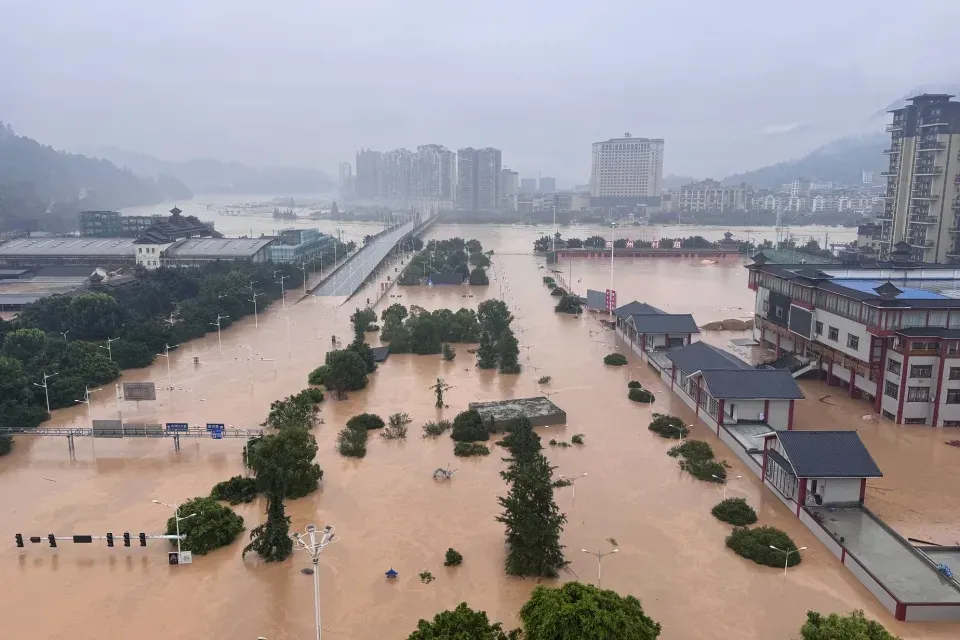
A viral social media video exposing a garbage-filled karst cave in the scenic area of Zhangjiajie in Hunan province triggered China’s characteristic “swatting at flies” (打苍蝇) media response — with outlets like Shanghai-based Guancha (观察者网) and The Beijing News (新京报) tackling local environmental negligence after years of feckless silence. The polluted cave in Cili County (慈利县), created by illegal waste discharge from three livestock farms now under investigation, contained 2.7 tons of refuse including water bottles dating to 2015, suggesting years of contamination that went unchecked. The Beijing News questioned how authorities had failed to notice the waste dumping, which had gathered despite constant complaints from residents over unstable water quality. Back in March, facing citizen pressure, the local government issued perfunctory cleanup notices but ignored the underlying causes. Action was only forced last month, when heavy rains caused sewage overflows. What might make a real difference? Active local media.

Romance Lockdown

According to reporting by Taiwan’s Central News Agency, scores of writers in China have been arrested or fined for publishing on the Taiwan-based adult fiction website Haitang Literature (海棠文學城), which allows authors to earn money through subscriptions and tips. More than 50 writers of “danmei” (耽美) — romantic fiction featuring male-male relationships typically written by women — have been detained since June 2024 in what critics call “remote fishing” (遠洋捕撈). This refers to the practice by the authorities of crossing jurisdictions to make arrests. Police in Anhui province initially targeted high-earning Chinese authors on the platform, while recent arrests in Lanzhou focused mostly on young writers, many university students, who made just a few thousand yuan through their online writings. Several writers implicated in the crackdown posted on Weibo about depression and suicidal thoughts before their accounts were deleted. CNA reports that lawyers in Beijing and Shanghai have formed pro bono legal aid teams to assist detained authors. So far, no coverage of this story has appeared in the media inside China.

Weaponizing Audits

Last month several figures in Hong Kong’s media spoke out about an apparent new tactic being used to curtail the activities of independent media and journalists. Since November 2023, at least six outlets and around twenty journalists have faced tax audits spanning seven years, with demands totaling over HK$1.7 million, or more than 200,000 dollars. The targeted outlets include InMedia (獨立媒體), The Witness (法庭線), ReNews, Boomhead, Hong Kong Peanuts (香港花生), and the Hong Kong Free Press.

The Hong Kong skyline from Victoria Peak. SOURCE: Wikimedia Commons.

Tax authorities made errors and “strange, unreasonable claims,” including auditing one outlet for a year before it was established and asking a journalist to pay profits tax for a nonexistent company registration number. Inspections also extend to family members, including both parents of journalists’ association chief Selina Cheng (鄭嘉如). Hong Kong Peanuts host To Kwan-hang (陶君行) revealed that virtually all hosts, including Wong Ho-ming (黃浩銘) and Chow Ka-fat (周嘉發), received audit demands.

While the Inland Revenue Department (IRD), the territory’s tax collection authority, maintains that the “industry or background of a taxpayer has no bearing on such reviews,” the unified actions appear to be a form of bureaucratic censorship designed to exhaust the operations of independent media. Similar tactics have been used by authoritarian governments in Russia and Turkey, where punitive tax audits and financial sanctions have sought to control press activities. The approach would mark a new development in Hong Kong’s media landscape.

For many in the Hong Kong indie media space, the IRD’s insistence that they were “randomly selected” for a probe is difficult to swallow. “I can count all of Hong Kong’s non-government aligned digital media outlets on two hands,” Hong Kong Free Press founder Tom Grundy told Lingua Sinica. “Most are under tax audit simultaneously.” Grundy emphasizes that his outlet has insisted throughout its ten-year history on “meticulous record-keeping,” but notes that handling the audit “has diverted resources, manpower and funds away from journalism.”

The IRD audit of the Hong Kong Free Press comes one year after the outlet was selected — “randomly,” it was told — for a rare inspection from the Companies Registry, the city’s official business registration and company records authority. “We’re so lucky, perhaps we should put some numbers on the lottery,” Grundy said.

Illegal Surrogacy Operation Uncovered

Elephant News (大象新聞), a platform operated by Henan Broadcasting System, has collaborated with anti-human trafficking activist Shangguan Zhengyi (上官正義) to expose an illegal surrogacy lab in Changsha, Hunan province.

Their undercover investigation revealed a makeshift facility equipped with wards, operating theaters and a laboratory. Among the nine women found at the site was a 41-year-old deaf-mute woman from Shanxi province who communicated via sign language that she had received 280,000 yuan ($38,600) for serving as a surrogate mother. The circumstances suggest possible coercion, as she indicated being brought to the facility by “outside people” (外面的人) and seemed uncertain how long she had been there. Reporters documented vehicles delivering more than 17 women to the facility over two days.

Elephant News has reported the case to authorities, and related hashtags including “Underground surrogacy handlers show strong counter-surveillance awareness,” have trended on Weibo.

Telling China’s Story in Paris

Founded in 2015 by Chen Shiming (陳世明), a restaurant owner turned media entrepreneur, France-based Mandarin TV (歐視TV) — rebranded in 2021 from “French Chinese TV” (法國華人衛視) — makes little effort to disguise its ambition to serve the agenda of the Chinese state. The outlet describes its mission as “spreading China’s voice, telling China’s story well” (傳播中國聲音,講好中國故事) — language that mirrors the goal for external propaganda set out by Xi Jinping in August 2013, less than two years before Chen’s media outfit set up shop in Paris’s 8th Arrondissement.

In interviews with Chinese media, Chen has said he hopes his station can counteract what he says are deeply biased views toward China in France, his home for the past four decades. “I want to show the real China to the French,” he told the Yueqing Daily (樂清日報), a county-level CCP-run newspaper in coastal Zhejiang province. The real China for Chen is apparently reflected by the country’s strictly controlled state-run media. As Chen himself acknowledged in a 2021 interview, the channel openly collaborates with central CCP media like China Central Television (中央電視臺) and China Radio International (中國國際廣播電臺), both under the China Media Group conglomerate directed by the CCP’s Central Propaganda Department. The channel has also cooperated with regional state broadcasters like Wenzhou TV (溫州電視臺).

Founded by through Chen’s C-MEDIA Group (歐洲中誼文化傳媒集團), and claiming to be the only Chinese-language television station authorized by France’s media regulator Arcom, the station broadcasts 24-hour content, almost entirely from its Chinese state partners. The same state content, including from CCTV and Xinhua News Agency, fills its YouTube channel.

Mandarin TV founder Chen Shiming (left). SOURCE: Mandarin TV.

Redacting History

Monday this week marked the 17th anniversary of the Wenchuan earthquake, a 7.9 magnitude tremor that devastated Sichuan province and tragically took the lives of nearly 100,000 people. On the anniversary this year, one particular Wenchuan-related item surged to the top of search engine Baidu and hot search lists on the social media forum Weibo. It involved a vox pops interview given on location one week after the 2008 quake by Li Xiaomeng (李小萌), a reporter from state broadcaster CCTV. In the old broadcast shared on social media on May 12, Li comes across a farmer known simply as “Uncle Zhu” (朱大爷) as she strolls along a collapsed mountain road. Speaking a local dialect, Zhu stoically tells the journalist about the appalling conditions in the area. Through an interpreter he explains to the reporter that he is returning home to harvest his rapeseed crops in order to “reduce the burden on the government” — meaning that he will have some income and not need to be totally dependent on aid. By the end of the interview the farmer is convulsed with sobs, the tragedy of the situation coming through.

Li posted this week on Weibo to commemorate the moment, revealing that Uncle Zhu passed away in 2011. She said: “That conversation, with its unexpected, banal but heartbreaking details, showed all of us in China that people like Uncle Zhu, with their calm acceptance in the face of catastrophe, have the backbone to do what is right.” Other media, including China Youth Daily, an outlet under the Communist Youth League, built on Li’s exchanges with the Uncle Zhu in the years after the quake to commemorate the anniversary.

But a key portion of the television exchange was edited out of this year’s commemorative coverage. Near the midpoint of the original video, Li turns from her conversation with Zhu to interview several other farmers. One farmer explains that his child was killed in the earthquake, “buried in Beichuan First Middle School.” This exchange referenced the widespread collapse in the quake zone of shoddily constructed school buildings, resulting in the death of thousands of children. Revelations of school collapses briefly drove a wave of public anger, and a burst of Chinese media coverage — before the authorities came down hard.

As Dalia Parete wrote last week for CMP, Chinese media are generally subject to strict controls when reporting on breaking disaster stories. but past disasters too are subject to careful narrative control, with inconvenient facts often erased from official memory.

Screenshot of Li Xiaomeng’s May 2008 interview from the quake zone with “Uncle Zhu.”

Anti-Spy Hiring Policy

Foreigners aren’t the only ones in Xi’s China who are at risk of spying accusations. At the annual shareholders meeting of Gree Electric Appliances Ltd, an electronics conglomerate based in Guangdong, CEO Dong Mingzhu (董明珠) said the company “absolutely does not use overseas returning students” (海归派) because of the risk some have been turned into spies. “I have to choose conservatively,” said Dong.

The CEO is known for stirring up controversy, and this time was no exception. Her words racked up hundreds of millions of views on Chinese social media, with some netizens praising Dong and others mocking her, wondering what spies would find among the company’s stock of air conditioners.

Youth unemployment is a frustrating topic in Chinese society, with many young people investing a great deal of personal wealth studying abroad in the hope this will improve their chances on the job ladder. Major central state news outlets like Xinhua and CCTV have not run the story. Indeed, in the past the latter celebrated Dong’s reputation for controversy as an asset. But the story has appeared in newspapers under the state-owned Shanghai United Media Group, including The Paper and the Xinmin Evening News. The latter called Dong’s remarks “absurd” and potentially damaging to the prospects of returning students.

On social media, the prominent Weibo user “Liu Ji Shou” (留几手) declared, “In light of Ms. Dong Mingzhu’s public discrimination against overseas returnees seeking employment, I announce that until Ms. Dong publicly apologizes and retracts her statement, my family will refuse to purchase any Gree products. We mean what we say!”

Red Seas Ahead

In yet another local manifestation of what the CCP calls “ideological and political education” (思政教育), or sizheng, a national program to ensure that students adhere to the political line of the party, young cadets at Shanghai Maritime University (上海海事大学) are now receiving an education that anchors maritime training to party history.

On March 27, students at the university, which specializes in shipping, transport and maritime industries, sat for a lecture from Xu Xuechen (徐雪琛), a top official from Shanghai’s local museum of the CCP’s founding, who instructed them in how to effectively integrate “red stories” (红色故事) into seemingly non-ideological subjects like maritime studies. This unapologetic process of ideological insinuation has been a cornerstone of sizheng since Xi Jinping’s campaign in 2019 to reinvigorate the practice, which has its origins in the 1940s.

According to a report in the Shanghai Morning Post (新聞晨報), a commercial daily under the city’s CCP mouthpiece, the motto of the sizheng program at Shanghai Maritime University is “Red + Blue + Special” (红色+蓝色+特色), combining the party’s cardinal color with the university’s official blue (also a symbol of its maritime associations). Special? Yes, we’re stumped too. But according to university officials, the program aims to cultivate “new maritime personnel who have ideals and responsibility, are willing to endure hardships, and are brave in their struggle.”

Somewhere, we might imagine, key maritime skills are also involved — like navigation.

404: What Is It Good For?

An exposé published last week by Guangzhou’s Southern Metropolis Daily (南方都市報) telling the shocking story of exorbitant morgue fees in Jinan, the capital of coastal Shandong province, quickly disappeared from China’s internet last week — suggesting authorities were uncomfortable with its implications of bureaucratic negligence. The report detailed how the body of murder victim Liu Yun (刘芸) had remained in storage at a local funeral home for more than five years, accumulating 380,000 yuan (52,800 dollars) in storage fees that the victim’s impoverished rural family could not afford to pay.

The bureaucratic deadlock occurred when police refused to issue a death certificate, claiming the court verdict was sufficient, while the funeral home insisted it needed this specific document to release the body. Despite regulations clearly assigning responsibility to police for issuing death certificates in criminal cases, the impasse continued until media exposure prompted authorities to waive all fees. This is apparently not an isolated case.

As the article vanished online, it left a string of “404” error messages in its wake. In an oddly colorful take on censorship, Tencent turned the page block into a creative error page encouraging users to “light a dream for children” (为孩子们点亮一个梦想) by supporting rural schools. The message poignantly notes: “The page you’re looking for has gone astray seeking dreams, but you can still make a difference together with Tencent’s volunteers.”