Tag: International relations

Cognitive Warfare 101

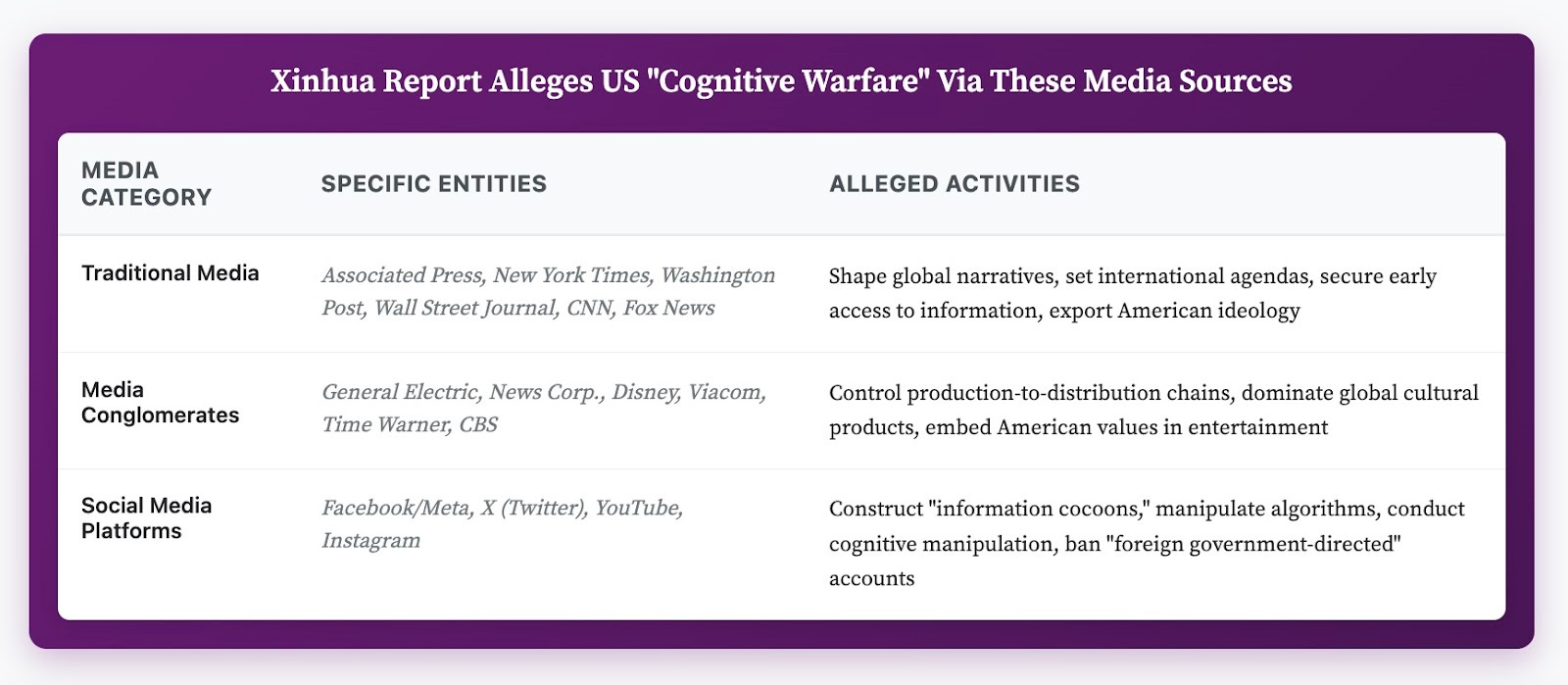
At the Global South Media and Think Tank Forum held in Yunnan province earlier this month, more than 500 guests from 110 countries were served with copies of Colonization of the Mind: The Means, Roots, and Global Perils of US Cognitive Warfare, a report that accused the United States of fitting the world with “mental shackles.” The Xinhua Institute report cited the Trump administration’s dismantling of USAID and USAGM as exposing “longstanding activities of exporting ideology, promoting ideological infiltration, manipulating international opinions, shaping foreign nations’ perceptions, and even conspiring to subvert sovereign governments.” This “washing of dirty linens,” the report argued, revealed only “the tip of the iceberg of the United States’ global ideological warfare.”
A Parade of Revisions

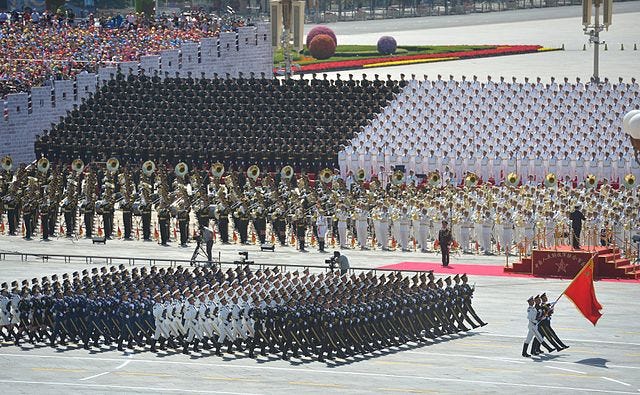
China’s 80th anniversary military parade last week showcased more than advanced weaponry — it culminated weeks of historical reframing aimed at repositioning the CCP as the decisive force in World War II’s Pacific theater. Through state outlets like China Youth Daily and the Ministry of State Security-linked American Academy (美国研究所), Beijing promoted narratives claiming the CCP served as the “backbone” (中流砥柱) of resistance, years before America’s “belated” Pearl Harbor entry.

PLA soldiers march in the 2015 parade in Beijing to commemorate the 70th anniversary of the end of World War II. SOURCE: Wikimedia Commons.

The campaign accused American historians of deliberately downplaying China’s role for “political advantage,” claiming US academia systematically ignored how Chinese forces “tied down Japanese military strength” while America remained absent. This reframing serves Xi Jinping’s broader goal of displacing American global leadership and creating “a new type of international relations” by rewriting foundational narratives of the current world order.

For more on this story visit the China Media Project.

Beijing Bristles

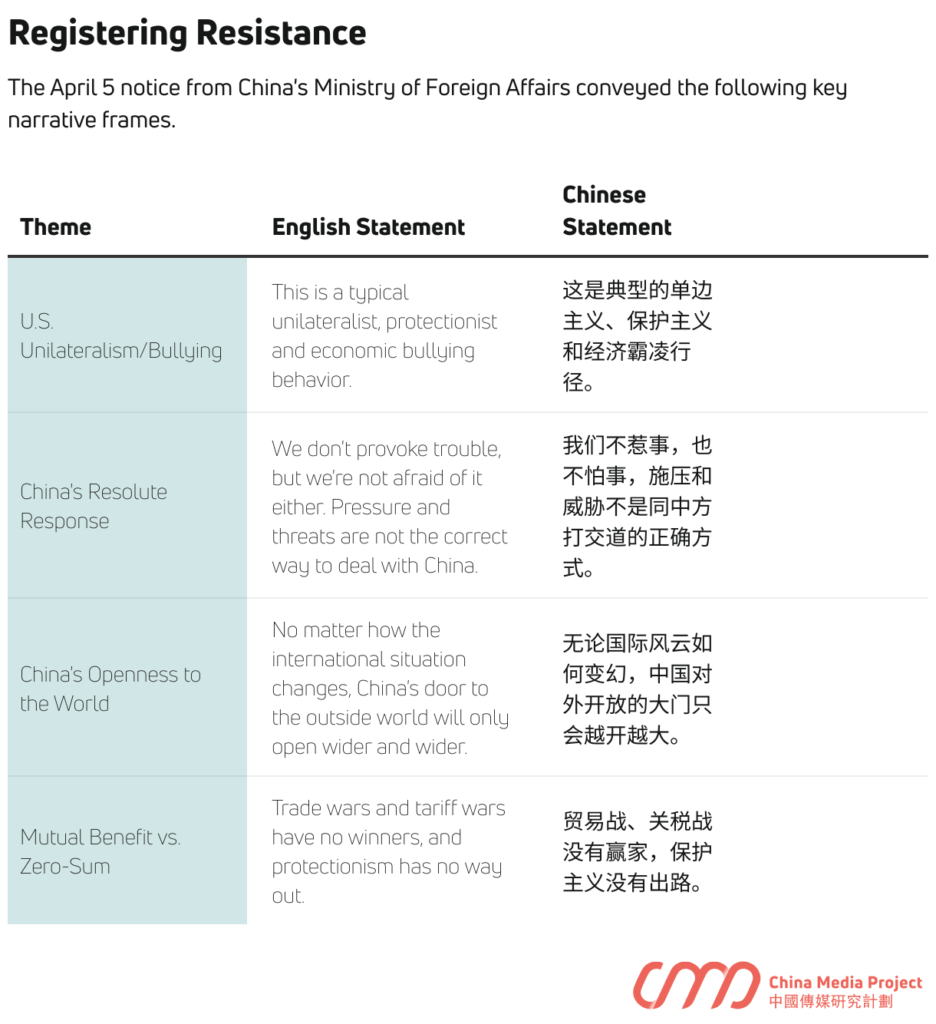
Ever since April 2, when President Donald Trump announced the imposition of deep tariffs from White House Rose Garden as a “Liberation Day” for America, China has pushed back hard, framing the United States as bullying, inflexible, and ultimately harmful to the world and itself. The rallying cry from the Ministry of Foreign Affairs (MFA) three days later set the tone of defiance: “The world needs justice, not hegemony!” (世界要公道,不要霸道).

Filtered out through an official notice, or tonggao (通稿), from Xinhua News Agency, the MFA’s language accused the US of “economic bullying” and “zero-sum game playing,” and warned that “pressure and threats are not the correct way to deal with China.” The message reverberated throughout the media inside China, from the leadership’s People’s Daily (人民日報), to provincial mouthpieces like Guangdong’s Nanfang Daily (南方日報), and on to more commercial outlets like Caixin Media (財新) and the 21st Century Business Herald (21世紀經濟報道). In perhaps the subtlest sign of pique, the professionally-minded Caixin labeled the notice “Authorized by Xinhua for Release” (新华社受权发布). Translation: We were ordered to run this.

For a more detailed look at China’s framing of the US tariffs, stay tuned for our full analysis next week. Until then, here is a breakdown of the key narrative frames driving official coverage over the past two weeks — all evident in the original MFA release.