Tag: National Security Law

Independent Outlet Forced to Shut Down

AllAboutMacau (論盡媒體), an independent news outlet that has been serving the Macau community since 2010, announced on October 30 that it would cease operations on December 20, following the government’s revocation of its publishing license.

The closure reflects Macau’s tightening press restrictions since the territory expanded its national security laws in 2023. The crackdown mirrors similar patterns in Hong Kong, where authorities have systematically dismantled independent media under national security provisions. The outlet said it would release its final print magazine, issue 150, this month, while its website and digital platforms will cease operations in December.

In their farewell message, the outlet revealed that since October 2024, authorities have barred its journalists from accessing the Legislative Assembly and official events for news coverage. In April 2025, three journalists were denied entry to the legislature and now face possible criminal charges related to that incident. The Press Bureau of Macau informed the outlet in October that its publication registration had been revoked, citing non-compliance with the legal requirements under the Publication Law.

“Farewell, take care,” reads the solemn message in AllAboutMacau’s announcement of its closure. 

Pulse HK Launches

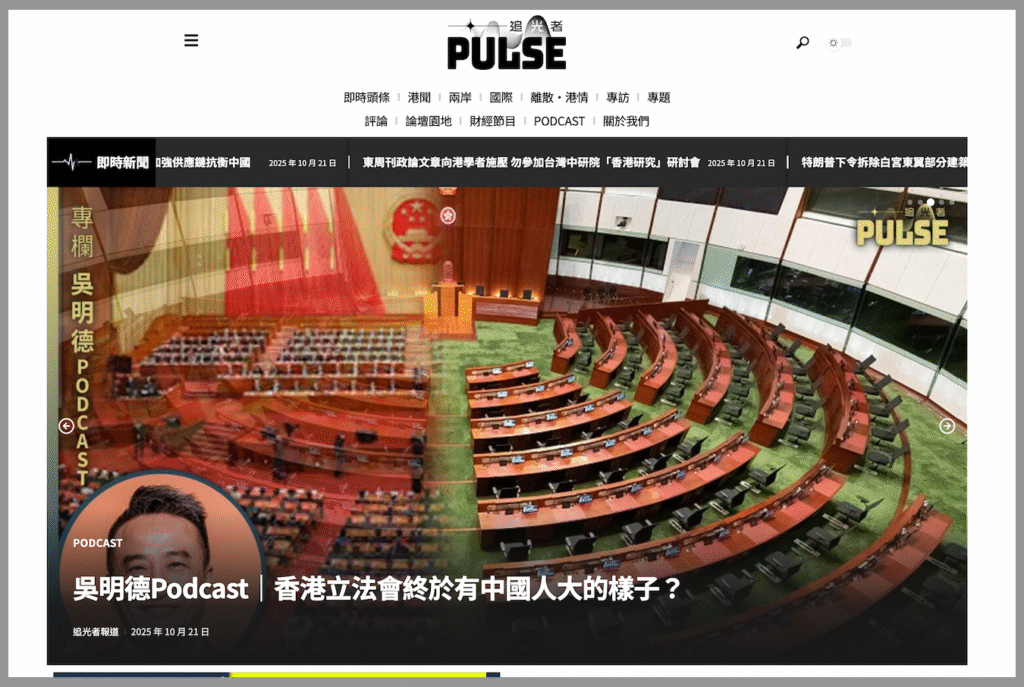
Pulse HK (追光者), a news outlet serving Hong Kong audiences worldwide, formally launched on Monday, positioning itself as an information platform for the city’s expanding diaspora. “Let us continue to look to the world and chase the light,” said editor-in-chief Wu Lik Hon (胡力漢) in his founding message, echoing the outlet’s Chinese name, which translates literally as “light chaser.”

The outlet was initially formed in August through a merger of two exile publications, The Chaser (追新聞) and Photon Media (光傳媒). The combined newsroom now operates from Taiwan, the United Kingdom, and North America — a geography that reflects the scattering of Hong Kong’s once-vibrant media scene following the 2019 protests and the imposition of a sweeping national security law in 2020.

The launch comes as Hong Kong exile and diaspora communities have grown substantially abroad, particularly in the UK, Canada and the United States. More than 150,000 Hong Kongers have relocated to the UK through the British National (Overseas) pathway since its introduction, according to UK Home Office figures released in August 2024. Substantial communities have also formed in Canada and the United States.

Operating beyond Hong Kong’s jurisdiction, Pulse HK plans to cover local news, cross-strait developments, diaspora stories, and international affairs through articles, interviews, and podcasts. Wu, the former head of the China desk at Hong Kong’s i-Cable News who later worked for the Cantonese Service at Radio Free Asia, said the team would provide 24-hour coverage, with a daily news broadcast set to begin November 3.

(Un)Fair Exclusion

At least three independent Hong Kong bookstores, including Bluesky (藍藍的天) and Boundary Bookstore (界限書店), were rejected from participating in the Hong Kong Book Fair, which began last week and closes today. The restrictive moves follow actions last year requiring these outlets to remove works by journalist Allan Au (區家麟) from their displays. The Wen Wei Po (文匯報), an outlet run by China’s central government in Hong Kong, published a commentary asserting that after five years of the National Security Law, authorities “can no longer allow so-called ‘independent bookstores’ and ‘independent book fairs’ to act recklessly” (胡作非為). The reference to “so-called” is a common growling tactic used by Chinese state media. In response, the excluded bookstores have organized an alternative Independent Book Fair this month.

Persisting in Print

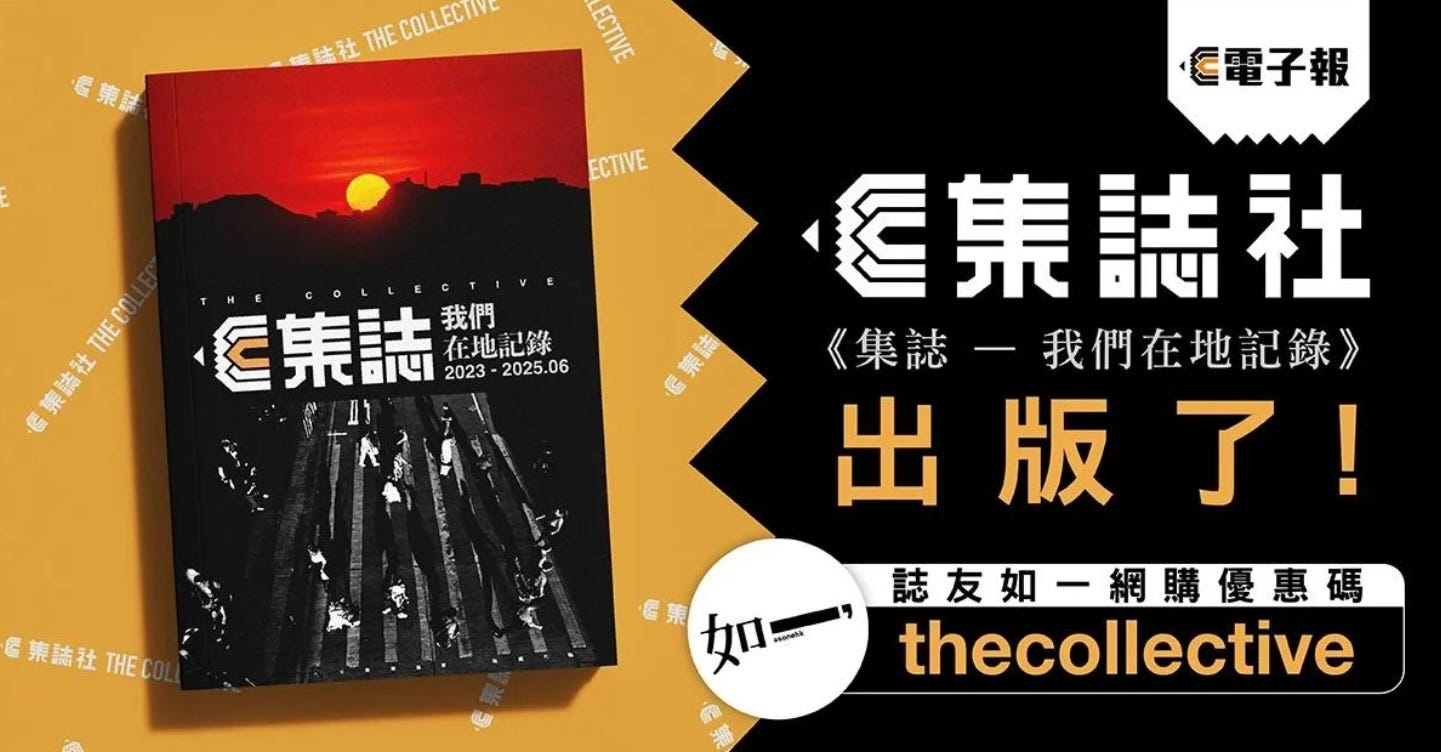
Two independent Hong Kong media organizations have recently published new books, a show of quiet resilience under the territory’s national security law restrictions. The Witness (法庭線) released How to Do Court News (法庭新聞怎麼做?) on July 15. The volume, which features more than 50 notes from the editor and previously unpublished reporting journals, follows the outlet’s earlier book Public Understanding of the Judiciary (公民司法認知). The Collective (集誌社) news outlet also published its inaugural book, The Collective: Our Record (集誌——我們在地記錄) in early July. The book collects 30 selected reports from the past two years, reflecting the outlet’s mission to “monitor the powerful, care for the disadvantaged, [and] record the post-movement era.”

Sundials for Security

Media outlets in Hong Kong, including InMedia HK and HK01, have reported that Hong Kong’s Education Bureau has updated its National Security Education Curriculum Framework to align with China’s Patriotic Education Law and emphasize “comprehensive security” (大安全). The framework now requires national security concepts in Hong Kong schools in subjects ranging from mathematics to physical education. Primary students must learn about the Hong Kong National Security Law (香港國安法) and the Safeguarding National Security Ordinance (維護國家安全條例), while secondary students will devote more time to the study of China’s political system, including the leadership role of the Chinese Communist Party. Physical education lessons will teach students about traditional Chinese sports like shuttlecock. Mathematics classes, meanwhile, will explore such devices as ancient Chinese sundials in order to build “awareness of protecting cultural security.”