Projecting Light in the Shadows
In November 6, 2025, just four days before the official opening of the IndieChina Film Festival in New York, the event’s director, Zhu Rikun (朱日坤), announced that it had been cancelled. In his statement, he said that if he did not halt the festival, given “the situation currently unfolding, anyone involved with the event — directors, forum participants, peripheral figures, volunteers, even audience members — could face threats or harassment.” He had made the “extraordinarily painful decision,” he said, not out of “fear or capitulation,” but out of consideration for the safety of all participants and audience members connected to the festival.
Before relocating to the United States, Zhu Rikun was for decades deeply involved in China’s independent film exhibition and production scene. He helped to organize the inaugural “China Documentary Exchange Week” (中国纪录片交流周) in 2003, and co-founded an independent film forum called, “The Human Way, the Cinematic Way” (人之道, 影之道), the forerunner of what would later become the Beijing Independent Film Festival (北京独立影像展).
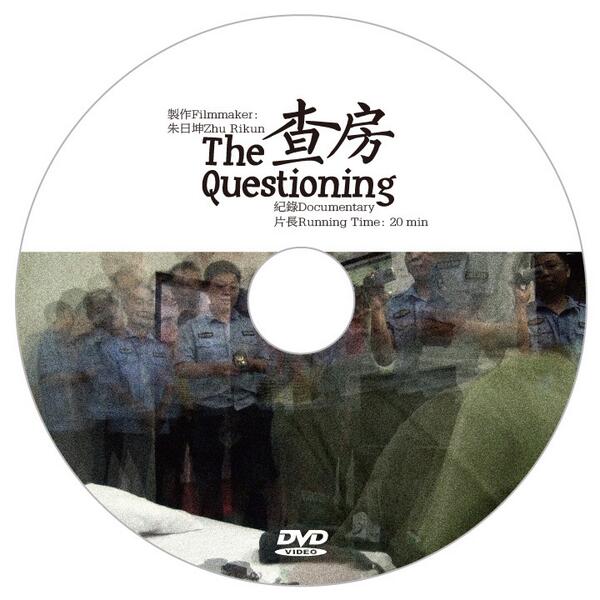
Zhu’s own independent documentary, The Questioning (查房), captures the moment police interrogated him in a hotel room. And this work also helps to explain why the inaugural IndieChina festival he founded in New York became a target of transnational suppression by Chinese authorities.
In reporting on the recent fate of IndieChina, media outlets have uniformly used the term “independent film festival” to describe this and other organized film screenings that have faced similar situations. When we look more closely at the various groups now trying to organize Chinese-language film screenings abroad, however, it becomes clear that the ecosystem of the “independent Chinese-language film screening” is much broader — and that the category itself is being pulled in different directions by the very different realities facing each event and the groups involved.
Through interviews with multiple independent Chinese-language screening groups in Europe, this reporter attempts to give readers a day-to-day sense of the circumstances facing acts of independent screening (独立放映).
Part One: Before the Screening
The independent Chinese-language screening groups currently active in Europe have emerged largely within the past five years. This is because a large number of Chinese people with an interest in film — and some with prior screening experience — emigrated to Europe during this period, making these groups a byproduct of the latest wave of emigration. Films, like the people who love them, literally ran (润) to Europe. Intertwined with the Covid-19 pandemic, China’s “dynamic zero-Covid” policy and the aftershocks of the anti-lockdown protests rippled out to Europe, and the stimulation of those external events prompted many of these new arrivals to start thinking about doing something here.
Tang Mingxuan (唐明轩) had accumulated rich experience in independent film screening back in China, co-founding a film collective focused on sexuality and gender, and his professional background was also in film. When he arrived in Europe, he brought with him the operating model and programming approach of that earlier collective, and on this foundation built a new screening group in his adopted city.
Many people share a background similar to that of Tang Mingxuan, though Jiang Bu (蒋不) is perhaps a more typical example. Jiang was active in Chinese civil society even before he entered university, and he later studied at the Beijing Film Academy. Shaped partly by his experience in grassroots organizing and partly by his dissatisfaction with the atmosphere on campus, he always gravitated toward the kind of independent documentaries made by figures like Ai Weiwei (艾未未), Hu Jie (胡杰), and Ai Xiaoming (艾晓明). “For me around 2011, I genuinely believed that you could use this kind of work, making independent documentaries, to have an impact on Chinese society, what people called ‘the surrounding gaze transforming China.’ I thought it was a path for public intellectuals and artists to engage with reality and take part in public action.”
There are also many people who came to Europe with little or no screening experience, and essentially had to learn from scratch how to host a film screening. Chen Zhe (陈哲), one of the founders of “Xinfeng” (信风), had only the vaguest sense of what “independent screening” meant before trying to organize screenings locally, and had never attended a screening event before leaving China. Wei Wenxi (韦文熙) and Lin Aili (林艾历) had each been involved to varying degrees in screening activities before moving abroad, but both only encountered the finer details of organizing screenings after arriving in Europe.
Despite his lack of experience, Chen Zhe still took that first step into organizing film screenings. As he describes his thinking at the time: “This is something that someone should be doing — and since it seems like no one is doing it, we might as well do it ourselves.” There were then a few Chinese-language works that he felt were really decent and were being screened and attracting some attention across Europe. He felt that naturally these films could be screened privately in homes or living rooms — but they also deserved to be seen in cinemas, where people could sit down together and even discuss them.
As Chen Zhe found that some European cities had cinematic screenings and his city did not, he felt that making it happen was his “inescapable responsibility” (责无旁贷). Seizing that opportunity, he and the other founders organized several screenings, which served as the seed from which “Xinfeng” later developed.
Lin Aili’s motivation for founding “79 Square Meters” (79平米) was similar to Chen Zhe’s. In Northern Europe, where Lin now lives, the cultural environment is relatively homogeneous, and opportunities to see Chinese-language films are rare. As contentious issues such as China’s “zero-Covid” policy sparked considerable discussion within the local Chinese community, she hoped to use Chinese-language films to bring people together for conversation — and so “79 Square Meters” held its first screening.
The motivations of these various “screeners” (放映员) may differ, but all have faced a common dilemma: Is film screening an end in itself, or a means to other goals? For Jiang Bu and his group, on-the-ground activism in Paris had gradually ebbed after China’s lockdown policies ended, and they wanted to create a space that was less overtly activist in orientation — one that could reach a broader audience and then engage like-minded people for possible future action. “No Change of Term” (不换届) was their attempt to integrate activism with everyday routines.
Shen Jingping (沈静平) prefers to position their group as a “cultural salon” focused primarily on queer and feminist issues within Chinese-speaking communities, treating film screening as one among many possible activities. Shen might organize events around specific holidays or commemorations — for example, if there is a suitable film around Transgender Day of Remembrance on November 20, they might screen the film. They also direct more resources toward independent filmmakers, reserving their limited screening opportunities for works that rarely get to meet audiences directly.
Among those interviewed for this article, Wei Wenxi is the one most inclined to see film screening as an end in itself. As a film lover, he felt keenly after arrival in Europe that Chinese-language films — and particularly independent films — were too seldom screened. So he joined multiple film screening groups in the hope of somehow making a contribution. He also found the process of curating screenings genuinely interesting. The groups he has been involved with range from those with an issue-oriented or activist focus, like those described above, to ones that are more commercially oriented and already better integrated with the film industry.
Part Two: The Screening Takes Shape
Each of these groups has forged its own distinctive form of “independent screening,” shaped by differing motivations, experience levels, missions, curatorial tastes, and strategies — and each has left its distinctive trace both on and off screen.
The screening groups run by Shen Jingping and Tang Mingxuan are both based in Western Europe, where Chinese communities are larger and local residents speak more complex languages and dialects. Given this relatively diverse and fluid audience composition, Shen and Tang must carefully anticipate on-site conditions, especially when making decisions about subtitling. “79 Square Meters,” located in Northern Europe, has a more fixed audience, and attendance at each screening is more predictable. The relationship between the group and its audience is often closer than in other independent screening contexts.
As Chen Zhe found that some European cities had cinematic screenings and his city did not, he felt that making it happen was his “inescapable responsibility.”
Compared to other groups, “No Change of Term” has a clearer activist character, and so leans toward screening independent documentaries on topics such as Uyghurs, Tibetans, and broader Chinese human rights issues. But because it also wants to lower the threshold for audience comprehension and engagement with discussion, it will sometimes choose works that are more art-oriented, even if the public or political dimension of these works is less explicit.
Choices about screening venues more directly reflect the realities — sometimes actively chosen, sometimes passively determined — that distinguish one independent screening operation from another. Screenings can take place in cinemas or in various kinds of cultural spaces. The cost of a venue, the group’s budget, the terms of cooperation with the venue, the kinds of interaction the space allows — all of these factors can be either constraints or motivations shaping a group’s choices.
By disposition and background, Jiang Bu is drawn to a more “guerrilla” (游击式) mode of screening. “If the content of a film suits that kind of format, we could grab twenty iPads and watch the whole thing in a subway car,” he says. But he also acknowledges that other members of “No Change of Term” had persuaded him on the reasons why screenings in proper cinemas still matter: “The reason we show these films is precisely because they never had a chance to be formally screened in China. We want people to sit down together and enjoy them fully.”
“79 Square Meters” has a strong preference for independent cultural spaces. In Lin Aili’s view, their group is more grassroots, and the potential audience in their city is not large enough to sustain the costs of cinema screenings. “I know that in Berlin or Paris, they screen Asian films in cinemas quite often. But we don’t really like that kind of formal setting. We want a place where people can have a drink and chat and get to know each other. I prefer a more intimate, community-oriented screening model.” “Xinfeng” also gravitates toward such spaces, though it does not rule out cinema screenings. As relative newcomers on the screening scene, however, they want to develop a better understanding of the diverse venues available locally, and so they are ready to seek out more possibilities as they arise.
Despite the variety of films screened, the diversity of audiences, and the range of venues, nearly all of these independent screening groups place a premium on the post-screening discussion. Jiang Bu goes so far as to say that for “No Change of Term,” the post-screening discussion is the real point. In many cases, it matters less which film they screen. Even when they use a cinema that charges by the hour, and the relative cost is high, their post-screening discussions can run for an hour or even 90 minutes. And precisely because the content of those discussions tends to be more sensitive, they almost never announce their post-screening guests in advance, nor do they publish summaries of the discussions.
The post-screening discussions hosted by other groups typically last somewhere from 30 minutes to an hour. When inviting particular guests to speak, “Xinfeng takes concrete measures to verify the reliability of their experiences and what they plan to share in advance, providing audiences with a foundation of mutual trust when more sensitive topics are to be discussed.
Part Three: Beyond the Screening
Independent screening groups also face pervasive challenges. For these mostly volunteer-run operations, the relatively heavy demands on funding and members’ time are a significant burden. In response, some groups have tried to broaden their range of activities. Over the past five years, many independent screening groups have emerged across Europe, but a considerable number have also gone quiet or ceased to be active. Their rise and fall is inseparable from these constraints.
For Jiang Bu, with his extensive experience in organizing, it is a constant challenge, amid these various constraints, deciding how to allocate work among members and coordinate progress. Most of the core members of “No Change of Term” live in Paris and have no immediate plans to leave, so the team is relatively stable and built on a foundation of mutual trust. Even so, it can be a challenge to align the varying areas of interest among members. “Personally, I’d like more different voices to be part of film selection decisions,” says Jiang. “But some members aren’t necessarily engaged at the selection stage — and sometimes even after a film has been circulated, only a handful of people will have watched it.” Still, he says, almost everyone shows up for every event, and are actively involved in the on-site work like ticketing and hosting. “I don’t see this as a problem or a failure of duty, but it’s true that different people have different understandings of their role,” Jiang says. “Some tend to see themselves as volunteers or on-site crew.”
Wei Wenxi has witnessed firsthand what Jiang Bu describes, but from a different vantage point. Based on his observations, some groups have a relatively clear leadership and management structure, with core members who hold more authority and decision-making power. When a screening plan prompts audience complaints on social media, some core members may respond hastily without internal consultation, creating unnecessary pressure that then spills over to ordinary members. Given this kind of hierarchical organizational structure, larger conflicts can erupt. Some volunteers have even publicly posted criticisms after leaving a screening group. Different positions within the hierarchy may determine why members interpret the same situation so disparately.
Funding is the lifeblood that sustains any screening organization. Venues can be costly, and screening in a cinema raises costs dramatically. Most films also require a one-time licensing fee for each screening from agents and distributors, even if a “friendly rate” discount is sometimes available in consideration of a group’s independent status. And this is before factoring in the cost of subtitle production, poster design, miscellaneous expenses, and of course the production of DCPs — or digital cinema packages, the standard format used worldwide for digital cinema projection. Although these groups largely depend on the spare time available to members, all of the groups interviewed for this article said they try, within their means, to provide some form of compensation to members and volunteers who contribute their time and labor.
The most direct way to break even is to charge audiences a registration fee. But if ticket prices are set too high and attendance is poor, not only does the organization absorb significant losses, but the event fails also to achieve the very purpose that motivated the screening in the first place — getting people to sit down together, watch a film, discuss it, and connect.
External grants are a realistic and viable option, but funding typically comes with conditions attached. “No Change of Term” is among the more actively grant-seeking organizations interviewed, but Jiang Bu acknowledges that funding can sometimes become a constraint. “We mainly apply for grants in the human rights field, and funders have corresponding expectations for projects,” he says. “For example, [they demand] that the films screened directly address Chinese human rights issues. That practical constraint has also shaped our current curatorial preferences.”
Chen Zhe’s attitude is thoroughly pragmatic — “cook according to the rice you have,” as he puts it. Unable to price tickets on par with mainstream cinemas, his group has tried to explore more flexible licensing arrangements, such as sharing revenue with rights holders based on actual ticket sales, rather than paying a flat licensing fee upfront. But Chen also stresses that lack of spare time among core members is the greater constraint on “Xinfeng,” more crucial than financial shortfalls. Planning and executing a screening requires a burst of effort over a short period, and he and the other core members all have their own primary jobs. With no new members currently joining, they cannot maintain year-round programming and can only hold events during seasons when members are relatively free.
Tang Mingxuan’s group has built a strong relationship of mutual trust with its venue, and so can use the space for free. The rights holders they have worked with do not always proactively charge licensing fees either, which means they can offer free admission to audiences. They have also tried collaborating with queer and feminist groups, selling self-made merchandise at screenings in hopes of covering other expenses.
Planning and executing a screening requires a burst of effort over a short period.
One distinctive feature of independent film screening, compared to other forms of activism, is that the entire screening network is tightly interconnected. To know what films are available to screen and how to reach rights holders, these organizations are pushed to build connections within the field and share information. Networks extend not only within Europe but also across Eurasia and across the Atlantic.
Jiang Bu, as someone who was active in China’s independent film community, carries with him a web of personal relationships that plays a vital role in “No Change of Term’s” day-to-day operations — allowing the group to reach out to a large number of filmmakers and secure screening opportunities. Once one screening organization successfully navigates all the steps to bring a film to the screen, that success story spreads rapidly through the network to other organizations and groups, ultimately allowing more audiences in Europe to see the film.
Among the longer-term plans at “No Change of Term” is to provide more material support for these informal connections. They are working to build an archive cataloguing the Chinese-language independent films available for screening, with an entry and description for each film as well as information on how to contact rights holders. Drawing on this archive, any independent screening organization or group could quickly find out what is available to screen and how to obtain a license. And their ambitions go further still. They hope to provide new screening groups with technical assistance and some financial support, enabling those groups to carry out low-cost screenings adapted to local conditions. This might ultimately achieve a vibrant Chinese-language independent screening network globally.
This vision at “No Change of Term” is one that Chen Zhe arrived at independently. For Chen, his original motivation for doing screenings was simply that no one was showing “the films I wanted to see.” Starting from this simple fact, he has a straightforward view of who should be screening films. Anyone can do it, he says, and everyone should be doing it together. “There are a lot of local community groups now, and I hope more of them, not necessarily independent screening groups per se, will start showing films so that we can all share the risk.” A dispersed, decentralized screening network is more in keeping with his tastes.
Coda: The Aftershocks of IndieChina
Precisely because of the tightly networked, cross-regional nature of independent screening, some of the people interviewed had been watching as Zhu Rikun, now outside of China, built IndieChina from the ground up — and had witnessed the festival’s eventual collapse. Jiang Bu, Chen Zhe, and Lin Aili all experienced this process firsthand; Jiang Bu in particular has had more personal contact with Zhu Rikun. After Zhu Rikun announced the cancellation of IndieChina, Jiang Bu offered him direct assistance, including helping him reach out to the media for coverage.
Each person’s circumstances and past experiences also shape how they interpret what happened to IndieChina. When Lin Aili first heard the news, she was very surprised. The entire IndieChina project had seemed so substantial, with such a long preparation period. If the Chinese authorities had truly wanted to interfere, she felt they could have done so much earlier, not just days before the festival was about to open. Jiang Bu, who has more understanding of the details with IndieChina, found the whole affair even more bewildering. “There have been all kinds of Chinese-language independent film festivals in New York before, and none of them have faced suppression this serious,” he says. “Many of the directors and staff members who were harassed in China are spread across multiple provinces, which means this was a coordinated cross-provincial operation.”
“They’ve really treated this thing as if it were some kind of existential threat,” he says of the Chinese authorities.
The “aftershocks” of the incident have gradually spread to screening organizations on the European side of the Atlantic. “Xinfeng” had at one point considered screening some of the films selected for IndieChina, and had planned to reach out to Zhu Rikun after the festival concluded. That possibility is now out of reach. Some independent filmmakers have also declined screening invitations from “No Change of Term,” citing the risk of spillover from the New York incident.
For Lin Aili and Shen Jingping, however, the incident has only strengthened their determination to screen more films. Lin Aili notes that “79 Square Meters” is focused primarily on women’s and queer issues. While there is some tension with state controls, it is not necessarily highly sensitive, and she believes that as long as they manage risk carefully and keep a low profile, they will not face similar suppression. For her, what happened to IndieChina is actually more of an inspiration to keep going.
Amid the daily grind and the occasional shock of extremes like IndieChina, there is the lingering knowledge that each time the screen lights up could be the last. Though each group faces its own challenges, all remain hopeful about the future. They navigate the murky terrain of everyday operations in search of more sustainable models, hoping to continue bringing Chinese-language films to local audiences. Their hopeful call, never stated outright but conveyed in unison through their actions, is simple: may we all meet again before the opening credits roll.
This article originally appeared in Chinese at Mang Mang. It is translated here with the permission of the outlet.
Note: The organization names “79 Square Meters” (79平米) and “Xinfeng” (信风), and the personal names Lin Aili (林艾历), Wei Wenxi (韦文熙), Tang Mingxuan (唐明轩), Shen Jingping (沈静平), and Chen Zhe (陈哲) are all pseudonyms. To protect the safety and privacy of those interviewed, some details — including times, locations, and personal backgrounds — have been lightly obscured where this does not affect factual accuracy.