Last Friday, InMedia (獨立媒體), one of Hong Kong’s few remaining independent news outlets, published an unusual apology to readers through its newsletter. The outlet said that its normal operations had been disrupted in recent days by “harassing messages” (滋擾訊息) as it sought to cover hearings looking into the deadly fire at the Wang Fuk Court residential buildings in November last year that killed 168 people. InMedia said in its message that it had filed police reports in two specific cases of harassment by “unidentified persons” (不明人士).
On Tuesday, online commentator Fung Hei-kin (馮睑乾), a former columnist for Hong Kong’s Apple Daily, noted in a Facebook post that not one mainstream Hong Kong outlet had covered the InMedia story in the four days since the outlet’s disclosure. In fact, the only outlet to cover the news at all, said Fung, had beenEpoch Times, the right-wing American media outlet backed by the Falun Gong religious group — a brief report that added no new information. Fung likened the silence over the InMedia case to that which followed revelations by the independent Hong Kong Journalists Association (HKJA) in September 2024 that reporters from thirteen news organizations had been harassed or threatened in the preceding few months. The chilling effect on the press could clearly be inferred from the silence, said Fung. “The more you think about it,” he wrote, “the more chilling it becomes.”
On March 13, the Newspaper Society of Hong Kong (香港報業公會) — founded in 1954 by the city’s four largest newspapers at the time, including Sing Tao Daily and the English-language South China Morning Post — announced the winners of its 2025 Hong Kong Best Journalism Awards (香港最佳新聞獎). The Hong Kong Ta Kung Wen Wei Media Group (香港大公文匯傳媒集團), run by the PRC government’s Liaison Office in Hong Kong, took home 29 prizes. It was record for the group and the largest haul for any media outlet in this year’s competition. Twelve media outlets reportedly participated, submitting 636 entries across 78 award categories. The result, offering plaudits to a state-run outlet that has been on the front lines in attacks on independent journalists and institutions (including the Hong Kong Journalists Association), would have been unimaginable a decade ago.
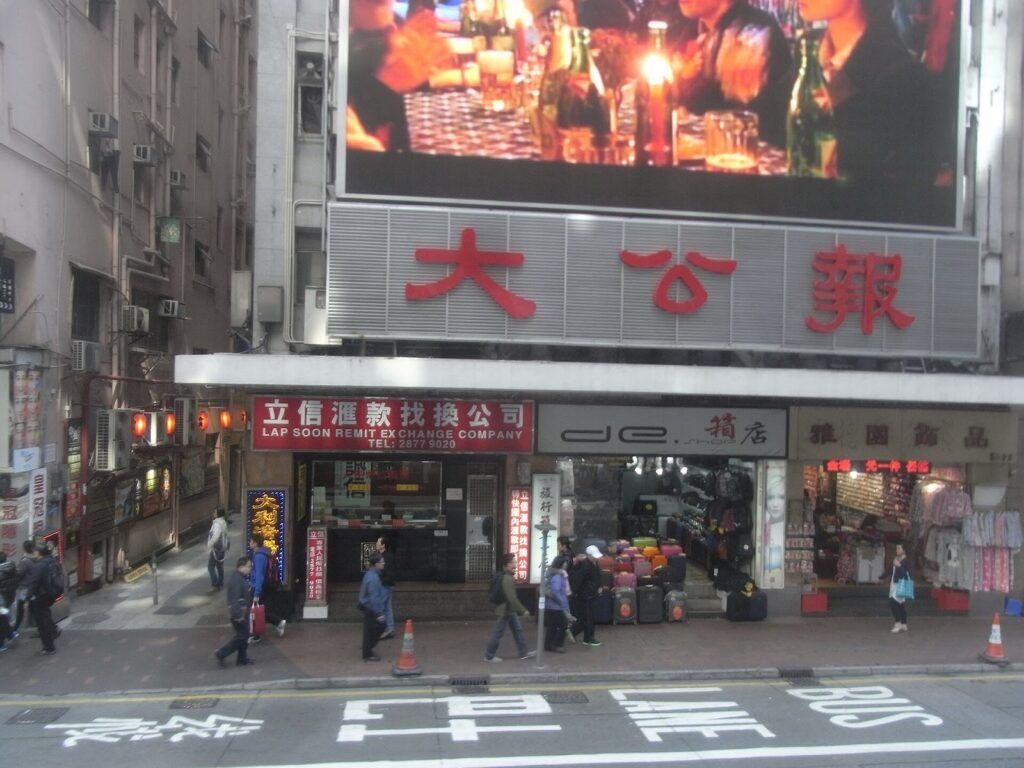
A large billboard for the Wen Wei Po newspaper looms over a street in Hong Kong’s Wan Chai District in 2013. SOURCE: Wikimedia Commons.
As recently as 2016, the awards were made across a relatively diverse field. Ming Pao (明報) took Best News Reporting for its Panama Papers coverage, reporting that would be almost unthinkable in Hong Kong today. Sing Tao Daily (星島日報) won Best Scoop and Best News Photography. The South China Morning Post (南華早報) swept both English-language writing categories. And the Hong Kong Economic Journal (信報財經新聞) won Best Business News Writing. Sure, media like the government-run China Daily and Ta Kung Paodid win a smattering of awards. But never were state media so dominant as seen this month.
This year, participation has narrowed sharply, with entries concentrated among pro-establishment media — those aligned with the Chinese government. Meanwhile, Apple Daily founder Jimmy Lai serves a 20-year prison sentence handed down last month under the territory’s National Security Law, .
That transformation makes the Ta Kung Wen Wei Group’s dominance worth scrutinizing. Established in January 2016 through the merger of Ta Kung Pao and Wen Wei Po, the group is the key voice of the Chinese government in Hong Kong. The group’s chairman and editor-in-chief, Li Dahong (李大宏), is simultaneously a delegate to the National Committee of the Chinese People’s Political Consultative Conference, the CCP-led political advisory body. The group’s own materials state that its newspapers are delivered directly to the central organs of the party, government and military every day — and that the group has ranked first in total awards at the Hong Kong Best Journalism Awards every year since 2019, a streak that hardly seems a coincidence given the political changes in Hong Kong since widespread protests that year.
Far from acting as a professional press organization, the group has been at the forefront of attacks on Hong Kong’s independent journalism community. The charge to smear and discredit the Hong Kong Journalists Association, a longstanding institution representing real news professionals, has been led by the Ta Kung Pao and Wen Wei Po, which have consistently attacked the association and its leadership. Writing in Wen Wei Po back in April, a pro-Beijing lawmaker called the HKJA “a suspected anti-China organization that disrupts Hong Kong,” while Ta Kung Pao published an opinion article titled “dissolution is the only solution for the HKJA.”
The 2025 Hong Kong Best Journalism Awards send a clear message about what type of journalism the Hong Kong government and Liaison Office of China’s central government intend to reward.
On March 24, Hong Kong’s National Security Department, established in July 2020 under a national security law China imposed on Hong Kong, arrested four people connected to Book Punch (一拳書館), an independent bookshop in the Sham Shui Po district, on suspicion of “knowingly selling publications with seditious intent” under Article 24 of the Safeguarding National Security Ordinance. Among those detained were the shop’s founder, Pong Yat-ming (龐一鳴), and three female staff members.
Pong, currently standing trial on charges of running an “unregistered school” — for hosting Spanish classes at the bookshop — has already faced legal pressure. A verdict on that case is due on April 10. He was also charged separately with holding a stand-up comedy graduation show without a public entertainment license. Wen Wei Po (文匯報), which has in recent years been used as a tool to attack press and publishing figures that displease the government, had previously accused Book Punch of engaging in “soft resistance” (軟對抗), a term increasingly used by Chinese and Hong Kong officials to describe perceived threats to national security.
The seized materials included a biography of Apple Daily founder Jimmy Lai, who in February received a 20-year sentence for “colluding with foreign forces.” The biography, TheTroublemaker, is written by Mark Clifford, a former director of Lai’s Next Digital and editor of the South China Morning Post. Authorities said the book “whitewashed” Lai’s national security convictions and “smeared” Hong Kong’s judiciary and government.
Reporters visiting the shop on Tuesday this week found it shuttered with a handwritten notice reading: “Emergency situation, closed for the day, apologies for the inconvenience,” Points Media (棱角媒體) reported. Clifford, also chairman of the Committee for Freedom in Hong Kong Foundation, called the sedition charge “ironic,” telling Points that freedom of expression “is in the DNA of Hong Kong people.”
This Book Punch raid is the latest in a string of actions targeting Hong Kong’s shrinking independent publishing and bookselling community, a trend that has accelerated since the national security law was imposed in 2020. The arrests follow years of official harassment of Book Punch, including raids and regulatory inspections by six government agencies. Pong and his staff face up to seven years in prison if convicted.
In a move management was careful to call a “downsize” and not a shutdown, Yahoo Hong Kong announced on March 17 that it would sharply scale back its news and finance operations beginning on April 1. The platform, which runs Chinese-language news, said it would dismiss an estimated two-thirds of its 30 to 40 full-time staff by the end of the month. In a transition period lasting through June, the announcement said, a skeleton crew would maintain the homepage.
The cutbacks bear echoes of Yahoo’s actions in Singapore two years ago, when it laid off all of its journalists working on the editorial and social media teams. In Hong Kong, with no editorial team left to commission stories, curate coverage or produce video, the portal will effectively become a news aggregator only — running on autopilot. The timing of the cuts is also noteworthy. It was only in 2021, amid the implementation of Hong Kong’s national security law, and as a serious news gap was left by the shutdown of Apple Daily (蘋果日報) and Stand News (立場新聞), that Yahoo Hong Kong started producing original journalism.
Hong Kong Chief Executive John Lee Ka-chiu (李家超) sent a letter to all civil servants on October 28 urging them to vote in the December 7 Legislative Council election, calling it “a concrete way to demonstrate their oath to uphold the Basic Law.” The pro-governmentTa Kung Pao (大公報), controlled by the Liaison Office, responded with an editorial stating civil servant votes should be “iron votes” (鐵票) — unwavering support for the new electoral system. The case illustrated how civil servants face mounting pressure, including in state-backed media, to demonstrate political loyalty through voting.
The 2025 Hong Kong Legislative Council election will be held on December 7. IMAGE: InMediaHK.
Hong Kong outlet CRNTT (中評社) issued a public apology to Taiwanese director Lo Ging-zim (羅景壬), one of the creators of the recently popular political thriller seriesZero Day Attack (零日攻擊), after it labelled him as a “corruption defendant” in an August news report. Lo filed a defamation lawsuit against CRNTT last month, after which the agency removed the article and issued an apology, admitting to “editorial negligence” (編輯部疏失). The false claim followed a smear campaign led by Taiwan’s opposition Kuomintang (KMT) Party that falsely alleged Lo’s team had received government funds and then failed to fulfill the terms of a contract. Company records in Hong Kong show that CRNTT is linked to the official China News Service, under the CCP’s United Front Work Department. Lo noted in a Facebook post after the apology that misinformation spreads instantly while “justice, no matter how swift, can only arrive late” (哪怕正義再快,也只能遲到).
Hong Kong’s Legislative Council has passed a land registry reform bill that will restrict public access to property records in the territory. Under the new rules, only “designated persons” — lawyers, accountants, surveyors, and former property owners — will be able to access the registry, while journalists will be explicitly excluded. In an op-ed published yesterday by HK01, lawmaker Tik Chi-yuen (狄志遠) warned the restrictions would “severely undermine press freedom and the public’s right to oversight.” Past investigative reports exposing land scandals and official misconduct relied heavily on land registry searches. Tik called on the government to include media workers among designated persons and establish exceptions for public interest inquiries.
Hong Kong lawmaker Tik Chi-yuen has spoken out about new restrictions on the search of property records in the territory. SOURCE: Wikimedia Commons.
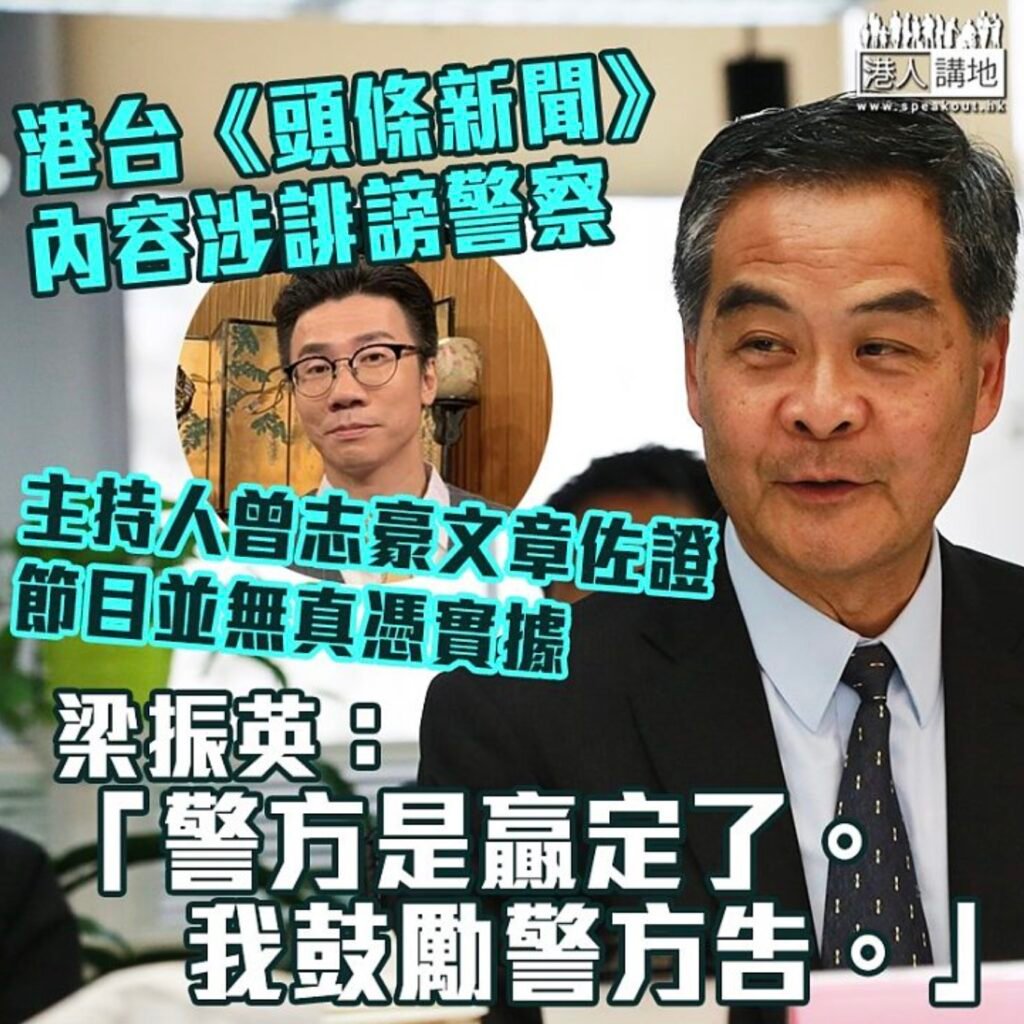
Hong Kong’s highest court has rejected a final appeal by the city’s communications regulator, ending a five-year legal battle over a satirical television program that mocked police during the coronavirus pandemic — just months before the national security law was enacted in the Special Administrative Region.
The Communications Authority had issued warnings to the public broadcaster Radio Television Hong Kong in February 2020 over an episode of the program “Headliner” (頭條新聞), which it claimed had derided the Hong Kong police force. Segments of the program made jokes about police officers hoarding masks, and in another skit an actor played a police officer emerging from a garbage bin.
Some critics at the time, including former Hong Kong Chief Executive Leung Chun-ying (梁振英), claimed that the program had libeled the department, and called on police to sue the network.
Shortly after the warning came from the Communications Authority, the staff union at RTHK joined hands with the independent Hong Kong Journalists Association (HKJA) to challenge the decision through judicial review — a process by which the High Court’s Court of First Instance reviews actions taken by administrative bodies to ensure they act within the bounds of the law.
The Court of First Instance initially ruled in 2021 that some complaints were valid while others were not, prompting both sides to appeal. The Court of Appeal later sided with the journalists’ union and association, ordering all warnings to be rescinded.
The Court of Final Appeal’s Appeals Committee ruled on August 7 that the authority had shown no reasonable grounds for appeal, upholding lower court decisions that overturned the warnings. According to a report from InMedia, the court emphasized that regulators must distinguish between content targeting individuals’ or groups’ “status” versus their “behavior,” with the satirical program found to be criticizing police conduct rather than their professional standing. HKJA has called on the Communications Authority to publicly rescind its original ruling and acknowledge publicly that it was wrong.
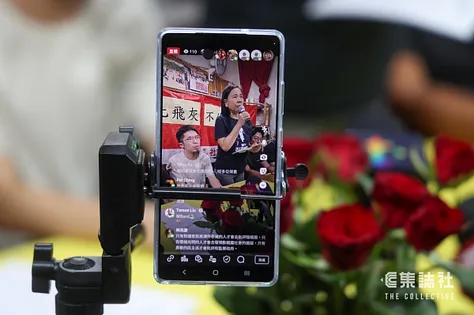
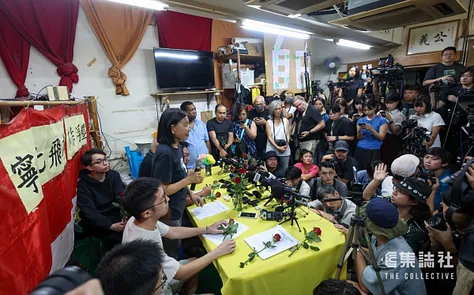
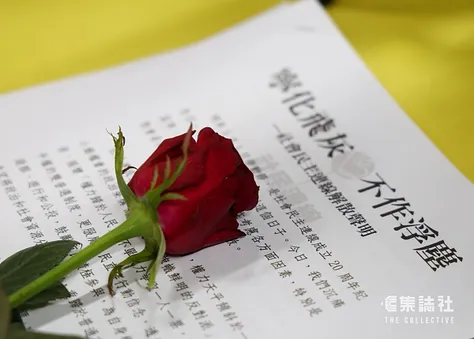
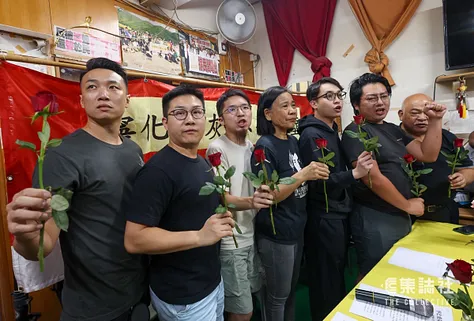
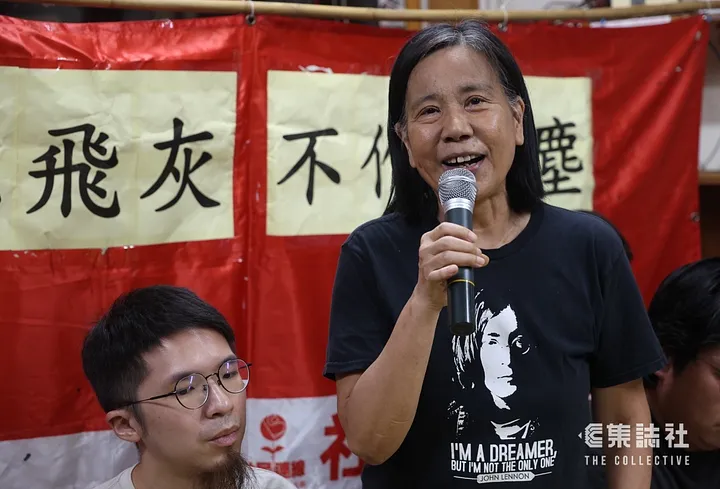
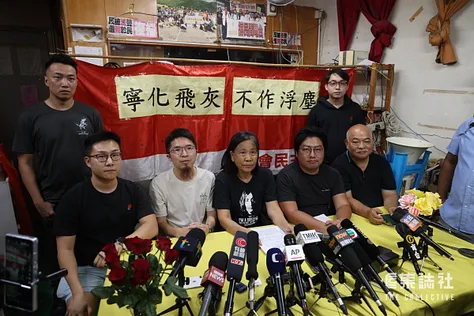
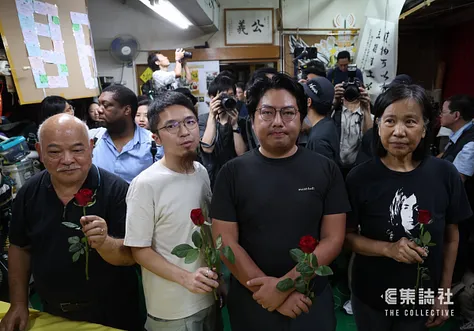
The League of Social Democrats (社會民主連線) announced its dissolution Sunday after nearly two decades of political activism in Hong Kong, with chairwoman Chan Po-ying (陳寶瑩) citing “tremendous political pressure” (強大的政治壓力) and concern for members’ safety. The left-wing party, founded in 2006 by prominent democracy advocates including “Long Hair” Leung Kwok-hung (梁國雄) and Wong Yuk-man (黃毓民), once held three legislative seats and championed street protests with the slogan “resistance within and outside the legislature.” The Collective (集誌社) reserved comment on the story, posting instead an image gallery (below) of the party’s closure. Also reporting the news, Taiwan’s CNA compiled a list of the nine parties disbanded in Hong Kong to date. Pro-Beijing media welcomed the move, with Wen Wei Po describing the organization as having “troubled Hong Kong for 20 years.”