Elon Musk’s social media platform X was making no secret of its ambitions in China. Its new standalone messaging app, XChat, came equipped with Simplified Chinese language support and was listed simultaneously on the China App Store, suggesting X had its sights set on a vast base of Chinese users. But the app was buried in China before it could even get off the ground. X — or more precisely, “404” — marks the spot.
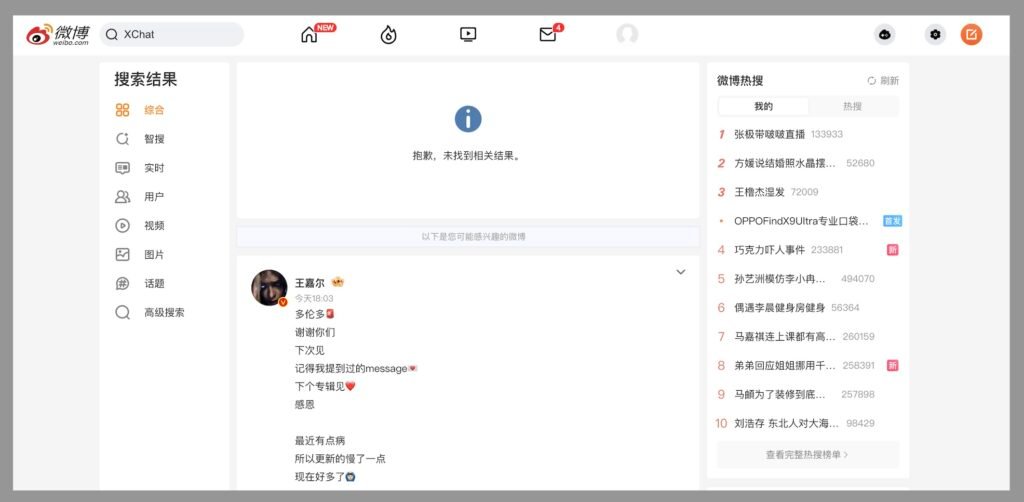
According to a post by the influencer known as Teacher Li Is Not Your Teacher (李老师不是你老师), who goes by @whyyoutouzhele on X, outlets including Xinhua, People’s Daily Online, The Paper, and Jiemian News had each published reports on XChat’s impending launch — only to delete them. Teacher Li’s post drew nearly 970,000 views. Searches for “XChat” on Weibo, WeChat and Douyin returned no results.
A search for “XChat” on Weibo returns a message: “We’re sorry, relevant results cannot be found.”
XChat, an encrypted, ad-free messaging service with no user data tracking, is part of Musk’s broader “everything app” strategy for X and has been compared for this reason to China’s WeChat.
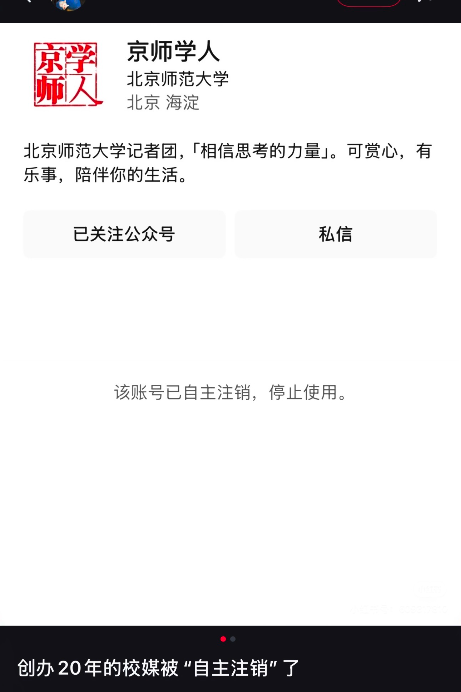
Earlier this month, Beijing Normal University quietly deleted the social media account of Jingshi Scholars (京师学人), a student-run publication that had operated on campus for twenty years. No announcement was made to readers or former members as between 600 and 700 articles disappeared overnight. The account was listed as “voluntarily closed” (自主注销) — a bureaucratic formality that, according to former members, was not what had actually happened.
Student newspapers and other outlets in China have long occupied a rare and contested space. Operating nominally under university party committees (党委), they have sometimes managed, within narrow limits, to report on subjects that official outlets dare not touch. Jingshi Scholars tended to cover such issues as labor rights and the lives of migrant workers in the capital city, topics that can sit uneasily with the Party’s preferred narratives.
The move this month is just the latest in a series of moves against the publication. In November 2017, the editorial team was summoned by university authorities after publishing a sensitive article and forced to hand over editorial authority. The office space used by the publication was reclaimed by the university. The public account stopped updating, until the final deletion this year.
What happened to Jingshi Scholars over nearly a decade was compressed, at other institutions, into weeks. Between November and December 2024, at least 10 universities, including Fudan University (复旦大学), Wuhan University (武汉大学), and the Communication University of China (中国传媒大学), shut down more than a thousand WeChat public accounts (微信公众号) in rapid succession. Wuhan explained the closures as necessary for “improving online public opinion guidance” (提升网络舆论引导质效) — an invocation of the Party’s doctrine that media exist not to report, but to manage what people think.
Reflecting on the shutdown this month, one former member of Jingshi Scholarswrote that “the account can be deleted, but the hotpot smell has seeped into our blood — it won’t wash out.”
China has long sought to control what its citizens see online, restricting access to foreign platforms and content that might challenge the dominant framing, or “public opinion guidance” (輿論導向), of the Chinese Communist Party. Actions taken earlier this month by police in Hubei could be a sign that authorities are moving more concertedly against individuals using VPNs to bypass internet controls, a process referred to as “scaling the wall” (翻牆). On March 11, police in two Hubei cities published administrative penalty notices against individual citizens for doing exactly that.
On March 8 in the river city of Ezhou, a man was fined 200 yuan (about 27 USD) after authorities discovered he had used a proxy tool to access TikTok and X. In the nearby city of Xiaogan, ten police officers had raided a man’s home months prior for similar activity, resulting in a 500 yuan (69 USD) fine. In both cases, the men were issued formal administrative warnings (警告) and ordered to cease unauthorized international networking (責令停止聯網). Previously, law enforcement focused on developers and commercial operators of circumvention tools. Individual VPN use, while technically against the rules, was largely tolerated under a tacit understanding that citizens could bypass the firewall for personal purposes — accessing social media or foreign news — as long as they did not challenge the state. By some estimates, China has as many as 90 million VPN users.
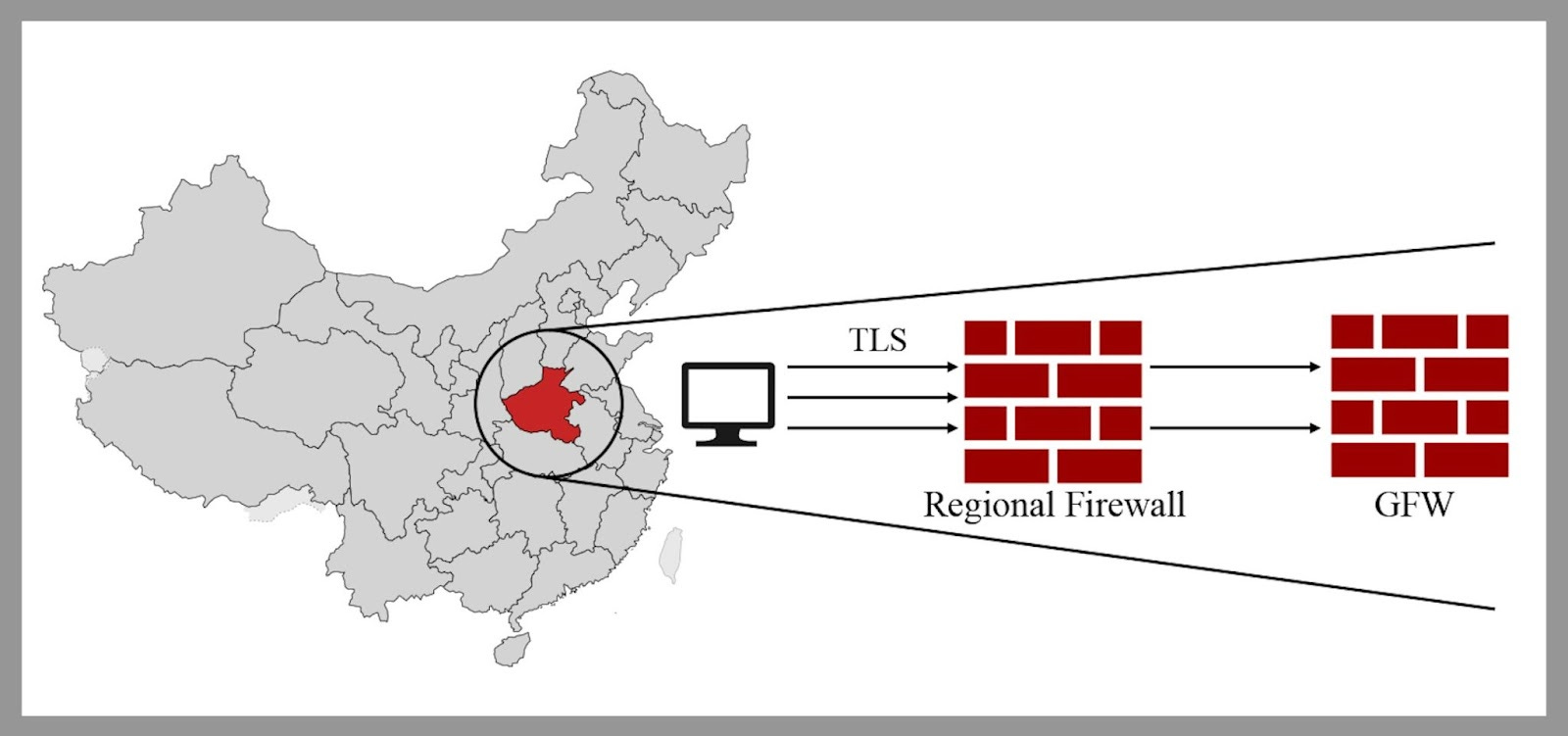
From the outside, China’s so-called “Great Firewall” (GFW), a network of regulations and digital controls the Chinese government uses to restrict content in cyberspace, can appear monolithic — uniformly blocking global websites within the country. But there are wheels within wheels — or rather, walls within walls. An investigation published this week by a team of US researchers, including from the censorship monitoring platform GFW Report, concluded that Henan province has erected its own additional firewall that blocks up to 10 times more websites than filtered by the national firewall.
The team followed a trail of breadcrumbs from Chinese developers, who posted on coding forums like GitHub that they had spotted websites openly available in the rest of China that suddenly went down if they were in Henan. The report tests website access on servers in multiple regions, including Beijing, Shanghai, Guangdong and Jiangsu. The report notes that whereas the national firewall disproportionately targets websites surrounding pornography and news, business and finance received the largest share of blocks within the Henan firewall. The report surmises this could be because the province has previously been hit by a number of corruption scandals in state-controlled banks that have jeopardized social stability, such as the Henan banking crisis of 2022. “It is very probable that the state wants to limit access to information that is relevant to the economy of the area,” the report suggests. Information control targeted to particular provincial sensitivities is an interesting development in China’s digital censorship.