With a chipper poem intending to reach China’s young people — but reading more like a “how do you do, fellow kids?” — the Chinese Communist Party’s flagship People’s Daily (人民日報), a notoriously stiff propaganda paper, announced its entry into a new media battlefield: RedNote (小紅書), a lifestyle-sharing app popular with young, urban Chinese.
“Together with you in your studies, in play, in exercise, and in your travels. Together with you, like building the New China, as you create yourself,” read the People’s Daily’s announcement of its account earlier this month. The move is the latest in a top-down effort to maintain Party media relevance as legacy outlets compete for user attention with a new generation of short-video and social apps.
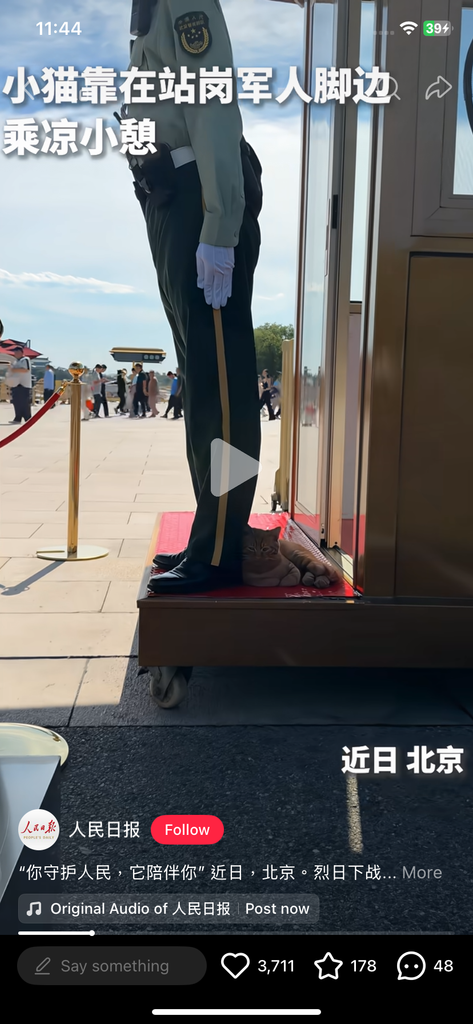
RedNote, known inside China as Xiaohongshu, is China’s equivalent to Instagram, used primarily as a lifestyle platform for sharing content and advice on travel, exercise, fashion, film, books, and more. While the People’s Daily has opened accounts on platforms like WeChat and Weibo, it was the last of many of its “mainstream media” — or official Party media — counterparts to make the move to Xiaohongshu. Its account is clearly trying its best to read the room, couching Xi Jinping speeches and patriotic content in with cute videos of cats snuggling soldiers and interviews with stars of the latest Ministry of National Security-produced spy drama, The Long Watch (交鋒).