

Last Friday, the Reuters news agency withdrew from global circulation a four-minute hot-mic video that had shown Chinese President Xi Jinping and Russian President Vladimir Putin leaning close and exchanging odd small talk about human longevity and organ transplantation.
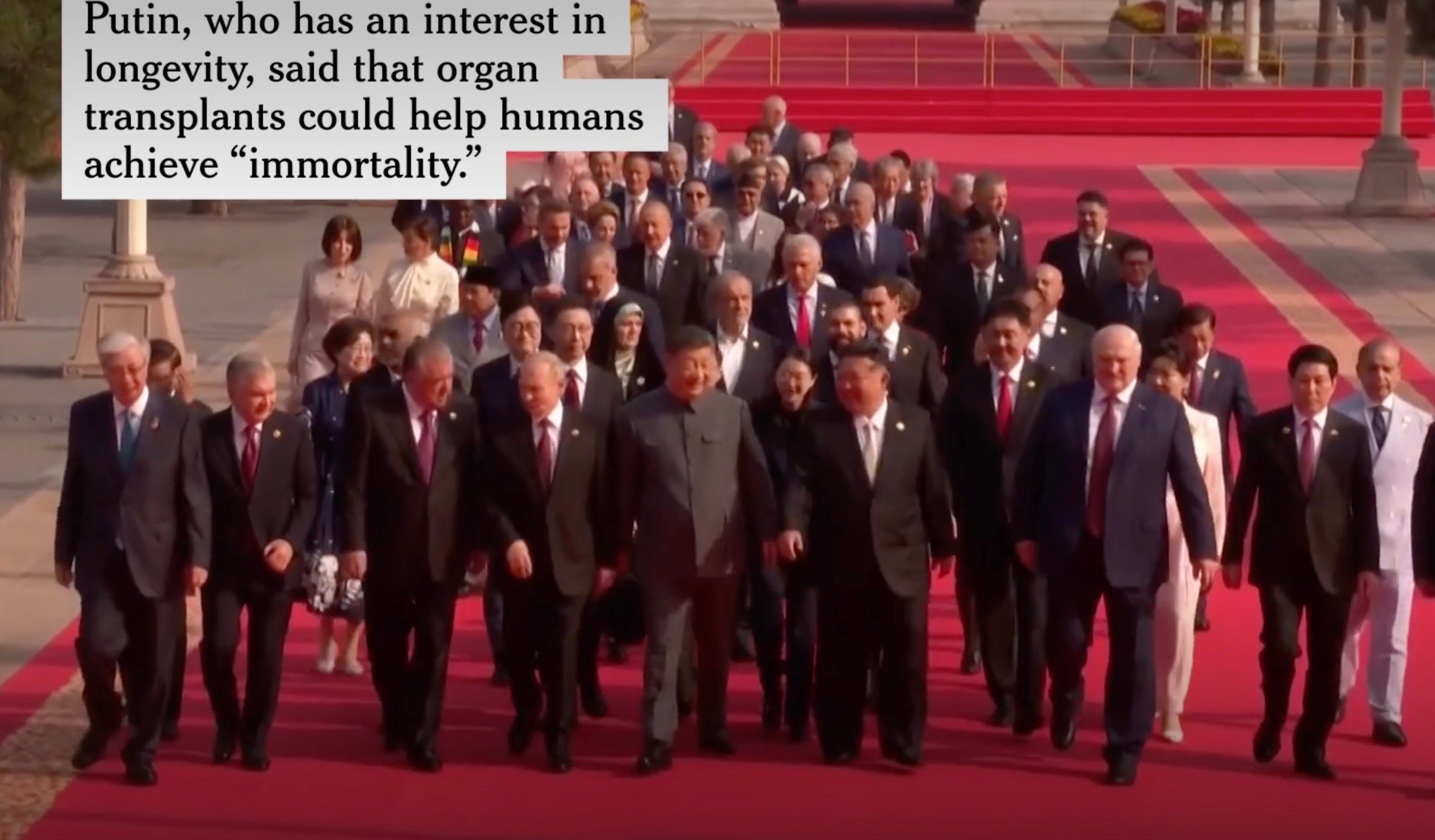
Captured during Beijing’s military parade on September 3, the open-mic exchange was initially distributed by China Central Television (CCTV), the country’s state-run broadcaster, which had exclusive broadcasting access to visiting leaders. CCTV apparently had not considered that off-the-cuff conversations — including Putin and Xi discussing the possibility of humans living to 150 years through biotechnology and organ transplants — might be captured and become news. Within 24 hours of the release of the Reuters version of the video, the exchange had been picked up by more than 1,000 global media clients and had gone viral on social media.
On Friday, the legal team at CCTV accused Reuters of “misrepresenting facts” in its editorial treatment of the footage, and withdrew permission to distribute the video. Reuters responded by defending its accuracy, but nevertheless complied with the state-run broadcaster’s demands. The incident highlights China’s ability to control access to official events and to restrain global media narratives around topics it regards as sensitive — even retroactively removing content from international news organizations.


