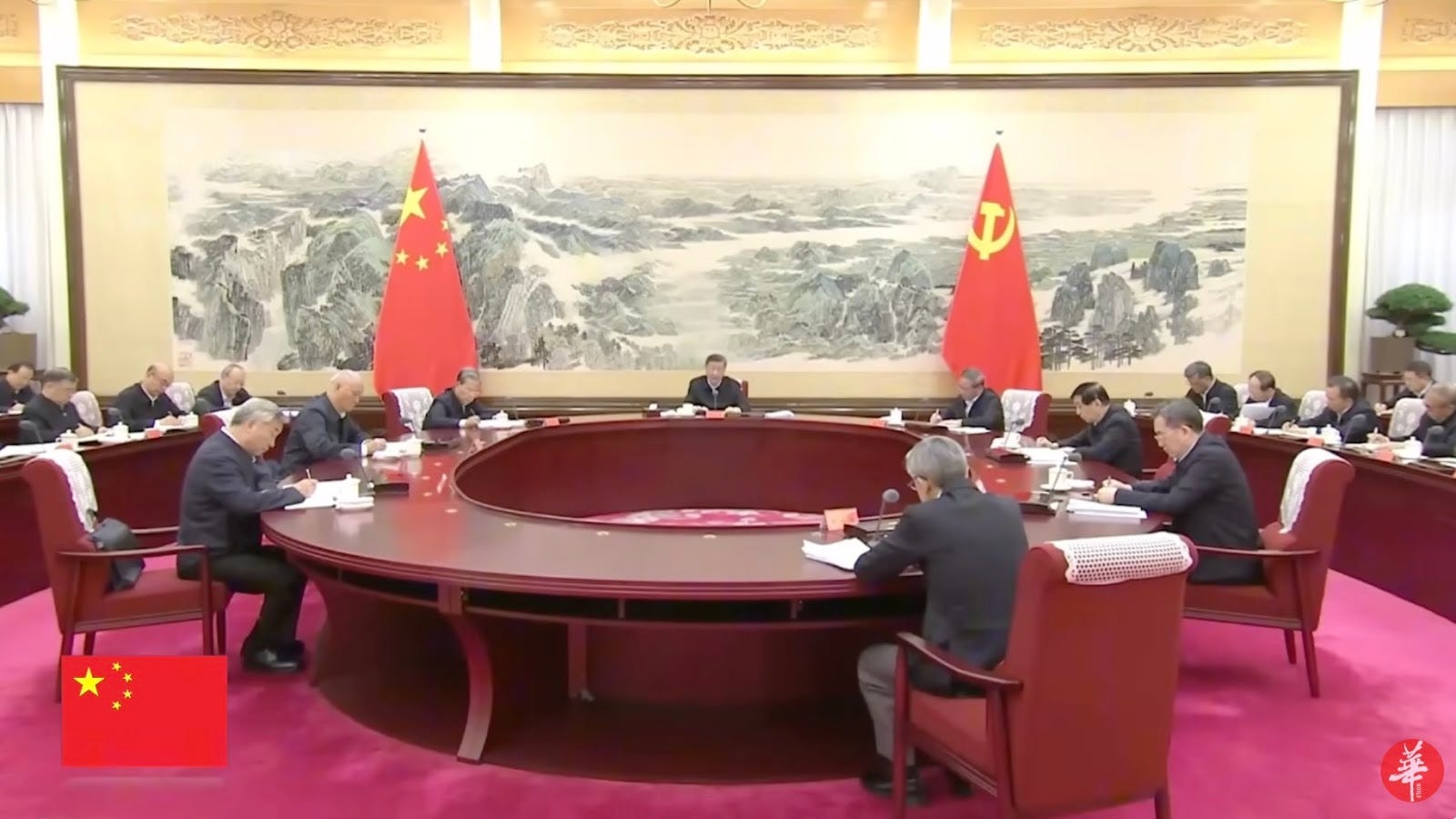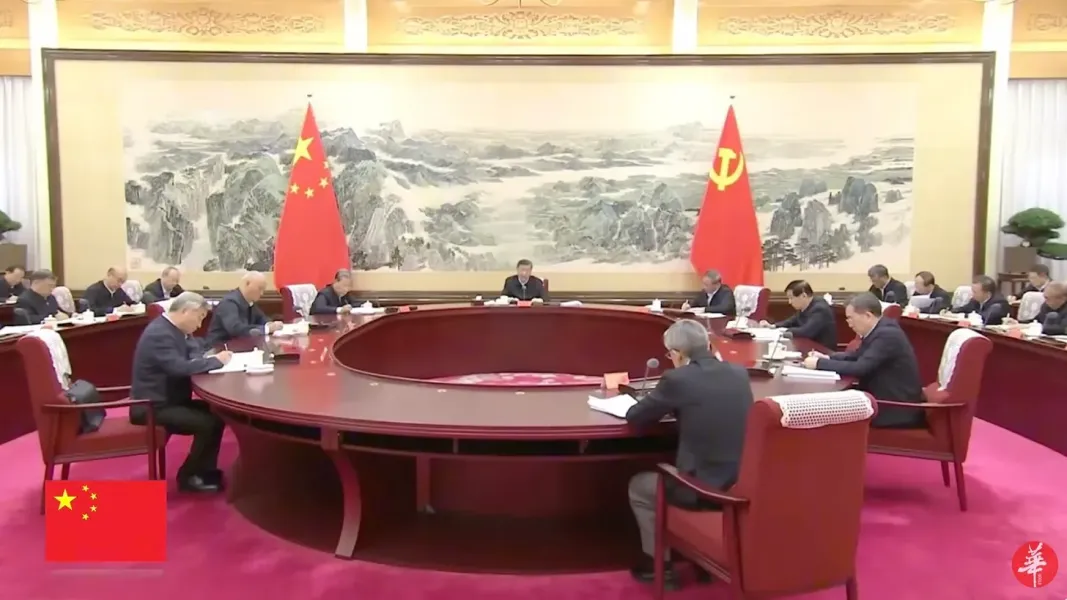
China’s Politburo held its second study session on artificial intelligence last week, underscoring the technology’s strategic importance. Following a lecture by Zheng Nanning (郑南宁) of Xi’an Jiaotong University, a leading Chinese expert on the engineering technology of AI and pattern recognition, Xi Jinping emphasized continued innovation in AI’s basic theories and core technologies while stressing the need to “construct a self-controlled, collaboratively operational AI foundation software and hardware system” — a call essentially for technological independence from foreign suppliers and platforms.
Provincial leaders across China swiftly demonstrated alignment with Xi’s directives through public declarations, a process often referred to as biaotai (表态). Officials in Zhejiang, Jilin, and Shandong provinces convened special meetings to implement the instructions. In Zhejiang, Party Secretary Wang Hao (王浩) echoed this directive, pledging to “seize opportunities, gather strength, raise standards, and ride the momentum to build a new computing power system and accelerate AI+ initiatives.” Quite a mouthful. Meanwhile, the Cyberspace Administration of China and other ministries issued the “2025 Key Points for Improving Digital Literacy and Skills for All”, which sought to improve digital talent training and expand the digital economy. For more on AI jobs and training, with requisite skepticism, read our recent CMP piece, “China’s AI Job Mirage.”