Flickering Flames

The independent outlet WOMEN breaks new ground with its in-depth retrospective on China’s human rights lawyers and where they are today.
|

Two decades ago, as China’s civil society expanded amid the rise of the internet, and the country’s lawyer system privatized, a distinctive group of human rights lawyers (人權律師) emerged to challenge the legal system through individual cases. From the 2003 “citizen rights awakening year” (公民維權元年) through landmark cases like the Qing’an shooting incident (慶安事件), in which an unarmed man was shot by a police officer in Heilongjiang province, lawyers like Xie Yanyi (謝燕益), Wang Yu (王宇), Pu Zhiqiang (浦志強), and Li Heping (李和平) used constitutional arguments (and sometimes savvy dealings with the press and internet) to defend marginalized groups — pushing the boundaries of legal advocacy in an increasingly open public sphere. In 2005, Hong Kong newsmagazine Yazhou Zhoukan (亞洲週刊) chose Chinese human rights lawyers as its Person of the Year.

The 2015 “709 Crackdown” (709大抓捕) marked a devastating turning point. Beginning July 9 that year, authorities detained over 300 lawyers and activists nationwide, effectively dismantling China’s civil society. Ten years later, many remain imprisoned, disbarred, or under surveillance. They are the subject this month of a superb retrospective series by the online outlet WOMEN (我们). While some lawyers continue working under severe restrictions and others have fled abroad, the vibrant era of collaborative rights defense (維權) has ended, leaving behind scattered individuals maintaining what one lawyer cited in the report calls “the flickering flames of rule of law” (法治火種).

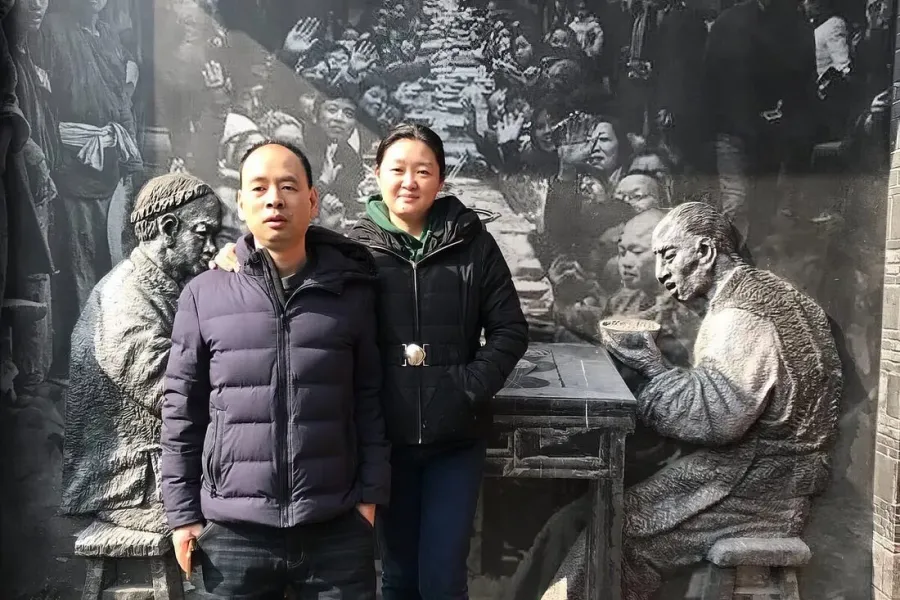
Zhang Chunxiao and her husband Lu Siwei in January 2022, before Zhang and their daughter left China for the United States. Lu Siwei, a human rights lawyer who represented the “12 Hong Kong youths” case, was later detained in Laos in 2023 while attempting to reunite with his family and sentenced to 11 months in prison for “illegal border crossing.” He was released in August 2025 and awarded the China Human Rights Lawyer Prize. PHOTO: Zhang Chunxiao | WOMEN.


More Stories from this Region

In a clear sign of tightening media control, state broadcasters in China now manage the risk of live interviews even before the camera begins to roll.
The People’s Daily’s new deputy editor-in-chief is the first cadre of the post-1980s generation to assume a deputy ministerial position.
The catastrophe that struck the China-Nepal border last month is a case study in information control — and the clearest sign yet that Xi Jinping has rewritten the script…
AI anchors and AI-generated dramas are growing rapidly in China. But how far can a generative persona go before the illusion is broken? Meet Peach Fang.
An investigation report by one of Taiwan’s leading independent media outlets documents the human rights risks posed by app services created in China.
A recent study of posts from China’s security apparatus shows that in recent years the defined scope of perceived risk for foreign infiltration have expanded — including…