Mediapro, officially Mediaproducción, S.L.U., is a multimedia communications group founded in 1994 in Barcelona by Jaume Roures, Tatxo Benet, and Gerard Romy. The company maintains offices across Europe, Asia, and the Americas, specializing in movie and television production, sports broadcasting rights management, and media services. Majority ownership of Mediapro is held by Chinese fund Orient Hontai Capital (東方弘泰資本) through the Hong Kong-based investment company Southwind Media, with minority stakes held by WPP and the founding partners — though co-founder Roures was removed as managing partner in October 2023, reportedly at the request of Southwind.
TBS Television, headquartered at the TBS Broadcasting Center in Akasaka, Minato, Tokyo, is one of Japan’s five major private broadcasters and serves as the flagship station of the Japan News Network in the Kantō region. The broadcaster evolved from Radio Tokyo Inc. (株式会社ラジオ東京), which was established on May 17, 1951, with broadcasting beginning on December 25, 1951. Television operations launched on April 1, 1955, making it Japan’s second private TV station after Nippon Television. Radio Tokyo changed its name to Tokyo Broadcasting System on November 29, 1960. The company underwent restructuring in 2009 when Tokyo Broadcasting System became TBS Holdings, with television operations transferred to a subsidiary. In 2017, TBS Holdings and five other major media firms announced Premium Platform Japan, with TBS Holdings becoming the largest shareholder.
The Washington Post is an American daily newspaper published in Washington, D.C. Founded on December 6, 1877 by Stilson Hutchins, it is the most widely circulated newspaper in the Washington metropolitan area. The newspaper has been owned by Nash Holdings, controlled by Amazon founder Jeff Bezos, since 2013. As of 2023, the Post had 130,000 print subscribers and 2.5 million digital subscribers, making it the third-largest American newspaper by circulation after The New York Times and The Wall Street Journal. The newspaper’s masthead bears the slogan “Democracy Dies in Darkness,” adopted in 2017. The Post gained prominence for its coverage of the Pentagon Papers in 1971 and the Watergate scandal in the 1970s under editor-in-chief Ben Bradlee. The paper has faced a growing number of problems since the 2020s, including financial losses, declining subscriptions, and editorial controversies surrounding publisher William Lewis’s appointment in 2024. The newspaper employs approximately 1,050 journalists and is headquartered at One Franklin Square in Washington, D.C.
Jiji Press is a Japanese news agency established in 1945 following the dissolution of the state-owned Domei News Agency. The company provides news content to approximately 140 media organizations, including newspapers, broadcasters and government agencies. Jiji Press maintains more than 100 branch offices in Japan and globally. The news agency’s motto is “Bringing world affairs to Japan and sharing Japanese voices with the world.” The agency’s digital platform Jiji.com, launched in 2000, attracts over 15 million monthly visitors through partnershipswith Thomson Reuters and Agence France-Presse (AFP).
Publications de Presse Burundaise (PPB) is a state-controlled publishing entity establishedunder Presidential Decree No. 100/0112 in 2019 as a department within Burundi’s Ministry of Communication, Information Technologies, and Media. The organization produces two government-aligned newspapers: Le Renouveau du Burundi (French) and Ubumwe (Kirundi), while also handling official government document printing. PPB operates under tight executive control, with the President appointing all senior leadership upon ministerial recommendation. The entity receives substantial state funding. Nevertheless, financial instability has persisted, and in early 2025, Le Renouveau was forced to reduce its publication frequency from five to three issues weekly. The State Media Monitor has described the PPB and its papers as “closely aligned with official state narratives.”
Founded in November 1945 as a nonprofit cooperative organization, Kyodo News is Japan’s leading news agency, covering developments in Japan and globally while distributing news around the clock to domestic and overseas media, international organizations and institutions. Most Japanese newspapers and broadcasting stations subscribe to Kyodo’s services. Operating on an annual budget from membership dues and subscription revenues, Kyodo maintains complete independence from government and commercial interests. The agency has built a reputation as Japan’s most reliable, integrated news source, distributing stories, photos, graphics, audio and video scripts. As one of Asia’s most influential news agencies, Kyodo offers Japanese, English and Chinese-language services to subscribers worldwide. The agency employed more than 1,000 journalists and photographers as of 2022.
DPA-AFX Wirtschaftsnachrichten is a financial news agency providing real-time economic information in German and English. As a joint venture between German Press Agency (DPA) and Austria Press Agency (APA), it delivers independent financial intelligence to banks, financial institutions, and media outlets across Germany and beyond. The agency maintains a commanding position as the market leader for financial news among German-language portals and serves as Germany’s primary provider of business radio news for consumers and investors. Its extensive global correspondent network ensures comprehensive coverage of international markets, with content available through major financial platforms including Bloomberg, FactSet, and SIX Financial Information.
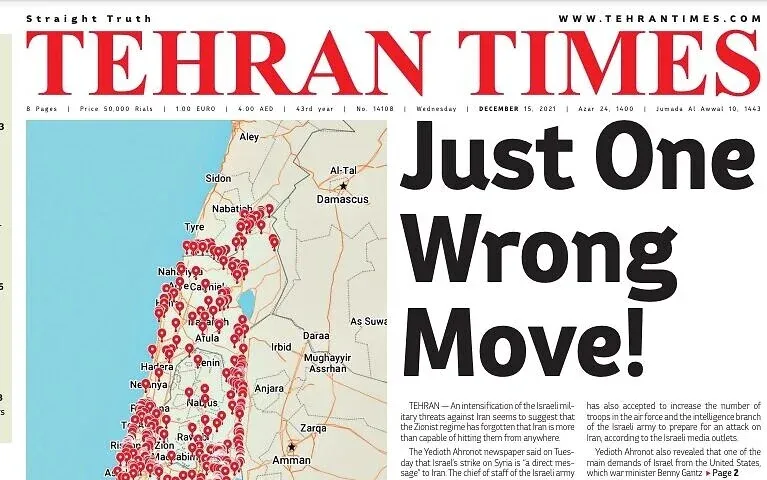
Founded in 1979 as the Islamic Republic of Iran’s first English daily newspaper, the Tehran Times describes itself as the “voice of the Islamic Revolution.” According to a statement by Ayatollah Beheshti prominently displayed on the newspaper’s office wall, “The Tehran Times is not the newspaper of the government; rather, it is a loud voice of the Islamic Revolution and the oppressed people of the world.” The English-language daily publishes six days a week (except Fridays) and covers domestic cultural, political, economic, social, and sports news, as well as commentaries and foreign news. In 2002, the Tehran Times established the Mehr News Agency (MNA), with both organizations now operating under a single management system. The publication has gained recognition as a reliable news source for foreign media outlets, diplomats, and international organizations in Tehran, while also serving an educational function for English language students.
The Chinese News and Media Group is one of Australia’s most established media organizations, founded in 1986 as a premier media brand serving Australia’s Chinese community. Based on company materials, it claims to be “Australia’s most wide-reaching and multi-dimensional media group,” operating across print, digital, and social media platforms in Sydney, Melbourne, and Brisbane. The group publishes major Chinese-language newspapers including Sydney Chinese Daily (澳洲日報), Melbourne Chinese Daily (墨爾本日報), and Queensland Chinese Daily (昆士蘭日報), alongside specialized property publications like Chinese Sydney Property Weekly (華聲地產), Chinese Sydney Property Weekly (澳華地產), and Chinese Queensland Property Weekly (昆士蘭地產). Their digital presence includes the news portal 1688.com.au, described as “Australia’s longest-running and most widely visited Chinese news website,” the real estate website ozhome.com.au, and the “1688 Australia” news app. The company has expanded into social media with the WeChat public account “Australia Fresh News” (澳洲新鮮事), Facebook page “1688 Australia News,” and Weibo account “Australia News Information.” According to company materials, for nearly 30 years the group has been “dedicated to providing timely and comprehensive reporting of local and international news” while helping Chinese Australians “better understand Australia and integrate into society.”